Algeria
 Egypt
 Libya
 Morocco
 Sudan
 Tunisia
 Benin
 Burkina Faso
 Cabo Verde
 Côte d'Ivoire
 Ghana
 Guinea
 Guinea-Bissau
 Liberia
 Mauritania
 Niger
 Nigeria
 Senegal
 Sierra Leone
 The Gambia
 Togo
 Cameroon
 Central African Republic
 Chad
 DR Congo
 Equatorial Guinea
 Gabon
 Republic of the Congo
 São Tomé and Príncipe
 Burundi
 Comoros
 Djibouti
 Eritrea
 Ethiopia
 Kenya
 Madagascar
 Malawi
 Mauritius
 Mozambique
 Rwanda
 Seychelles
 Somalia
 South Sudan
 Tanzania
 Uganda
 Angola
 Botswana
 Eswatini
 Lesotho
 Namibia
 South Africa
 Zambia
 Zimbabwe
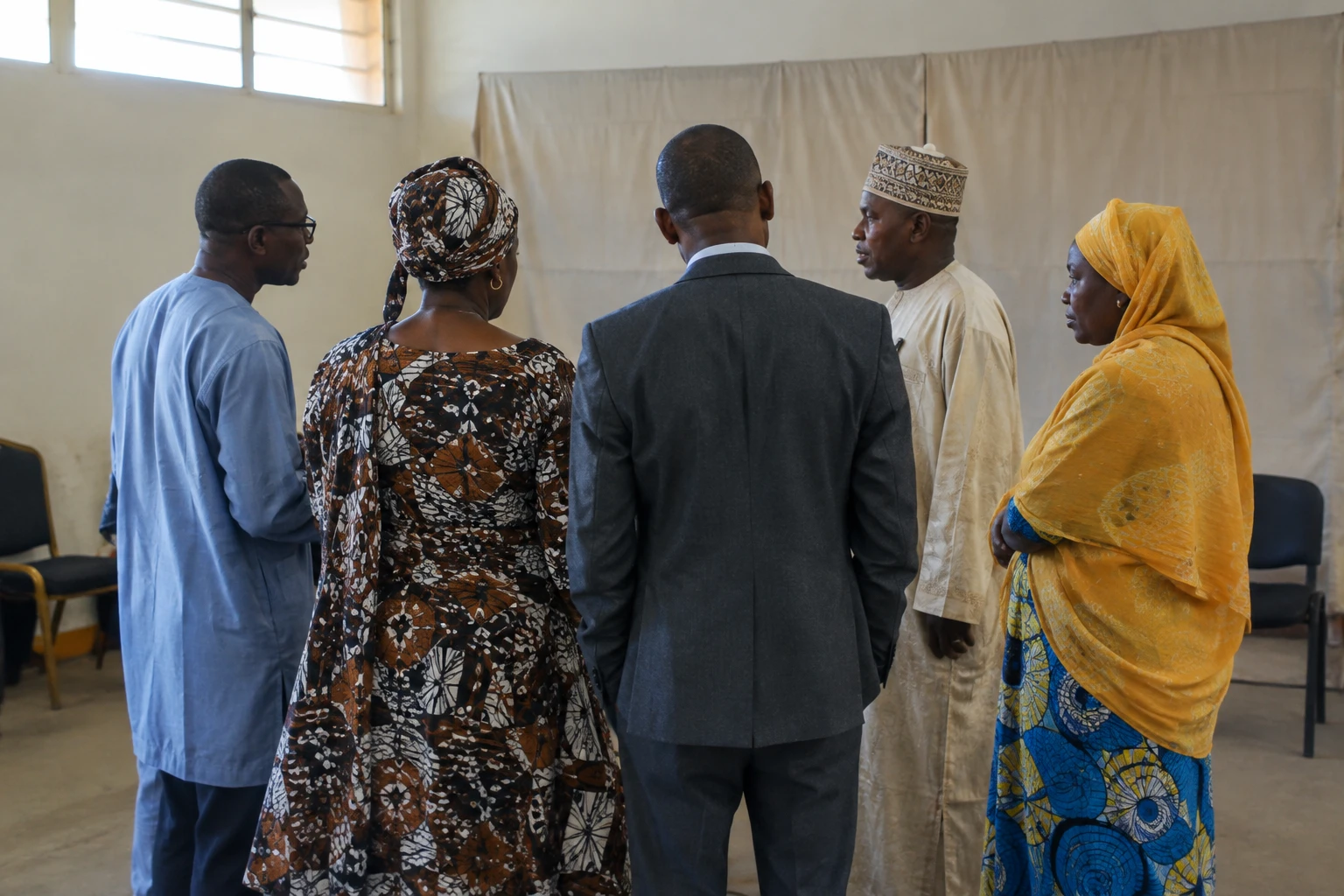
At markets, in fields and on roads linking villages to urban centres, people in central Mali remain exposed to clashes and reprisals. Accounts of recent attacks in Nampala, in the Ségou region, and in several localities in Mopti highlight how civilians can find themselves caught between armed groups and military operations.
Markets and villages caught in the fighting
In Nampala, a drone reportedly struck the market on Sunday 8 November, according to local accounts cited in a report on the incident. A civilian, a butcher and driver from Niono, was reportedly killed. Around ten other people were said to have been injured, including three seriously. These figures and the reported circumstances have not been confirmed by a second identifiable independent source, and should therefore be treated with caution.
Witnesses cited in the report attributed the strike to JNIM, the Group for the Support of Islam and Muslims, affiliated with al-Qaeda. They described an attack following an earlier clash about 40 kilometres away, during which the army allegedly killed several fighters before withdrawing towards Nampala. This account, too, is based on local testimony. The group reportedly did not claim responsibility for the strike on the market.
The reported presence of two military vehicles near the market has raised questions about the circumstances of the strike. One local source said the attackers fired beside the vehicles. Without independent verification, it is not possible to establish precisely what happened or determine whether the soldiers were targeted.
In the Mopti region, residents also report that several villages emptied between 3 and 5 November. Diengo, Goundaka and Djongué-Bambara, in the commune of Fakala, and Kabio, in the commune of Soye, were reportedly deserted after repeated attacks and drone strikes attributed to JNIM. Families are said to have gone to Mopti, Djenné or Sofara. The available information does not establish how many people were displaced.
Armed pressure on several fronts
These reports come amid intense armed activity in central and northern Mali. JNIM has claimed mortar fire on the military camp at Léré, in the Timbuktu region, as well as two attacks on military positions in the Mopti region, according to the available report. A claim of responsibility sets out the group’s version; by itself, it is not enough to confirm what happened or the toll.
On 13 November, Mali’s military high command announced strikes carried out two days earlier near Kadiana, in the Bougouni region, and Boulkessi, in the Douentza region. It described the targets as bases and gathering points for armed groups. No consolidated toll accompanied the announcement. The statement alone does not make it possible to verify the effects of the strikes or whether civilians were present in the areas targeted.
Military announcements and claims by armed groups thus describe separate but simultaneous operations across a vast territory. Their juxtaposition does not prove that the strikes announced by the army were a direct response to attacks on civilians or military positions. It does, however, show how difficult it is for residents to distinguish battle zones from ordinary places of life.
Direct consequences for residents
The closure or abandonment of a market first affects families who depend on it to buy food and sell their produce. For traders, transporters and small-scale farmers, insecurity can disrupt travel and reduce income. In villages, a hasty departure also means leaving behind land, livestock, stocks or tools, without knowing when it will be possible to return.
Moving to Mopti, Djenné and Sofara can bring families closer to services and support networks, but it also increases needs in host communities. Without reliable figures or information about shelter, access to water, healthcare and schooling, it is difficult to assess the scale of those needs. The consequences therefore go beyond the number of immediate casualties.
In some areas, dozo hunters help protect villages. Their presence can become a source of tension: armed groups may regard residents as linked to these forces, while families risk reprisals because of their choices or presumed affiliations. This does not justify treating an entire community as an armed actor. Every accusation must be attributed and verified.
Security measures alone cannot resolve the civilian question
Mali’s authorities face groups capable of striking camps, posts and routes far from one another. The armed forces respond with ground and air operations, while armed groups claim or deny responsibility for certain attacks according to their interests. In this environment, transparency about objectives, tolls and post-strike investigations is essential to establish responsibility and maintain public trust.
The regional context also matters. Mali has left the Economic Community of West African States (ECOWAS) alongside Burkina Faso and Niger; the three countries have formed the Alliance of Sahel States. This realignment changes the framework for regional political cooperation, while armed groups and networks of movement extend beyond borders. It does not replace the practical need for coordination on security and civilian protection.
At the level of the Sahel and the African Union, the next developments to watch are concrete: independent confirmation of the casualties in Nampala, changes in displacement in the communes of Fakala and Soye, and the publication of verifiable information on the strikes announced near Kadiana and Boulkessi. For residents, the immediate challenge remains being able to go to markets, work their land and travel to neighbouring towns without being targeted or forced to flee.