Algeria
 Egypt
 Libya
 Morocco
 Sudan
 Tunisia
 Benin
 Burkina Faso
 Cabo Verde
 Ghana
 Guinea
 Guinea-Bissau
 Liberia
 Mali
 Mauritania
 Niger
 Nigeria
 Senegal
 Sierra Leone
 The Gambia
 Togo
 Cameroon
 Central African Republic
 Chad
 DR Congo
 Equatorial Guinea
 Gabon
 Republic of the Congo
 São Tomé and Príncipe
 Burundi
 Comoros
 Djibouti
 Eritrea
 Ethiopia
 Kenya
 Madagascar
 Malawi
 Mauritius
 Mozambique
 Rwanda
 Seychelles
 Somalia
 South Sudan
 Tanzania
 Uganda
 Angola
 Botswana
 Eswatini
 Lesotho
 Namibia
 South Africa
 Zambia
 Zimbabwe
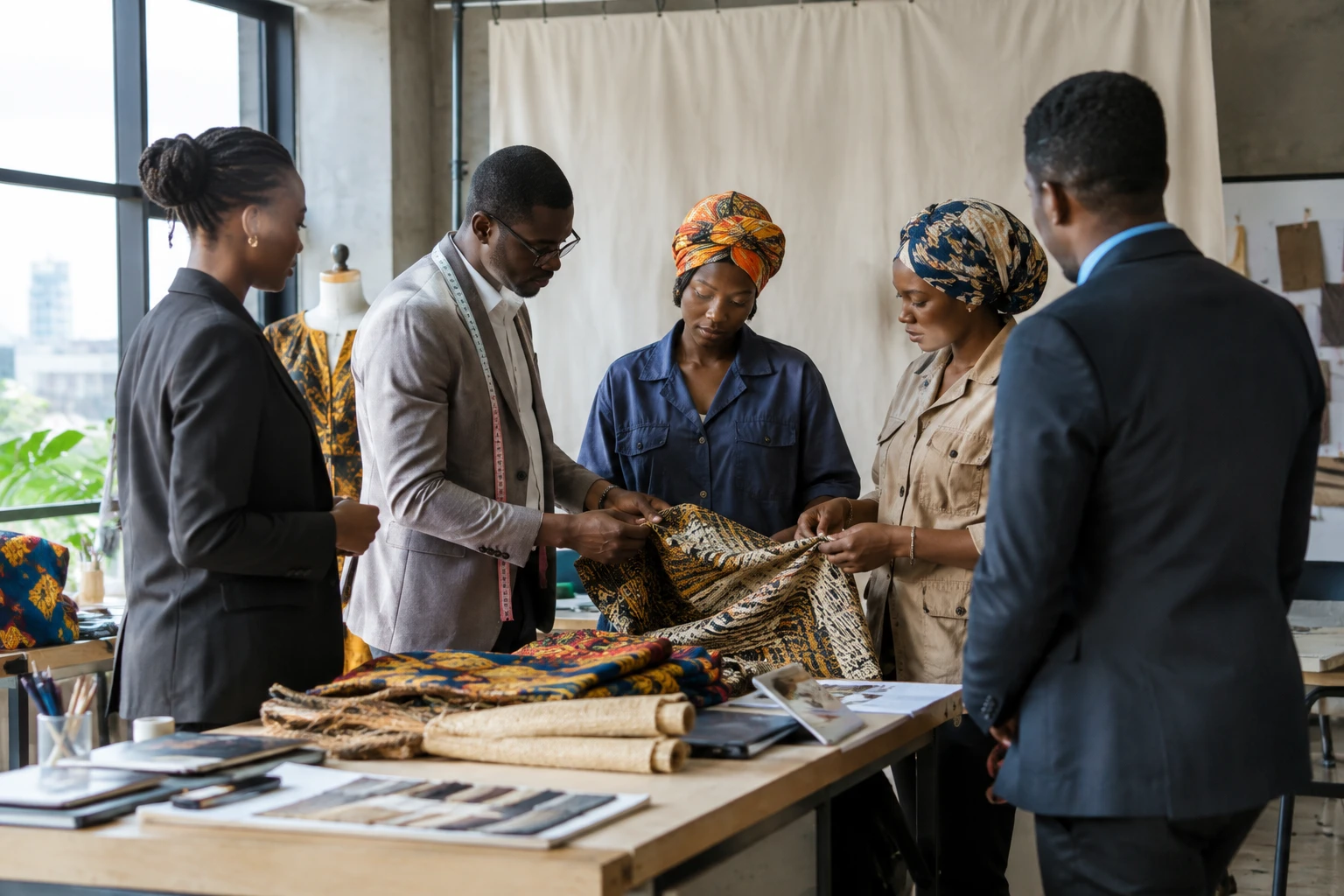
Can a garment connect a childhood memory to a weaving workshop, then to an international runway? For Maison Kanty’s, the Ivorian label founded by William Kouakou Mackenzie and Bohui Aguy Thierry, this movement of ideas and materials lies at the heart of its work. It also raises a practical question: how can traditional craft skills thrive in a fashion industry seeking to process more of its resources locally?
From a skill learnt in Treichville to a creative house
William Mackenzie grew up in Treichville, a district of Abidjan, in an environment where sewing was part of everyday life. His grandmother, mother and stepmother all worked as seamstresses. He says he learnt by watching them before training himself. His career took him through marketing and hospitality before he devoted himself to design.
Founded in 2019, Maison Kanty’s initially designed menswear. A presentation of women’s designs at a fashion event in Abidjan later broadened its audience. In the designer’s account, interest from female customers encouraged the label to continue in this direction. His vision of a powerful woman is not limited to a silhouette: he describes someone able to succeed while helping those around her to grow.
This focus on the individual is reflected in pieces designed to express a style, rather than in a fixed reproduction of traditional outfits. The two partners start with a story, then choose a material and develop the design. Cotton, raffia and woven cloth can all feature in contemporary silhouettes. A textile associated with a ceremonial occasion can be reinterpreted for city wear.
Craft, design and the value chain
Working with artisans requires more than choosing a fabric. The designers need to identify weavers, explain the label’s vision and agree together on the desired finish. They say they seek out skills in Côte d’Ivoire as well as neighbouring countries such as Mali and Burkina Faso. This regional work brings together skills and materials that cross national borders.
This model highlights an economic reality that is often less visible than fashion shows: fashion depends on a chain of professions, from material production to garment-making and sales. Côte d’Ivoire’s economic portal estimates that there are more than 50,000 textile and fashion artisans, alongside 15 industrial production units in the garment sector. It also reports installed spinning and weaving capacity of 26,000 tonnes a year. These figures show the scale of the ecosystem, but do not in themselves reveal artisans’ incomes, the regularity of orders or the share of materials processed locally. Data on the textile and garment industries in Côte d’Ivoire therefore provide a useful context for understanding the issues behind each collection.
The question of local processing is also reflected in Ivorian government policy. In June 2024, the government presented a strategy to develop an integrated textile and clothing industry. The stated aim for 2030 is to make the country a regional hub and generate about 75,000 skilled jobs. This is an ambition, not a result already achieved. It nevertheless shows why cooperation between designers, artisans, businesses and training organisations matters: the value of a textile increases when more stages of its production can be carried out in the region. The Agence Ivoirienne de Presse report on this strategy sets out its deadline and employment target.
An award, then a date in Abidjan
International recognition came in 2026. Maison Kanty’s co-founders received the eco-responsible designer award at Africa Fashion Up, a Paris event dedicated to African labels. The award is confirmed by the event’s website and independent reports. It highlights the fashion house’s approach to materials and craft skills. However, an award alone is not enough to measure a label’s environmental impact: production volumes, the origin of inputs, partners’ pay and the lifespan of garments all remain key factors. Africa Fashion Up’s presentation of the award winners confirms the award, while a professional report on the 2026 edition also identifies the Ivorian duo among the winners.
The next announced step will take place at home. The 18th edition of Afrik Fashion Week is due to be held in Abidjan from 11 to 15 November 2026, under the theme “Materials and Creativity”. The Agence Ivoirienne de Presse reports that the programme includes a discussion on supporting fashion labels, a visit to a weaving unit in Montézo and a collection presentation. RTI has also reported the event dates. As of 8 November 2026, these activities are still to come. The programme announced by AIP and RTI’s presentation of the event confirm the dates and focus.
What Ivorian fashion can build
For designers, working with a weaver can give a collection a distinctive identity. For artisans, sustained collaboration can open up new markets, provided orders are predictable and payment terms explicit. For customers, garments make visible skills and materials that are more than decorative. But turning this visibility into a sustainable business also depends on access to finance, training, equipment and distribution channels.
The significance extends beyond Côte d’Ivoire. ECOWAS, the Economic Community of West African States, brings together countries whose exchanges of materials, skills and products can strengthen creative industries. The cooperation with Mali and Burkina Faso highlights how regional fashion extends beyond national borders. It remains to be seen whether fashion shows and awards will translate into lasting partnerships, better-structured orders and more local processing. It is at this level — in workshops as well as on runways — that the ability of Ivorian design to make its craft skills prosper will be measured.