Algeria
 Egypt
 Libya
 Morocco
 Sudan
 Tunisia
 Benin
 Burkina Faso
 Cabo Verde
 Côte d'Ivoire
 Ghana
 Guinea
 Guinea-Bissau
 Liberia
 Mali
 Mauritania
 Niger
 Nigeria
 Senegal
 Sierra Leone
 The Gambia
 Togo
 Cameroon
 Central African Republic
 Chad
 DR Congo
 Equatorial Guinea
 Gabon
 Republic of the Congo
 São Tomé and Príncipe
 Burundi
 Comoros
 Djibouti
 Eritrea
 Ethiopia
 Kenya
 Malawi
 Mauritius
 Mozambique
 Rwanda
 Seychelles
 Somalia
 South Sudan
 Tanzania
 Uganda
 Angola
 Botswana
 Eswatini
 Lesotho
 Namibia
 South Africa
 Zambia
 Zimbabwe
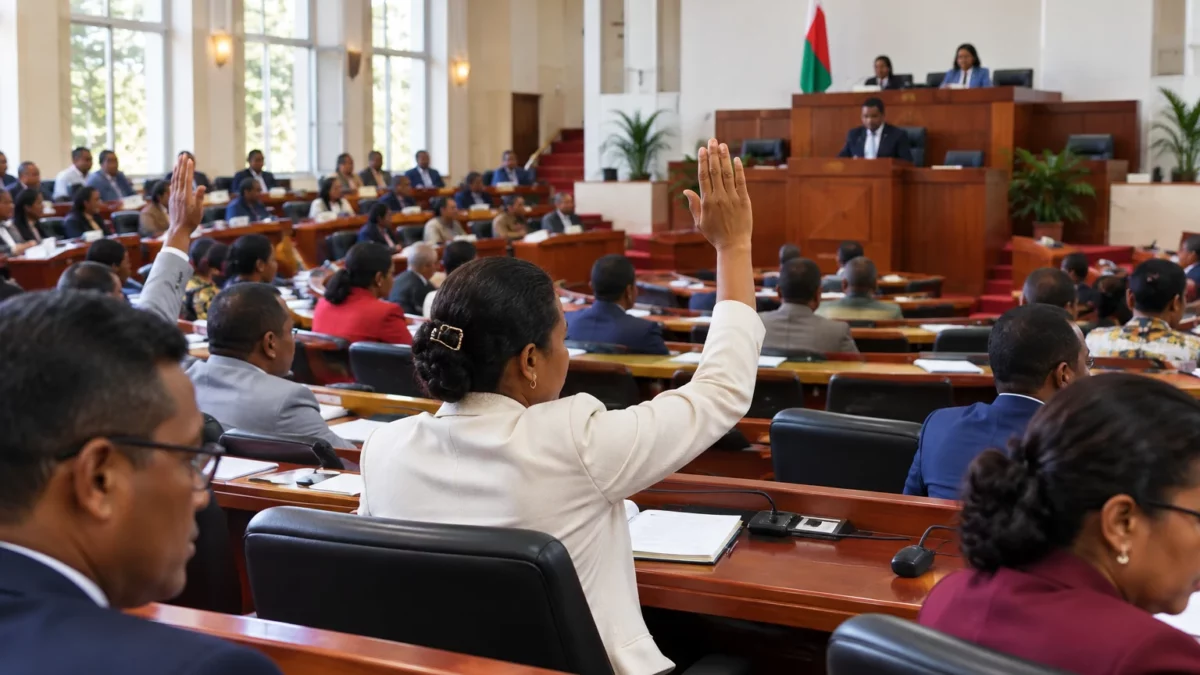
The change at the head of Madagascar’s National Assembly comes as the country’s institutions must define the rules and timetable for ending the transition. Marco Tsaradia’s election gives a strong majority to a member of parliament associated with the movement supporting Michaël Randrianirina’s government. However, on its own, it is not enough to establish the extent of his control over the Chamber.
A rapid reshuffle in Tsimbazaza
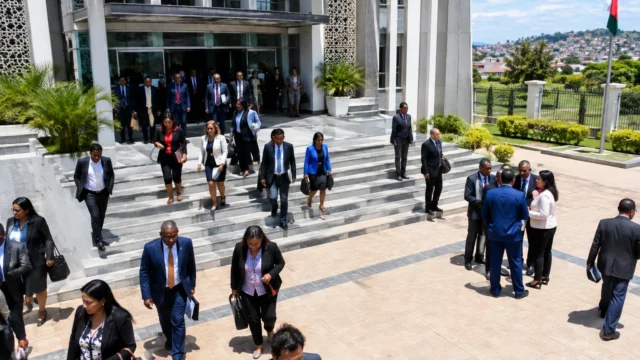
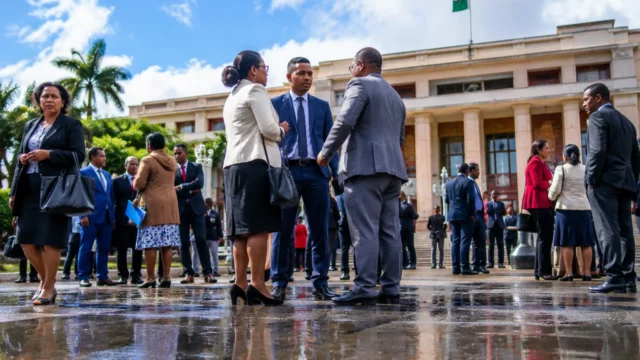
On Wednesday 25 November, in Antananarivo, members of parliament elected Marco Tsaradia president of the National Assembly. The sole candidate, the MP for Ampanihy Andrefana, received 129 votes out of 130 voters, according to consistent reports from Malagasy media and Tunisia’s TAP news agency.
The vote followed the removal of Siteny Randrianasoloniaiko on the night of 23 to 24 November. The National Assembly says the motion received 112 votes in favour and 37 against. Three other members of the permanent bureau — two vice-presidents and a quaestor — also lost their posts.
The resolution cited Article 16 of the rules of procedure, which allows bureau members to be removed « for serious misconduct » by a two-thirds vote of MPs. The allegations levelled against the outgoing president included alleged irregularities in the institution’s functioning and a change to the agenda without a prior collective decision. The Assembly says the members concerned were able to present their defence. These are the grounds put forward in the parliamentary procedure; they do not, in themselves, constitute an independent assessment of the facts.
A president close to the ruling platform
Elected as an independent MP in 2024, Tsaradia joined Vondron’ny Fihavaozan’i Madagasikara (VFM), the platform supporting President of the Refoundation Michaël Randrianirina. The material provided describes him as the movement’s secretary-general. This political closeness gives his election significance beyond the replacement of an office-holder: it shifts the Chamber’s internal balance in favour of MPs aligned with the transitional authorities.
The near-unanimous vote indicates that no other candidate mobilised visible opposition during the ballot. It does not, however, allow the conclusion that all 129 MPs support every aspect of the transition. Individual positions, parliamentary alliances and the new bureau’s practical functioning will be more precise indicators.
The speed of the sequence also merits attention. The institution first changed its agenda to include the motions of removal, then replaced the officials concerned the following day. This process is at the heart of criticism reported by MPs, but the available information does not allow the allegations of political manoeuvring to be independently resolved. The episode is above all a reminder of how much parliamentary rules and their interpretation matter during a period of transition.
Parliament at the centre of the transition’s end
Madagascar is undergoing a transition that began after Andry Rajoelina’s departure in October 2025 and Michaël Randrianirina’s assumption of office. The timetable announced by the Electoral Commission provides for a constitutional referendum in June 2027, followed by a presidential election in October 2027. Parliament is therefore expected to function during a period when institutional rules and the conditions for returning to elected government remain central issues.
The Southern African Development Community (SADC), the regional organisation of which Madagascar is a member, has called for an inclusive national dialogue led by Malagasy people, and reforms to prepare for new elections. It has also asked the transitional authorities for a roadmap and periodic reports. The change at the head of the Assembly will be assessed against these commitments: the Chamber can contribute to debate and oversight of the process, but its credibility also depends on the space given to voices that do not support the government.
The consequences are not limited to leaders. For residents of Antananarivo, parliamentary decisions affect national rules; in remote districts such as Ampanihy Andrefana, representation also depends on MPs’ ability to put forward local needs. The reshuffle of the bureau does not yet show whether these concerns will carry more weight in the Assembly’s work.
A political test watched across the region
For SADC and the African Union, which have called for a return to constitutional order and elections, the challenge will be to monitor actions as well as announcements. The new Assembly president may facilitate coordination between the transitional authorities and their parliamentary majority. He will also have to uphold the Chamber’s procedures and enable pluralist debate if it is to play a credible role in preparing for the end of the transition.
The next milestones are implementation of the roadmap, the stages of national consultation and adherence to the electoral timetable announced for 2027. Tsaradia’s election establishes a new balance of power in Tsimbazaza. How that power is exercised will show whether this reshuffle strengthens parliamentary work or further concentrates political levers around the transitional authorities.