Algeria
 Egypt
 Libya
 Morocco
 Sudan
 Tunisia
 Benin
 Burkina Faso
 Cabo Verde
 Côte d'Ivoire
 Ghana
 Guinea
 Guinea-Bissau
 Liberia
 Mali
 Mauritania
 Niger
 Nigeria
 Senegal
 Sierra Leone
 The Gambia
 Togo
 Cameroon
 Central African Republic
 Chad
 DR Congo
 Equatorial Guinea
 Gabon
 Republic of the Congo
 São Tomé and Príncipe
 Burundi
 Comoros
 Djibouti
 Eritrea
 Ethiopia
 Kenya
 Malawi
 Mauritius
 Mozambique
 Rwanda
 Seychelles
 Somalia
 South Sudan
 Tanzania
 Uganda
 Angola
 Botswana
 Eswatini
 Lesotho
 Namibia
 South Africa
 Zambia
 Zimbabwe
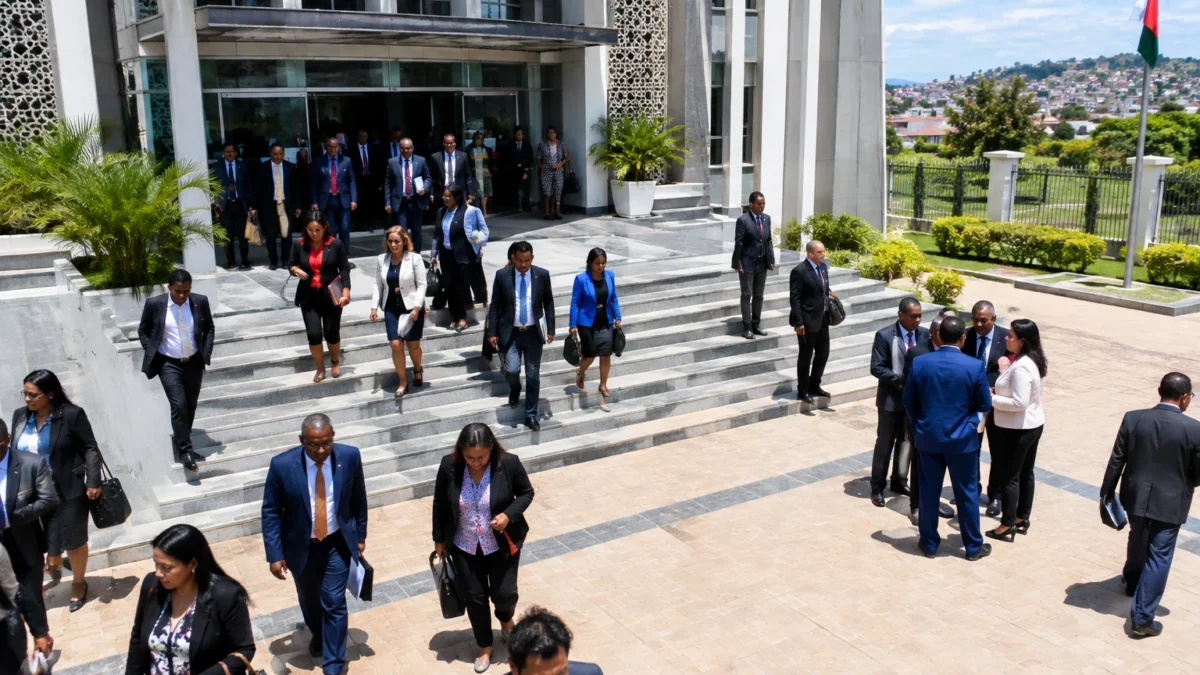
In Madagascar, the institutions born of the 2025 political crisis remain at the centre of a practical question: who controls decisions during the transition, and under what rules? The removal of the speaker of the National Assembly, in the night of 23 to 24 November 2026, has revived this debate as the country prepares for a new constitutional phase.
A transition still under strain
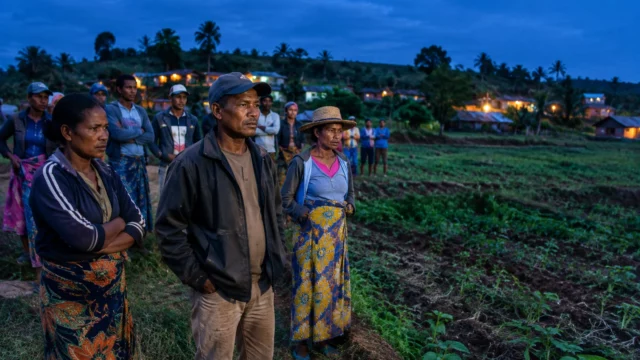
The crisis of September and October 2025 began with youth mobilisations, notably over water and electricity cuts. The protests broadened to cover governance issues and preceded the departure of Andry Rajoelina. Colonel Michaël Randrianirina then took charge of the transition. This sequence placed Madagascar’s institutions under twin pressures: responding to demands voiced in the streets and organising a return to an accepted political order.
The country is a member of the Southern African Development Community (SADC), a regional organisation supporting the transition process. In December 2025, SADC called for inclusive national dialogue and a roadmap to prepare for new elections. The Malagasy authorities submitted their refoundation programme to the organisation on 28 February 2026. According to announcements set out in the programme, the timetable notably provides for a constitutional consultation before the elections. The communiqué of the SADC extraordinary summit thus sets a regional framework for Madagascar’s process.
Four officials removed from the bureau
In Antananarivo, MPs adopted a motion targeting four members of the National Assembly’s permanent bureau. The tally published by the institution records 112 votes in favour and 37 against the removal of Siteny Randrianasoloniaiko. Two vice-presidents and a parliamentary treasurer were also affected by separate votes. Madagascar’s National Assembly published the results of the sitting, while national media also reported on the vote.
The allegations cited in the motion include decisions taken without sufficient consultation and breaches of the institution’s operating rules. MPs also accuse him of making remarks that could, in their view, fuel communal tensions. These are accusations made by the MPs who initiated the procedure; they should not be confused with facts established by a court.
Randrianasoloniaiko, elected speaker of the Assembly in October 2025, said he was surprised by the accusation of serious misconduct, while stating that he accepted it with humility, according to reports published the day after the vote. His removal does not bring parliamentary work to an end: it changes the leadership of the lower house at a time when its political role remains decisive.
The official vote and political rivalries
MP Antoine Rajerison, elected for Arivonimamo and an avowed opponent of the authorities, voted for the motion. He nevertheless believes the officially stated grounds are not enough to explain the ousting. In a statement reported after the vote, he referred to a disagreement between the speaker of the Assembly and the head of state, notably over the next presidential election. This is his interpretation; the published evidence does not independently establish that the dispute was the direct cause of the vote.
The distinction matters. A motion may cite breaches of the rules, while political alliances and rivalries influence its adoption. Malagasy media have also presented tensions at the top as one possible explanation. But without public documents detailing internal discussions or independent confirmation of this hypothesis, it should be treated as a political interpretation, not as a proven fact.
The vote also serves as a reminder that the chamber is not merely an extension of the executive. It can sanction its own leaders and become a forum for negotiating the balance of power during the transition. The stakes therefore go beyond succession to a post: they concern Parliament’s genuine autonomy and MPs’ ability to account for their decisions.
The Constitution, the next test of parliamentary support
The reshaping of the bureau comes as Parliament is due to consider a draft new Constitution. According to the opinion issued by the High Constitutional Court in November 2026, the text must be approved by three-quarters of the members of the National Assembly before being put to a referendum. This high threshold gives parliamentary alliances and the composition of the chamber’s leadership particular weight.
For transition officials, the constitutional process is intended to open a new institutional phase. For MPs, the upcoming vote will also test their ability to influence the rules governing the end of the transition. For citizens, the impact will depend on the text’s content, the transparency of its preparation and the safeguards provided for the popular consultation. The legitimacy of a new Constitution cannot be reduced to its adoption by Parliament.
At regional level, SADC has called for dialogue led by the Malagasy and preparatory steps towards elections. The organisation is thus monitoring how the country balances institutional refoundation with a return to civilian rule through the ballot box. The removal, on its own, does not allow one to conclude that there has been a change of course. It does, however, make more visible the competition to control the institutions as the rules for the next election take shape.