Algeria
 Egypt
 Libya
 Morocco
 Sudan
 Tunisia
 Benin
 Burkina Faso
 Cabo Verde
 Côte d'Ivoire
 Ghana
 Guinea
 Guinea-Bissau
 Liberia
 Mali
 Mauritania
 Niger
 Nigeria
 Senegal
 Sierra Leone
 The Gambia
 Togo
 Cameroon
 Central African Republic
 Chad
 DR Congo
 Equatorial Guinea
 Gabon
 Republic of the Congo
 São Tomé and Príncipe
 Burundi
 Comoros
 Djibouti
 Eritrea
 Ethiopia
 Kenya
 Malawi
 Mauritius
 Mozambique
 Rwanda
 Seychelles
 Somalia
 South Sudan
 Tanzania
 Uganda
 Angola
 Botswana
 Eswatini
 Lesotho
 Namibia
 South Africa
 Zambia
 Zimbabwe
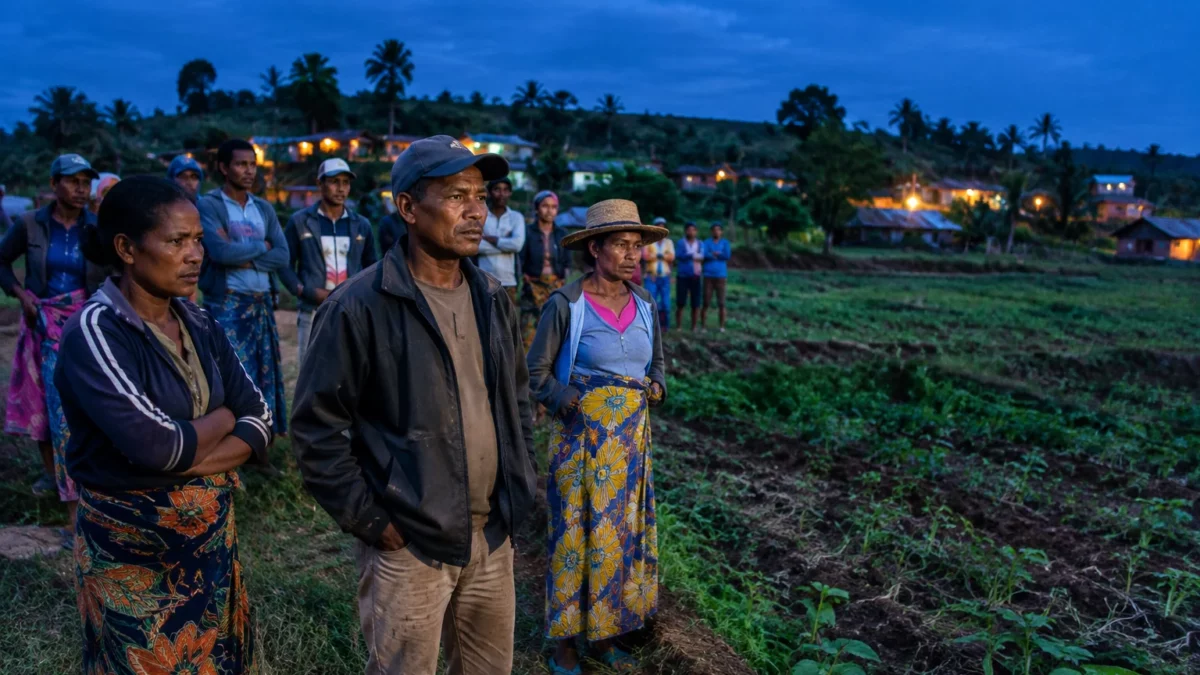
Can a £1.25 million fundraising bring Ampasindava closer to becoming an operating mine, or does it merely fund another step in a long journey? For Madagascar, the stakes go beyond the promise of extracting sought-after minerals: they also concern permits, local benefits and the processing of the resource.
Funding to prepare for the next steps
Harena Rare Earths announced on Wednesday 25 November 2026 that it had raised £1.25 million, or about $1.6 million, by issuing 50 million shares at 2.5 pence each. The proceeds are intended to fund the development of the Ampasindava project in north-western Madagascar. The company expects to complete the fundraising around 2 December.
According to information released by the company, the funds will be used in part for regulatory work, day-to-day expenses and Harena’s contribution to a development programme supported by the US International Development Finance Corporation (DFC), the American development finance agency. Some of the money is also to cover ore-processing work planned for the first quarter of 2027. Harena wants to produce a saleable concentrate to start discussions with prospective buyers.
This announcement does not, by itself, provide the financing for the mine. Harena estimates the initial investment required at $142 million. The project envisages an operating life of 20 years and total production estimated at 71,000 tonnes of rare earth oxides, including dysprosium and terbium. These elements are used, among other things, to manufacture permanent magnets used in electric motors and electronic equipment. These figures remain company projections, not production that is already assured.
Mining permit obtained, environmental approval pending
An administrative milestone was reached before the fundraising: the Ampasindava mining permit was formalised in October 2026, after the mining specifications were signed in August. But the permit does not give immediate approval for work to begin. Harena says it still needs to obtain the environmental permit and complete its environmental and social management plans, which are prerequisites for building the pilot-phase infrastructure.
Madagascar’s framework requires an environmental assessment before mining operations begin. The Mining Code states that a permit holder may not begin mining activities without the required environmental authorisation or permit. The study and its review by the competent authorities are therefore substantive steps, not a formality to be bypassed.
Consultation with local communities will also weigh on what happens next. In Ampasindava, residents and civil society organisations have already voiced opposition to the project and concerns about land, livelihoods and environmental risks. These views do not necessarily represent those of all the communities concerned, but they are a reminder that a national permit does not, on its own, settle questions of acceptability and impact monitoring.
From exported ore to value created locally
DFC support adds a geopolitical dimension to the project. The agency has already committed $4.84 million to its development, according to information released by Harena. Additional funding of up to $67 million has been discussed as part of the development programme, but this should not be confused with money already awarded. The new fundraising is intended to help advance work that could support this mobilisation of capital.
Future offtake contracts — agreements under which buyers commit to purchasing production — are another component of the financing structure. They could provide greater visibility on expected revenues. However, they guarantee neither future rare earth prices, nor profitability, nor delivery of the announced timetable. The production target for 2028 still depends on funding, permits and technical work.
In Antananarivo, the authorities will have to balance public revenue, investment and oversight requirements. In the Ampasindava region, the practical consequences will be measured instead by access to land, water quality, jobs and the benefits reaching local councils. The mine could diversify Madagascar’s extractive activities, but extraction alone does not guarantee lasting jobs or a fair share of value for nearby communities.
A recent report by the United Nations Conference on Trade and Development says Madagascar can increase the value added to its minerals and develop economic activities beyond extraction. For Ampasindava, this raises a practical question: will the project be limited to producing a concentrate for export, or can it create skills, suppliers and processing stages in the country? The information available does not yet make it possible to answer that question.
A Madagascan stake in regional supply chains
Madagascar is a member of the Southern African Development Community (SADC), a regional framework that promotes, among other things, the development of value chains and mineral processing. The issue therefore goes beyond selling raw materials: it also concerns the ability of countries in the region to retain more industrial activity and expertise. SADC identifies mineral beneficiation as a pillar of its industrial strategy.
The next phase will be decisive: completion of the announced fundraising, progress on the study and environmental permits, followed by the results of processing trials and any commercial agreements. The 2028 timetable is Harena’s target, not a guaranteed date. For the people of Madagascar, success will be measured not only by whether production begins, but also by the transparency of decisions, compliance with environmental commitments and the share of value retained in the country.