Algeria
 Egypt
 Libya
 Morocco
 Sudan
 Tunisia
 Benin
 Burkina Faso
 Cabo Verde
 Côte d'Ivoire
 Ghana
 Guinea
 Guinea-Bissau
 Liberia
 Mali
 Mauritania
 Niger
 Nigeria
 Senegal
 Sierra Leone
 The Gambia
 Togo
 Cameroon
 Central African Republic
 Chad
 DR Congo
 Equatorial Guinea
 Gabon
 Republic of the Congo
 São Tomé and Príncipe
 Burundi
 Comoros
 Djibouti
 Eritrea
 Ethiopia
 Kenya
 Malawi
 Mauritius
 Mozambique
 Rwanda
 Seychelles
 Somalia
 South Sudan
 Tanzania
 Uganda
 Angola
 Botswana
 Eswatini
 Lesotho
 Namibia
 South Africa
 Zambia
 Zimbabwe

In Ifotaka, in southern Madagascar, children are already receiving treatment for malnutrition, even though the lean season has not yet begun. The coming rainy season could bring even less water. For farming families, the climate alert is compounding an already entrenched food emergency.
A climate shock hitting vulnerable ground
The lean season refers to the months when stocks from the previous harvest run out before the next one. In the Grand South, this period is particularly difficult for households that depend on their crops, livestock and seasonal income. Irregular rainfall undermines these activities and reduces the harvests available in local markets.
The previous crisis remains fresh in people’s minds. During the “kere”, the Malagasy word for periods of hunger, the 2021-2022 crisis left around 30,000 people around Ifotaka facing extreme food shortages, according to information reported from the area. The humanitarian response subsequently led to the opening of a nutrition treatment centre in the locality.
This vulnerability is not confined to the south. Madagascar, whose capital is Antananarivo, is exposed to very different risks depending on the region: droughts in the south, cyclones and floods elsewhere. The country belongs to the Southern African Development Community (SADC), a regional organisation that co-ordinates, among other things, co-operation on climate risks and cross-border emergencies.
Needs outstrip response capacity
In a report filed in September and published on 6 and 7 October 2026, journalists observed children receiving a meal at a World Food Programme (WFP) centre in Ifotaka. In Amboasary-Atsimo, a hospital had recorded six deaths among children suffering from malnutrition since the start of the year, according to medical authorities cited in the report. These local figures alone do not provide a complete picture of the national situation.
Projections are nevertheless worrying. The WFP estimates that the number of people facing “crisis” levels of food insecurity or worse could reach 3.7 million at the start of the lean season, in October 2026. The Integrated Food Security Phase Classification (IPC), an international tool that classifies the severity of food insecurity and malnutrition, forecasts that nearly 270,000 children under five in the Grand South will be affected by acute malnutrition by April. These figures are estimates and projections, not a definitive count of observed cases.
Regional trends reinforce the warning, while underlining the need to distinguish between reference periods. In June, the FEWS NET analysis network forecast a deterioration from October in the Grand South, as stocks dwindled and the 2026-2027 rainy season was likely to be delayed. It also noted that food security outcomes varied by district and harvest. In other words, the risk is serious, but its effects will not be the same in every community.
Assistance resources matter as much as the weather. In February 2026, the Malagasy government, the United Nations and humanitarian partners reported that 1.5 million people facing crisis conditions were concentrated in the Grand South and Grand South-East. Their appeal cited a funding shortfall of $80.8 million for the response planned through April. The WFP, for its part, announced in June 2025 a South Korean rice contribution intended to support 480,000 people and fund school meals. This targeted aid shows that support is available, but does not guarantee that all current needs will be covered.
Local solutions, but unequal access to water
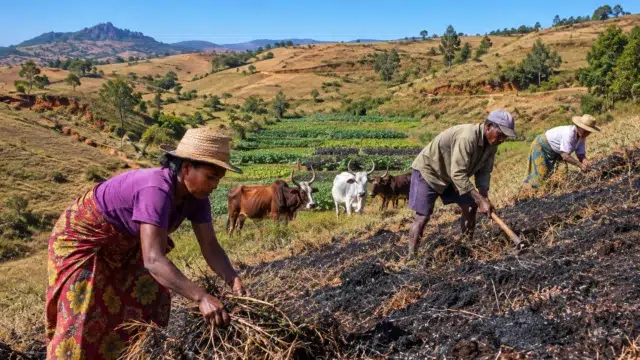
The crisis is also playing out in fields, schools and markets. When harvests shrink, rural families lose both a source of food and part of their income. In towns, rising food costs weigh on households that buy most of what they eat. Children are particularly exposed when school meals or health services lack resources.
Irrigation can reduce dependence on rainfall, but equipment is expensive. In the report, a farmer said he had spent more than two million ariary to drill a well and install a solar pump. This investment helps one farm irrigate its plots; it remains beyond the reach of many small-scale producers. Collective infrastructure, access to water points and pump maintenance therefore determine who can actually adapt their crops.
Economic pressure compounds these obstacles. Fuel is needed to transport food and run pumps. Fertilisers, including urea, add to production costs. If these expenses rise while harvests fall, farming households may lose purchasing power before they even buy food.
Rainfall and funding will be decisive
The coming weeks should clarify how the rainy season is taking shape and how harvests are developing. FEWS NET anticipates an increased risk of rainfall deficits in the south between October 2026 and February 2027, while other parts of the country may experience different conditions. This disparity is a reminder that a national forecast alone cannot describe local realities.
For Madagascar and its SADC partners, the immediate challenge is to link early warnings with the means to act: accessible nutrition care, support for school canteens, market supplies and sustainable access to water. The response will also need to account for differences between districts and households. The figures point to a major risk; the coming rains, harvests and humanitarian funding will determine the extent to which it can be contained.