Algeria
 Egypt
 Libya
 Morocco
 Sudan
 Tunisia
 Benin
 Burkina Faso
 Cabo Verde
 Côte d'Ivoire
 Ghana
 Guinea
 Guinea-Bissau
 Liberia
 Mali
 Mauritania
 Niger
 Nigeria
 Senegal
 Sierra Leone
 The Gambia
 Togo
 Cameroon
 Central African Republic
 Chad
 DR Congo
 Equatorial Guinea
 Gabon
 Republic of the Congo
 São Tomé and Príncipe
 Burundi
 Comoros
 Djibouti
 Eritrea
 Ethiopia
 Kenya
 Malawi
 Mauritius
 Mozambique
 Rwanda
 Seychelles
 Somalia
 South Sudan
 Tanzania
 Uganda
 Angola
 Botswana
 Eswatini
 Lesotho
 Namibia
 South Africa
 Zambia
 Zimbabwe
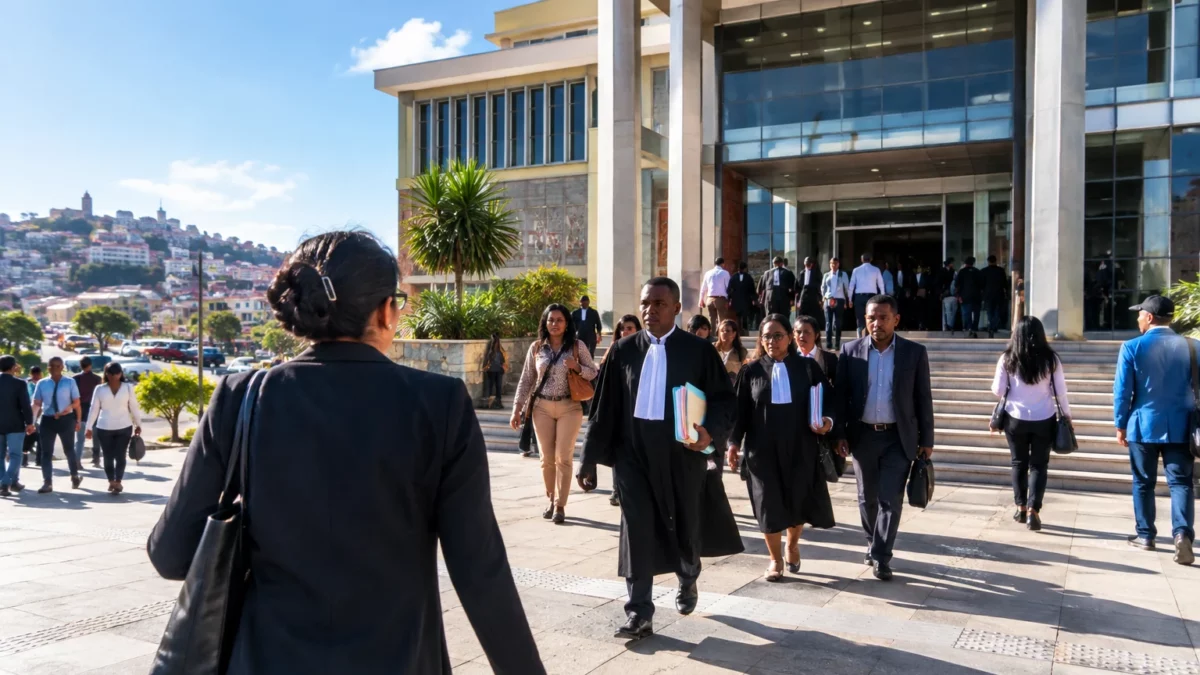
Could a registration certificate issued in Antananarivo engage the responsibility of the Malagasy state far beyond its borders? The investigation into five Boeing 777s found in Iran has taken on a new dimension: anti-corruption prosecutors are also targeting two former leaders of the country.
An aviation case becomes a political one
The five aircraft were provisionally registered in Madagascar in the name of Udaan Aviation. They were not operated on Malagasy territory. After several stops, they reached Iran in July 2025. Madagascar’s Civil Aviation Authority (ACM) said the temporary authorisations had been granted for a technical transfer to Kenya and had expired on 17 April 2025. These details put the issuing of the documents, their use and the aircraft’s actual route at the heart of the case. The Malagasy Civil Aviation Authority’s explanations of the registrations contrast with the fact that the aircraft were subsequently spotted in Iran, a destination subject to US restrictions on aviation.
The political context has changed profoundly since the first revelations. In October 2025, protests led in particular by young people, initially over water and electricity cuts, challenged Andry Rajoelina’s rule. A military unit joined the movement. Rajoelina left Madagascar, and Christian Ntsay also left the country. Colonel Michaël Randrianirina subsequently took over as head of state. The African Union suspended Madagascar from its activities after the change of power, while the Southern African Development Community (SADC), a regional organisation of which the country is a member, undertook a diplomatic initiative. The African Union Peace and Security Council communiqué called for the restoration of constitutional order.
Two legal proceedings, responsibilities to be established
The first case concerns the registration and transfer of the five aircraft. It involves 32 Malagasy, Iranian and Indian defendants, according to information published by several Malagasy media outlets. The trial opened in November 2026. An appeal hearing relating to a procedural decision is scheduled for 27 November. These court proceedings do not constitute a final ruling on the responsibility of those accused.
A separate complaint by the ACM, filed in October 2026, opened a second case. Thirteen additional people are being targeted, including the former president and former prime minister. On 23 November, prosecutors at the Antananarivo Anti-Corruption Centre (PAC) requested arrest warrants for Andry Rajoelina and Christian Ntsay. It is now for the judges to decide whether to issue the warrants. The prosecution’s request is therefore not, in itself, a warrant or a declaration of guilt. 2424.mg’s report on the prosecution’s requests and Newsmada’s report describe the same request and the ongoing proceedings.
The new charges cited by prosecutors are particularly serious: financing terrorism and financing the acquisition of heavy weapons. The prosecution argues that the Iranian company that took possession of the aircraft is linked to a network targeted by these proceedings. This claim will have to be examined through adversarial proceedings in court. At this stage, the available evidence does not allow the alleged connection to be presented as a fact established by a court.
Prosecutors also say that eleven people are in pre-trial detention in this second case. Detention before trial does not prejudge the outcome of the proceedings. The defence, the documents tracing the aircraft authorisations and the transfer routes will be crucial in establishing who made which decisions, and when.
Madagascar’s credibility at stake
The case goes beyond the two former officials. It raises questions about the ACM’s oversight procedures, the vetting of companies seeking aircraft registrations and the movement of aviation documents across jurisdictions. A national register reflects the credibility of the state that maintains it. If Malagasy authorisations were used beyond their stated purpose or validity, the consequences could affect the reputation of the country’s civil aviation and its relations with foreign partners. The Malagasy authorities have, however, denied any institutional complicity in the transfer, saying the beneficiary company had diverted the documents from their declared purpose.
The effects are not evenly distributed. For institutions and businesses, the immediate issue is confidence in administrative controls and international exchanges. For the public, the case comes amid a political transition marked by strong expectations of transparency and public accountability. But the court proceedings alone will not resolve the daily difficulties that fuelled the 2025 protests, including problems accessing water and electricity.
At regional level, Madagascar must contend with demands from its SADC and African Union partners for a return to a recognised institutional order, while conducting a sensitive national investigation. The case is also a reminder that aircraft registers and transfer controls are not purely technical matters: an administrative decision taken in one country can have international ramifications, particularly when sanctions apply to the final destination.
What happens next depends on two timetables: the judges’ decision on the requested warrants and the hearing scheduled for 27 November in the first case. Court actions will clarify whether proceedings against Rajoelina and Ntsay move forward, as well as individual responsibility for the aircraft’s journey. Until then, the allegations remain allegations, and the presumption of innocence applies to all defendants.