Algeria
 Egypt
 Morocco
 Sudan
 Tunisia
 Benin
 Burkina Faso
 Cabo Verde
 Côte d'Ivoire
 Ghana
 Guinea
 Guinea-Bissau
 Liberia
 Mali
 Mauritania
 Niger
 Nigeria
 Senegal
 Sierra Leone
 The Gambia
 Togo
 Cameroon
 Central African Republic
 Chad
 DR Congo
 Equatorial Guinea
 Gabon
 Republic of the Congo
 São Tomé and Príncipe
 Burundi
 Comoros
 Djibouti
 Eritrea
 Ethiopia
 Kenya
 Madagascar
 Malawi
 Mauritius
 Mozambique
 Rwanda
 Seychelles
 Somalia
 South Sudan
 Tanzania
 Uganda
 Angola
 Botswana
 Eswatini
 Lesotho
 Namibia
 South Africa
 Zambia
 Zimbabwe
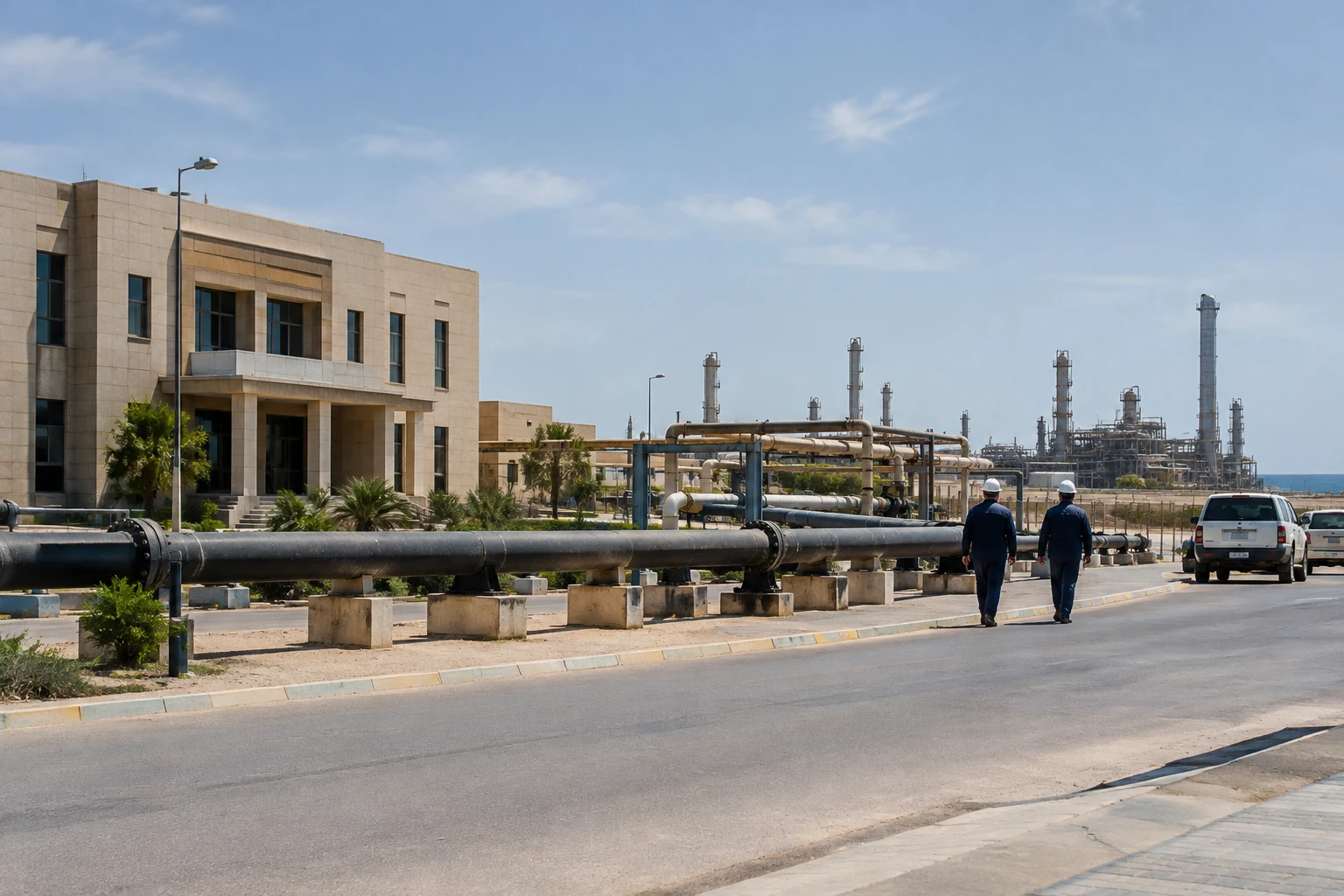
In Zawiya, a few hours of downtime on an oil pipeline can affect a refinery that supplies the Libyan market with fuel. The stakes therefore go beyond the flow through a pipeline: they concern the reliability of supplies and the state’s ability to protect its oil infrastructure.
A strategic pipeline under pressure
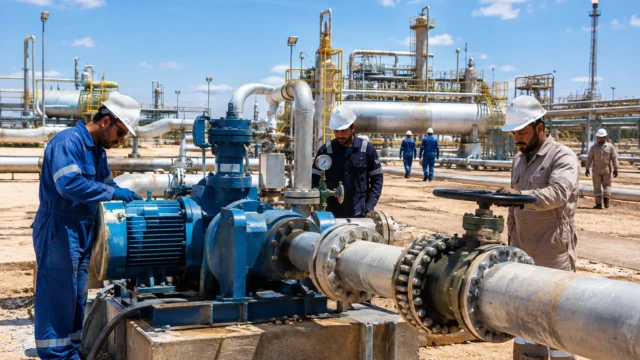
The refinery is in western Libya, on the Mediterranean coast, near the capital, Tripoli. It depends on several routes for crude deliveries. Among them, the 18-inch pipeline linking the Hamada and Tahara fields to Zawiya plays an important role. Closing a valve on this line is enough to halt pumping and disrupt downstream operations.
This vulnerability is part of a national context marked by political and security fragmentation since 2011. The country’s institutions remain divided between rival centres of power. The National Oil Corporation, or NOC, nonetheless remains the state operator responsible for coordinating much of the oil sector’s activity. The sector’s revenues are essential to funding the state. Local blockades can therefore quickly take on national economic and political significance.
At regional level, Libya is a member of the Arab Maghreb Union, which also brings together Algeria, Morocco, Mauritania and Tunisia. But the disruptions in Zawiya first and foremost have a direct impact on Libya’s domestic balance: they threaten supplies to the west of the country and the continuity of production at a strategic site.
Pumping halted after a valve was closed
On 30 October, the NOC said an armed group had closed a valve in the Rayayna area, on the pipeline linking the Hamada and Tahara fields to the refinery. The closure is said to have caused a sharp rise in pressure. Technical teams then halted pumping as a precaution, to protect the pipeline and facilities. The company did not identify the group or announce a timetable for reopening the valve.
According to the NOC, if the blockade continues, around 15,000 barrels of crude a day intended for Zawiya could be lost. This figure represents a potential loss of flow, not a final tally of lost production. The pipeline serves several fields and helps supply the refinery; the halt in pumping interrupts these deliveries until operations resume.
The incident comes eight days after another closure was reported on the same line. On 22 October, the NOC said unauthorised individuals had entered a receiving station operated by Arabian Gulf Oil Company, near Zawiya, and then closed a valve. The repeated incidents show that the risk is not just down to the technical condition of the equipment: its security also depends on the ability to prevent unauthorised intervention.
Consequences beyond the refinery
Zawiya has a nominal processing capacity of 120,000 barrels a day. This is a theoretical capacity and does not guarantee that this volume is actually processed every day. On 19 October, the NOC reported that 2.67 million tonnes of crude had been refined since the start of the year, or 73.32% of the company’s annual target. It cited maintenance shutdowns, operational and security constraints, limited storage and supply difficulties.
Disruptions in September had already illustrated this dependence. A blockade on the route linking the Al-Sharara field to Zawiya had led the NOC to shut down one refining unit to keep the other operating. The units subsequently restarted after the valve was reopened and pumping resumed, according to the Libyan News Agency, LANA. This precedent confirms that a closure can have tangible operational consequences, without automatically meaning that the refinery has shut down completely.
For the authorities, the challenge is to secure the fields, pipelines and coastal facilities alike. For refinery staff, every drop in supply makes it harder to plan unit operations and use available stocks. For residents and businesses in western Libya, any potential effects depend on the duration of the interruption, stocks of finished products and the ability to bring in crude by other routes. So far, no shortage or price rise linked to the 30 October incident has been established.
Oil continuity, a national and regional concern
The NOC has called on the relevant authorities, including the Petroleum Facilities Guard, to secure the pipeline, reopen the valve and allow pumping to resume. The appeal highlights a recurring challenge: the infrastructure is strategic, but its protection depends on security actors and arrangements whose control may be fragmented. The immediate risk is technical; the lasting difficulty is institutional.
The successive blockades on the Hamada-Tahara and Al-Sharara routes are a reminder that production, refining and domestic supply are linked. A local incident can thus affect public revenues, the operation of facilities and fuel availability, although its effects are not the same in every region of the country. The situation in Zawiya also warrants attention from its Maghreb neighbours: the stability of Libyan oil flows matters in a regional market where infrastructure, trade and energy policies intersect.
The next concrete step is confirmation that the valve has been reopened and pumping has resumed. The NOC has announced neither a date nor a timeframe. Until deliveries are restored, the incident is a reminder that refining capacity alone is not enough: it must be backed by continuous supplies and protected facilities.