Algeria
 Egypt
 Morocco
 Sudan
 Tunisia
 Benin
 Burkina Faso
 Cabo Verde
 Côte d'Ivoire
 Ghana
 Guinea
 Guinea-Bissau
 Liberia
 Mali
 Mauritania
 Niger
 Nigeria
 Senegal
 Sierra Leone
 The Gambia
 Togo
 Cameroon
 Central African Republic
 Chad
 DR Congo
 Equatorial Guinea
 Gabon
 Republic of the Congo
 São Tomé and Príncipe
 Burundi
 Comoros
 Djibouti
 Eritrea
 Ethiopia
 Kenya
 Madagascar
 Malawi
 Mauritius
 Mozambique
 Rwanda
 Seychelles
 Somalia
 South Sudan
 Tanzania
 Uganda
 Angola
 Botswana
 Eswatini
 Lesotho
 Namibia
 South Africa
 Zambia
 Zimbabwe
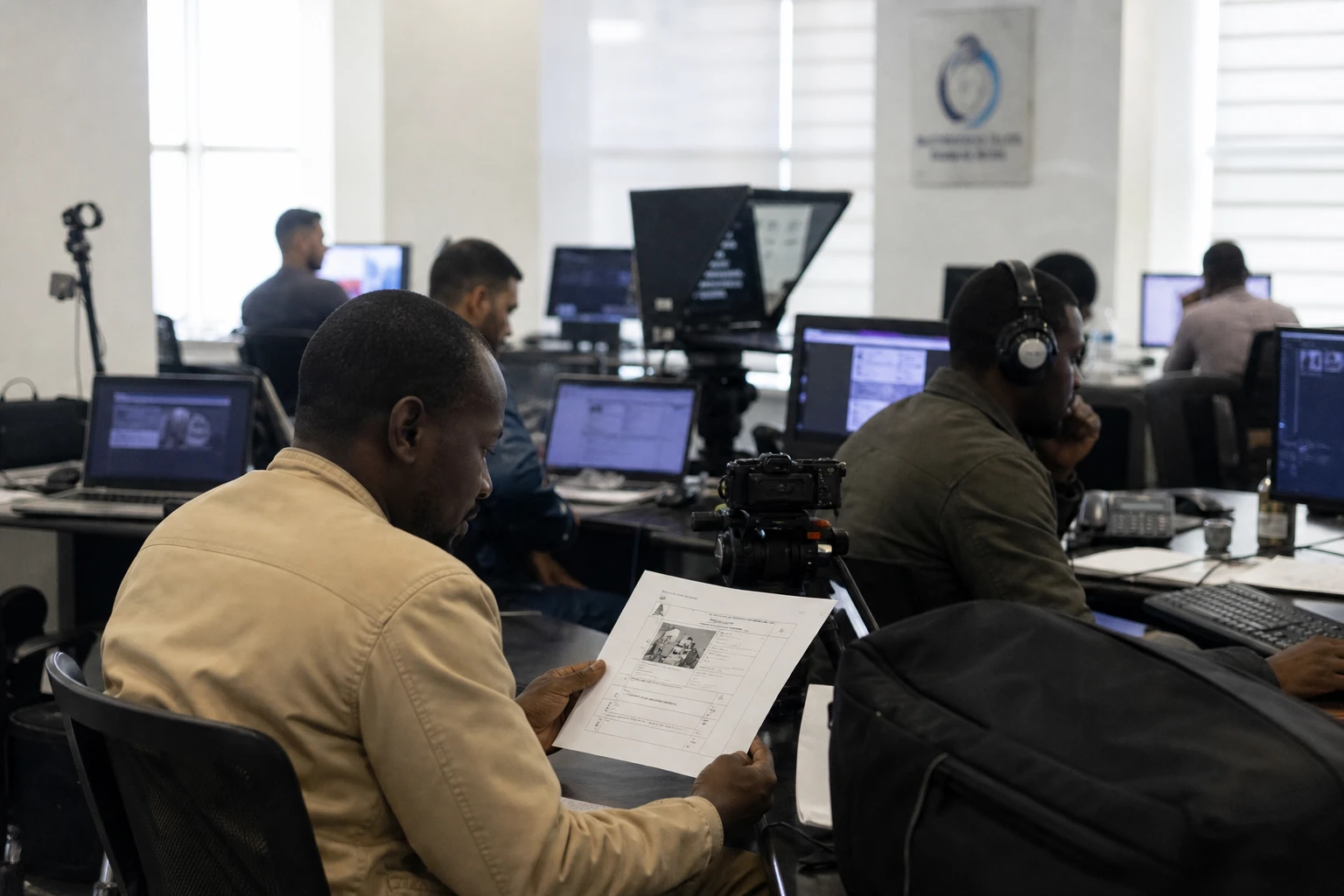
In Tripoli, the promise of elections remains the test
In Libya, signatures and announcements have come one after another for years. But the real question remains the same: who will finally agree to hand power back to the ballot box in a country where two centres of authority are still vying for control of the state? The new agreement initialled in Tripoli on 30 August 2026 puts that question back in the spotlight. It sets a 24-month timeframe for presidential and parliamentary elections. That is a long time. It is also, for many Libyans, an attempt to break out of a deadlock that has become structural.
Libya sits at the intersection of several fault lines: competing institutions, security rivalries, an economy under pressure and persistent foreign interventions. Since the failure of the vote scheduled for December 2021, the country has not brought to a close the transition that began after the fall of Muammar Gaddafi in 2011. The United Nations has repeatedly sought to put a political timetable back at the centre of the process. The African Union, too, has stressed that a lasting settlement depends on an inclusive Libyan roadmap backed by unified institutions.
What the 30 August agreement provides for
The agreement was signed in Tripoli as part of a dialogue format facilitated by the United Nations Support Mission in Libya, known by its acronym UNSMIL. According to the UN mission, the text covers two issues considered crucial: reconstituting the council of the High National Elections Commission and adjusting the legal and constitutional framework for presidential and parliamentary elections. It also provides for the parties to work towards holding elections within a period not exceeding 24 months.
The principle is not new. But this time, the process has been more tightly focused. Talks began in Rome on 29 April, continued in Tunis over several rounds, and culminated in the signing in Tripoli. That detail matters: the Libyan issue is rarely settled in a single capital. It moves back and forth between Libya, neighbouring countries and international mediation forums. The United Nations Security Council, in turn, welcomed the agreement as a step towards free, fair and transparent elections, while supporting the work of Special Representative Hanna Tetteh.
The Tripoli-based government, led by Abdel Hamid Dbeibah, welcomed the text. In the east, the political and military apparatus linked to Field Marshal Khalifa Haftar remains an indispensable actor. The balance of the process therefore rests on an obvious point: no election can hold if the two poles refuse to recognise both the framework for the vote and its outcome. This is precisely what UN mediation is still seeking to secure.
Why this compromise matters to Libyans
On paper, the compromise may seem technical. In reality, it goes to the heart of Libya’s crisis. Without a credible electoral commission, rules accepted by all and a minimum of institutional unity, a vote risks producing another power struggle, followed by another freeze in government. Libyans have already experienced this scenario. In 2021, the vote did not take place. Since then, rival institutions have prolonged a fraught coexistence, with very tangible effects on daily life: fragmented budgets, parallel administrations and opaque public decisions.
The 24-month timeframe is therefore a double-edged sword. It leaves time to revise the rules, resolve disputes and appoint people capable of organising the vote. But it also gives habitual blockers an opening. UNSMIL itself acknowledges that status quo actors could slow down or derail the process. This caution is not rhetorical. It reflects a decade of unfinished transitions, in which every political advance has had to contend with military, tribal, regional and economic power dynamics.
The role of the international community remains ambivalent. Support from the UN and the Security Council provides useful political cover. But success depends first and foremost on Libyans themselves, as the UN mission has repeatedly said in describing the process as «Libyan-led and owned». The African Union advocates the same approach, stressing that the country’s stabilisation must come through united national institutions, not a solution imposed from outside. This convergence between African and UN positions matters, because it avoids reducing Libya to a mere international management issue.
Implications beyond Tripoli
The significance of the issue extends far beyond the Libyan capital. For North Africa, Libya’s stability affects trade flows, migration routes, the movement of arms and diplomatic relations between neighbours. For the continent, the Libyan case remains a political test: can a war between institutions be brought to an end without agreement on power-sharing, security and the rules of the game? The answer is not yet clear. But the new agreement puts a simple idea back at the centre: without a credible timetable, transition becomes a form of permanence.
The next milestone will therefore be less symbolic than decisive. It will be necessary to see whether the signatories confirm the text, whether the High National Elections Commission regains a stable working basis and whether the two rival poles finally accept a common framework. In Libya, elections do not fail only at the ballot box. They often fail much earlier, in negotiations over the rules needed to make them possible. That is where the country’s future is still being decided in Tripoli.