Algeria
 Egypt
 Morocco
 Sudan
 Tunisia
 Benin
 Burkina Faso
 Cabo Verde
 Côte d'Ivoire
 Ghana
 Guinea
 Guinea-Bissau
 Liberia
 Mali
 Mauritania
 Niger
 Nigeria
 Senegal
 Sierra Leone
 The Gambia
 Togo
 Cameroon
 Central African Republic
 Chad
 DR Congo
 Equatorial Guinea
 Gabon
 Republic of the Congo
 São Tomé and Príncipe
 Burundi
 Comoros
 Djibouti
 Eritrea
 Ethiopia
 Kenya
 Madagascar
 Malawi
 Mauritius
 Mozambique
 Rwanda
 Seychelles
 Somalia
 South Sudan
 Tanzania
 Uganda
 Angola
 Botswana
 Eswatini
 Lesotho
 Namibia
 South Africa
 Zambia
 Zimbabwe
A fragile opening in a country that has waited too long
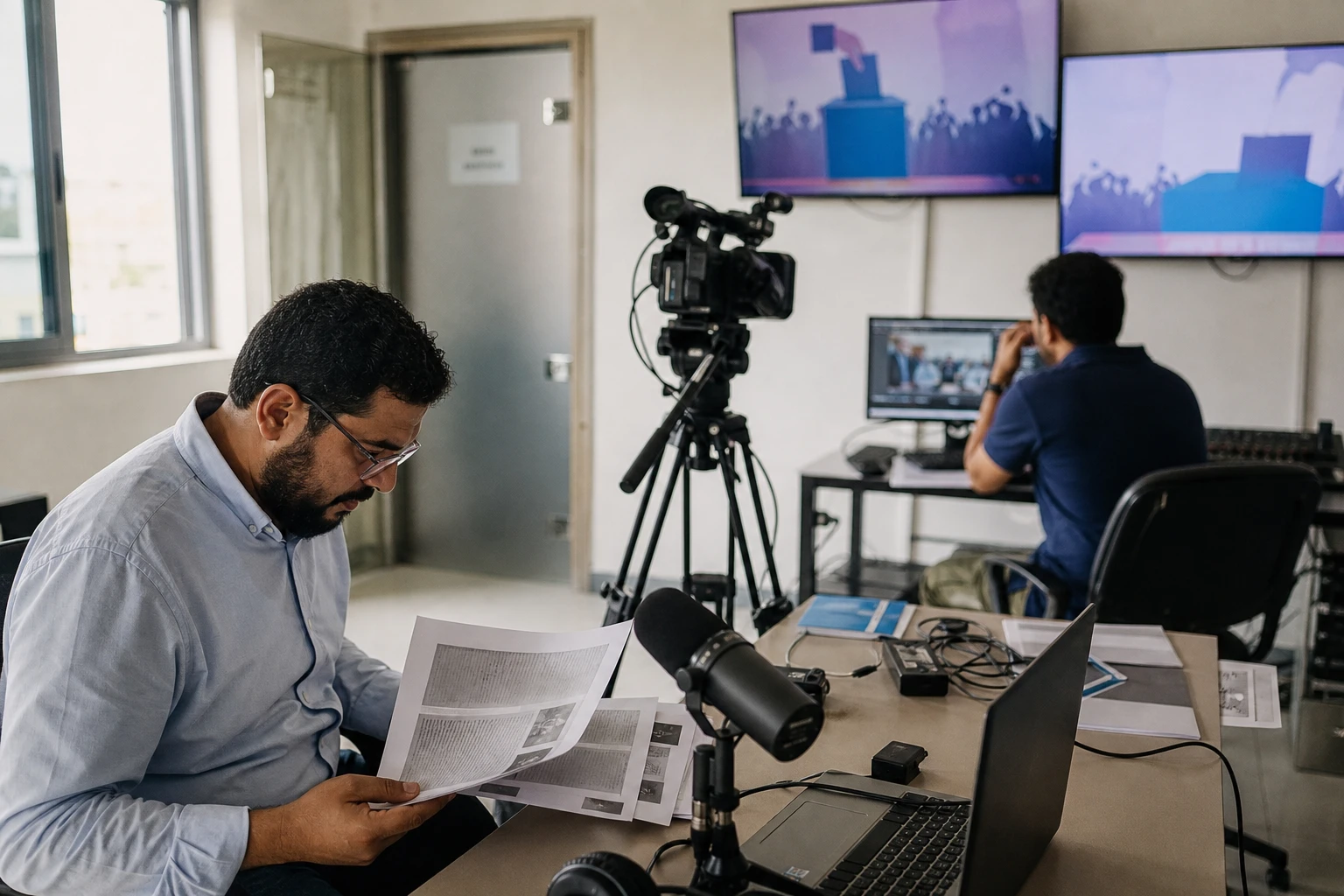
In Libya, every political advance is scrutinised as a test of survival. The country has already seen too many postponed election timetables, too many promises of unity left unfulfilled, and too many rival capitals to believe in a thaw without caution. Yet the agreement signed in Tripoli on 30 August 2026 revives a simple but decisive idea: putting the vote back at the centre of a fragmented institutional system.
This signal comes amid a North African context in which Libya remains a nexus of security, energy and migration flows. Since the fall of Muammar Gaddafi in 2011, the country has never brought to a lasting close the transition opened by the revolution and then fractured by rivalry between centres of power in Tripoli and the East.
What the agreement signed in Tripoli provides for
The text signed at the headquarters of the United Nations Support Mission in Libya provides for two immediate tasks: reshaping the board of commissioners of the High National Elections Commission, and lifting the legal obstacles that had been holding up presidential and parliamentary elections. It also sets a 24-month timeframe for holding the polls under a single executive authority.
The momentum did not emerge from a single meeting. It is the result of months of discussions held in Rome and then Tunis, under UN facilitation, before the final signing in Tripoli on 30 August 2026. The participants represent the country’s main institutional components, including the authorities in the West, military leaders in the East, and consultative bodies such as the High Council of State and the House of Representatives.
Libyan state media confirmed that the compromise also covers adjustments to the electoral framework, with revised rules for the presidential and parliamentary elections, while the participating authorities hailed it as a step towards ending the deadlock. The United Nations Security Council also welcomed the agreement on 9 September 2026 and reaffirmed its support for the UN mission’s roadmap, announced on 21 August 2025.
Why the compromise matters, and to whom
For the institutions, the stakes are clear: without shared rules, there can be no credible election and no peaceful transfer of power. Libya has lived for years with two centres of authority. In the West, the Tripoli government is led by Abdel Hamid Dbeibah. In the East, Khalifa Haftar’s camp relies on distinct political and security structures. The agreement seeks precisely to narrow this gap by restoring a common basis before any vote.
For the population, the stakes are even more tangible. A stable electoral framework is essential to rebuilding institutions capable of paying, regulating and planning. This affects daily life more directly than statements by the elites: public services, the budget, local security, the movement of goods, and trust in administrations that have long been fragmented. The UN mission also emphasises that elections should make institutions more accountable to Libyans and better equipped to manage political and economic tensions.
For both the East and the West, the potential gain is real, but the fault lines remain. Leaders who control military or administrative levers may lose some of their advantage in an open electoral contest. Conversely, cities, urban voters and sections of civil society calling for a clear political horizon stand to gain more from an explicit timetable and a reinstated electoral institution. This also explains the caution among stakeholders: each wants guarantees about the rules of the game before accepting its outcome.
Libya’s future is a Libyan matter, but never an isolated one
The Libya issue extends beyond Tripoli. It involves the United Nations mission, as well as the International Follow-up Committee and several regional capitals. The African Union retains an important political role through its peace and reconciliation mechanisms for North Africa. At the same time, Libya’s stability affects the Sahel, the Mediterranean and migration routes. A better-governed Libya could reduce spillover effects on neighbouring countries; a Libya at an impasse prolongs uncertainty across the entire North African coastline.
At the regional level, this compromise also recalls an often-forgotten truth: in North Africa, transitions are not simply about elections. They depend on the reunification of institutions, control of the armed forces, resolution of constitutional disputes and the ability to enforce the result of the vote. This is precisely what the roadmap pursued by the UN mission since August 2025 seeks to address.
The test of the timetable remains. The agreement opens a window, not a way out. The coming months will show whether the signatories turn a compromise text into a lasting political framework. In a country where transitions have often been suspended before reaching their conclusion, the real question is no longer just the date of the election. It is whether Libya can finally reunify its rules, institutions and national future.