Algeria
 Egypt
 Morocco
 Sudan
 Tunisia
 Benin
 Burkina Faso
 Cabo Verde
 Côte d'Ivoire
 Ghana
 Guinea
 Guinea-Bissau
 Liberia
 Mali
 Mauritania
 Niger
 Nigeria
 Senegal
 Sierra Leone
 The Gambia
 Togo
 Cameroon
 Central African Republic
 Chad
 DR Congo
 Equatorial Guinea
 Gabon
 Republic of the Congo
 São Tomé and Príncipe
 Burundi
 Comoros
 Djibouti
 Eritrea
 Ethiopia
 Kenya
 Madagascar
 Malawi
 Mauritius
 Mozambique
 Rwanda
 Seychelles
 Somalia
 South Sudan
 Tanzania
 Uganda
 Angola
 Botswana
 Eswatini
 Lesotho
 Namibia
 South Africa
 Zambia
 Zimbabwe
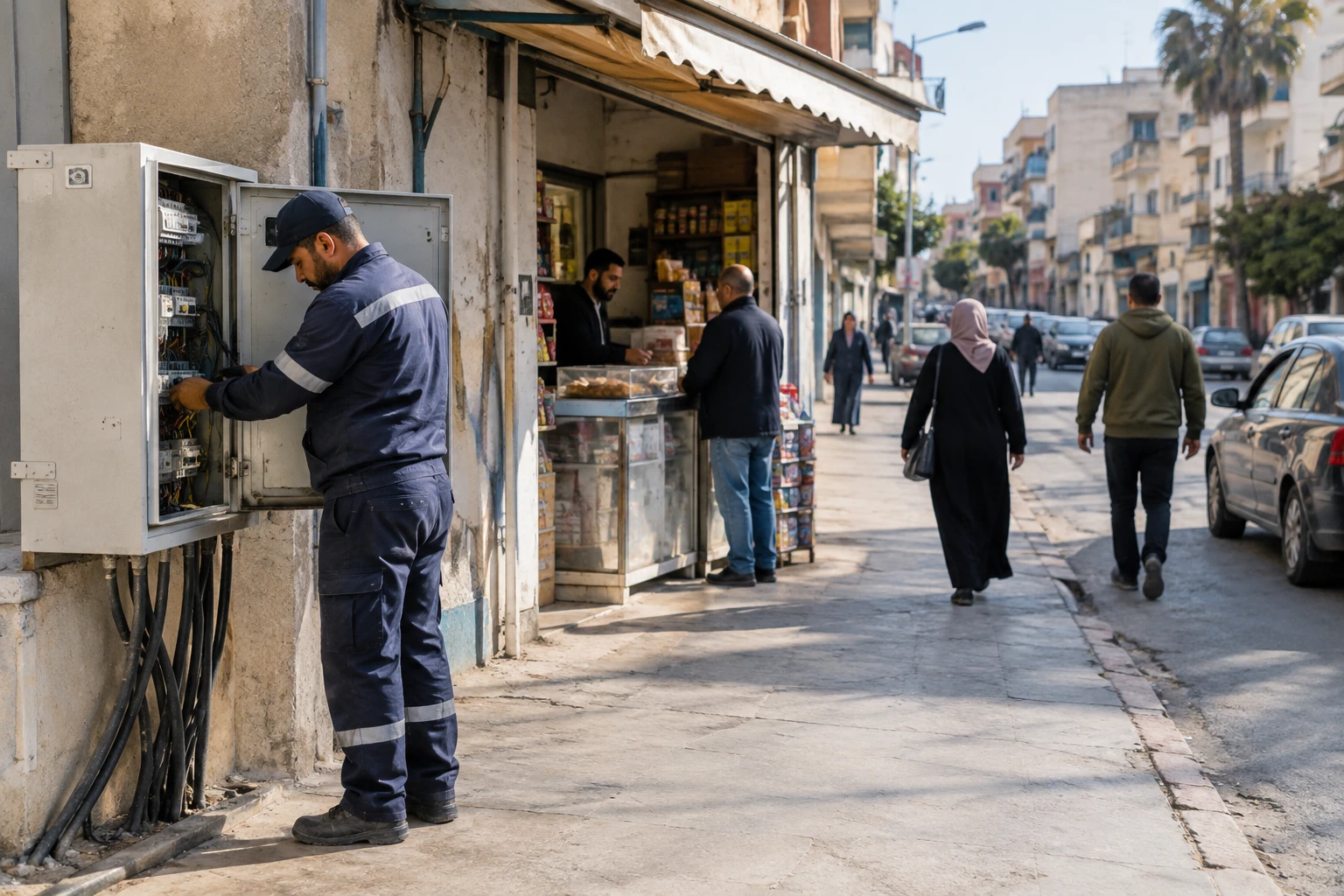
Recovering gas that was previously going up in smoke could strengthen Libya’s electricity supply and reduce emissions. But the offshore Bouri field facility has not yet entered service: its benefits will depend on commissioning and the ability to transport the gas to power stations.
Construction complete, but production has yet to begin
On 19 October 2026, Eni announced the completion of the Bouri Gas Utilization project, carried out with Libya’s National Oil Corporation (NOC) through their joint venture, Mellitah Oil & Gas. Commissioning procedures are under way. The company has not announced a specific date for the start of operations.
The project includes a new gas recovery module and connection equipment. It is intended to capture and process the associated gas from oil production, which has until now been flared at the Bouri field, off Libya’s western coast. Flaring means burning the gas produced alongside oil when it cannot be recovered or transported.
According to Eni, the facility is expected to make about 700 million cubic metres of gas a year available for use and avoid the equivalent of 1.5 million tonnes of CO₂ annually. The NOC, for its part, cites a capacity of about 100 million cubic feet per day. These estimates describe expected volumes, not production already delivered: commissioning remains a step to be completed.
Both announcements converge on the goal of recovering the gas and supplying it to the Libyan market. The NOC says supplying power stations is among the priorities. It has also said that preparations for receiving and processing the gas were being discussed with Mellitah and Eni ahead of commissioning.
Electricity at the heart of the national challenge
For Libyans, the project’s value will first be measured by the reliability of electricity supply. In August, Libyan news agency LANA reported that the authorities had called for greater coordination between the NOC and the state-owned electricity company, particularly over the quantities of gas and fuel supplied to power stations. Gas recovered at Bouri could therefore help meet a tangible domestic need, without by itself guaranteeing a lasting improvement in service.
Having a resource is not enough. It must be processed and transported, and the reliability of power facilities must be ensured. Residents and businesses, who are directly affected by power cuts, will benefit from these volumes only if the entire chain works. Operators and the authorities, meanwhile, will have to strike a balance between domestic supply and sales abroad.
This tension between domestic demand and exports is already apparent in the gas sector. The new gas could also support exports to Europe through Greenstream, the subsea pipeline linking Libya’s western coast to Sicily. Eni presents exports as a possible outlet. The stated priority for the domestic market nevertheless underlines that the actual availability and allocation of gas will matter as much as the project’s technical capacity.
A project in a sector exposed to vulnerabilities
Libya’s energy production takes place in a complex institutional and security environment. The NOC is the state-owned company responsible for the oil and gas sector. Eni has operated in the country since 1959 and works with the NOC, including through Mellitah Oil & Gas. Eni says it produced about 162,000 barrels of oil equivalent per day in Libya in 2025, on an equity basis. This figure covers all its activities in Libya, not just the Bouri field.
Infrastructure is also vulnerable to political tensions and operational disruptions. In July 2026, protests over power cuts led to the temporary closure of gas pipelines at the Mellitah complex, according to reports by the Associated Press. The episode is a reminder that new equipment does not remove the risks related to access to facilities, their maintenance or the continuity of flows.
The challenge of flaring also extends beyond Bouri. The World Bank’s Global Gas Flaring Tracker estimates that the volume of gas flared in Libya rose by 15% in 2025, alongside an increase in oil production. The project therefore comes amid a context in which gas recovery requires more than isolated facilities: networks, processing capacity and rules to reduce flaring sustainably are also needed.
A Maghreb and African dimension to watch
Libya is a member of the Arab Maghreb Union, which brings together the countries of the Maghreb, as well as the African Union. For the region, the Greenstream link illustrates the importance of energy infrastructure connecting the two shores of the Mediterranean. For the continent, the issue raises a broader question: how can a resource produced locally be turned into electricity and revenue while limiting waste and emissions?
The NOC has set a target of eliminating routine flaring by 2030, according to its communications on reduction projects. Bouri could contribute to that goal, but will not be enough to achieve it nationwide. The next measure will be whether the facility enters service, followed by verification of the volumes processed and their destination. It will also be necessary to see whether the additional gas improves supply to power stations before supporting exports.
The project thus turns a loss into a potential resource, without resolving Libya’s energy difficulties all at once. Its outcome will depend on technical operations, infrastructure stability and distribution choices. Only under these conditions will the project produce visible effects, from Tripoli to the regions served by the electricity grid.
Further reading: Eni announcement on the Bouri gas project ; NOC information on commissioning ; LANA agency report on power station supplies ; World Bank data on gas flaring ; overview of the Arab Maghreb Union.