
 Algeria
 Egypt
 Libya
 Morocco
 Sudan
 Tunisia
 Benin
 Burkina Faso
 Cabo Verde
 Côte d'Ivoire
 Ghana
 Guinea
 Guinea-Bissau
 Liberia
 Mali
 Mauritania
 Niger
 Nigeria
 Senegal
 Sierra Leone
 The Gambia
 Togo
 Cameroon
 Central African Republic
 Chad
 Equatorial Guinea
 Gabon
 Republic of the Congo
 São Tomé and Príncipe
 Burundi
 Comoros
 Djibouti
 Eritrea
 Ethiopia
 Kenya
 Madagascar
 Malawi
 Mauritius
 Mozambique
 Rwanda
 Seychelles
 Somalia
 South Sudan
 Tanzania
 Uganda
 Angola
 Botswana
 Eswatini
 Lesotho
 Namibia
 South Africa
 Zambia
 Zimbabwe
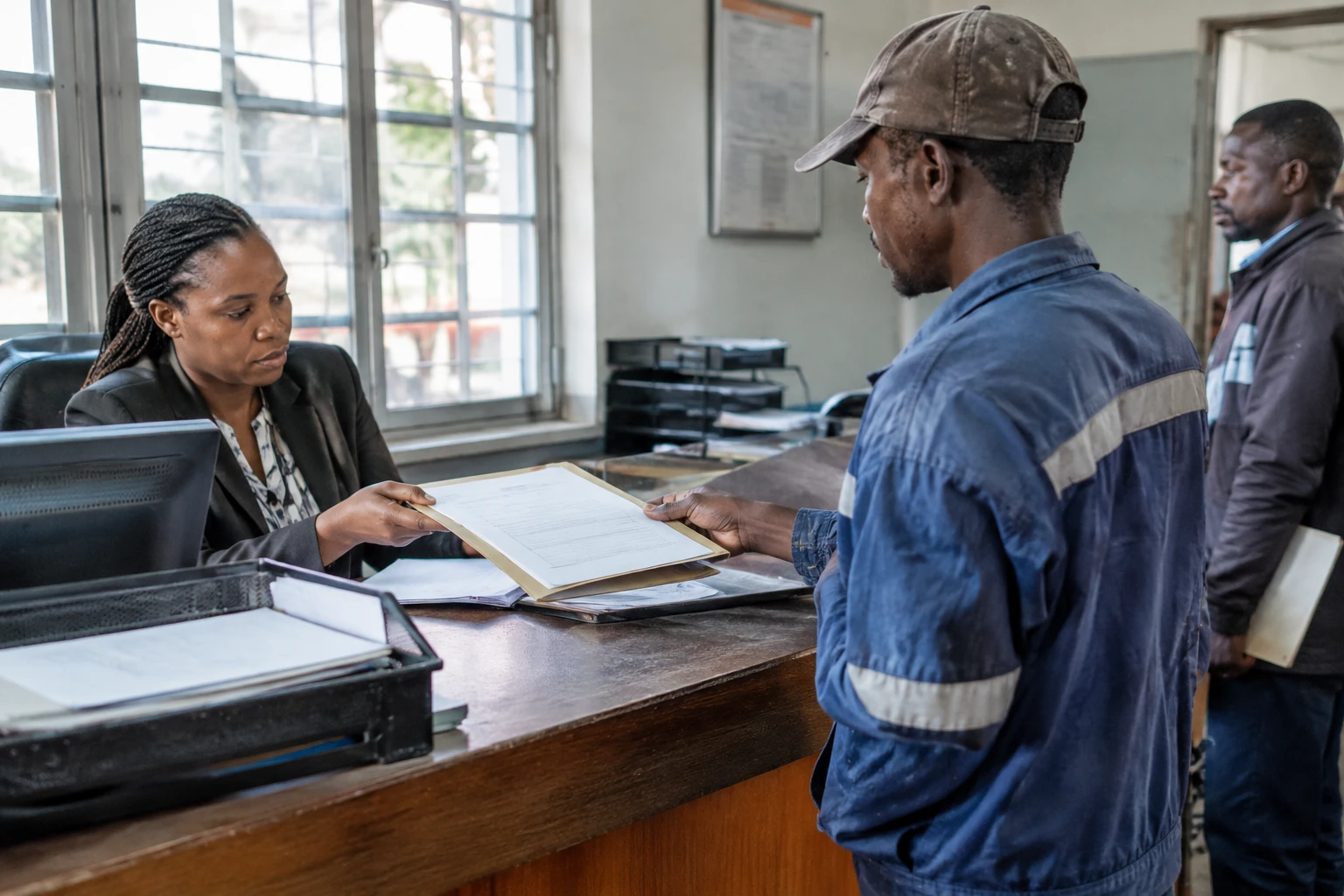
In Kolwezi, being able to sell the ore matters as much as being able to extract it. When buying depots and processing plants close — or appear to close — artisanal miners’ incomes can stop immediately. This dependence was at the heart of tensions in the capital of Lualaba in October.
A control operation at the heart of the tensions
On 19 and 20 October 2026, protests disrupted several neighbourhoods in Kolwezi. Demonstrators objected to an inspection operation at mineral buying depots and processing plants. These facilities are essential intermediaries: they buy ore extracted by artisanal miners and prepare it for sale.
The anger also reflected a concrete fear: that inspections of the facilities would block the flow of production. Barricades and burning tyres obstructed traffic. Shops and schools were affected. Radio Okapi also reported looting, vandalised vehicles and the burning of a police station. Available sources do not all confirm the same details about the incidents.
On Wednesday 21 October, calm gradually returned to several areas. Lualaba Governor Fifi Masuka said that no processing plants had been closed. She urged artisanal miners to comply with the rules and sell their production through recognised cooperatives. The inter-agency commission, which came from Kinshasa, describes its mission as an operation to clean up the sector.
The human toll should be treated with caution. The New Congolese Civil Society reported one death, but the authorities had not confirmed this figure in the information cross-checked. The figures of four injured and 32 arrests, cited in local reports, could not be confirmed by a second independent source. They therefore cannot be presented as established facts.
Formalising the sector without cutting off incomes
The commission sent to Lualaba brings together several state agencies. According to reports, it is tasked in particular with verifying the legality of activities and strengthening traceability of artisanal copper and cobalt. Around 100 Chinese employees are said to have been repatriated because of irregular immigration status, but this figure has not been confirmed by a second independent source.
The province wants to direct transactions through the Musompo trading centre. Opened in 2023, the centre is intended to bring together cooperatives and traders, check ore quality and document its origin. It thus addresses an issue of economic sovereignty: enabling Congolese institutions to monitor volumes and transactions, rather than allowing sales to take place through channels that are difficult to control.
But the system faces a problem of trust. A report by the Extractive Industries Transparency Initiative (EITI) on artisanal copper and cobalt mining notes that Musompo remains little used by operators. The document cites concerns about prices and buyers’ practices, as well as mistrust of the provincial authorities. In other words, setting up a centre is not enough: artisanal miners also need to find sales conditions they consider fair.
For operators, the stakes are immediate. If access to buyers narrows, their daily incomes can fall even when mining sites remain accessible. Workers at processing plants and small businesses in Kolwezi also depend on this activity. Conversely, credible inspections can curb opaque transactions and help establish the origin of minerals. The challenge is to advance both aims without shifting the cost of reform onto artisanal workers alone.
Available sites, another point of friction
The grievances reported in Kolwezi are not limited to buying depots. Artisanal miners also denounce restrictions on access to certain sites, including Kamilombe, and are calling for artisanal mining zones to be established. An artisanal mining zone (ZEA) is an area officially reserved for artisanal miners. The governor and a commission member said a solution was planned for miners expected to leave a Gécamines site, citing ZEA 371. The practical implementation of this alternative remains crucial.
This issue concerns the organisation of the mining sector in the DRC itself. Industrial deposits, concessions and artisanal activities coexist, sometimes in contested areas. When boundaries and replacement options remain unclear, a measure presented as regulatory can be experienced by artisanal miners as the loss of access to work. This does not remove legal obligations or the risks associated with mining; it explains why consultation and workable alternatives matter as much as inspections.
A Congolese issue with international repercussions
Lualaba is at the heart of the DRC’s copper and cobalt production. These minerals are in demand for industrial uses, particularly in batteries and equipment linked to the energy transition. How they are extracted, bought and traced is therefore of interest to the DRC’s authorities, local communities and companies sourcing them on global markets.
For Kinshasa, the operation must demonstrate that the state can enforce the rules in a strategic sector. For the people of Kolwezi, its outcome will also be measured by the resumption of activity, security in neighbourhoods and the ability to sell ore at a price considered fair. What happens next will depend less on announcements than on the authorities’ ability to maintain access to buyers, make Musompo credible and clarify access to artisanal mining areas.
The issue extends beyond provincial borders: it concerns the DRC’s place in global supply chains and the local distribution of mining revenues. In Kolwezi, stability will depend on balancing public oversight, economic activity and rights of access to work. For now, the lull on 21 October marks a pause, not a resolution of the disagreements.
For established facts about the protests and the authorities’ position, see Radio Okapi’s report on the return to calm in Kolwezi and Deutsche Welle’s report on inspections contested by miners. Difficulties accessing the trading centre are documented in the EITI report on artisanal copper and cobalt mining in the DRC.



