
 Algeria
 Egypt
 Libya
 Morocco
 Sudan
 Tunisia
 Benin
 Burkina Faso
 Cabo Verde
 Côte d'Ivoire
 Ghana
 Guinea
 Guinea-Bissau
 Liberia
 Mali
 Mauritania
 Niger
 Nigeria
 Senegal
 Sierra Leone
 The Gambia
 Togo
 Cameroon
 Central African Republic
 Chad
 Equatorial Guinea
 Gabon
 Republic of the Congo
 São Tomé and Príncipe
 Burundi
 Comoros
 Djibouti
 Eritrea
 Ethiopia
 Kenya
 Madagascar
 Malawi
 Mauritius
 Mozambique
 Rwanda
 Seychelles
 Somalia
 South Sudan
 Tanzania
 Uganda
 Angola
 Botswana
 Eswatini
 Lesotho
 Namibia
 South Africa
 Zambia
 Zimbabwe
A financial market can change more than one market
In the Democratic Republic of the Congo, the planned Kinshasa Stock Exchange will be more than a new screen in a trading room. It will show whether the country can finally channel some of its savings into local businesses, rather than relying almost exclusively on bank credit, public advances and external financing. In a country where economic activity is still heavily driven by commodities and financing needs are high, the stakes go beyond finance alone: they concern economic sovereignty and the ability to create long-term capital.
The question is all the more sensitive because the DRC is not starting from scratch, but from a still embryonic financial market. The Central Bank of Congo already organises Treasury bill and bond issues, and the Finance Ministry has for several months been pursuing a strategy to structure the securities market. The future exchange will therefore have to complement an existing system, not replace it.
A legal framework in place, an architecture still to build
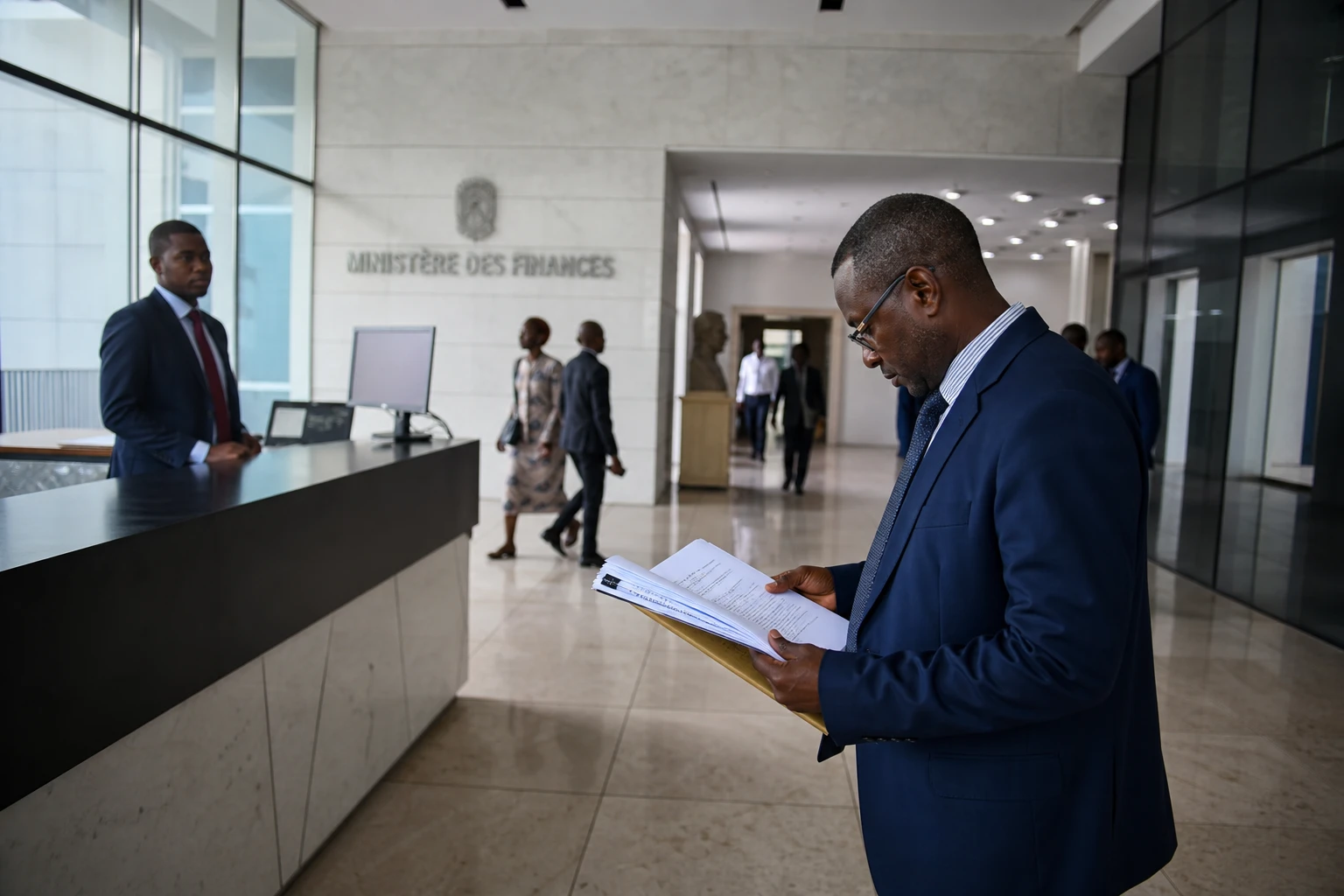
The starting point is legal. The Congolese government advanced a draft law on stock markets in 2026, and the Finance Ministry subsequently announced in its official communications a partnership with the International Finance Corporation, the World Bank Group’s private-sector arm, to support the development of the Kinshasa Stock Exchange. The ministry made this technical support public on 19 June 2026, and it also appears in the institutional record of this reform.
The architecture, however, remains to be built. The text cited by the authorities provides for a Financial Markets Regulatory Authority, tasked with supervising the market, setting its general rules and issuing licences. The central securities depository, settlement banks, digital trading infrastructure and links with the national payment system supervised by the Central Bank of Congo will also have to be defined. In other words, the law opens the door, but the room is not yet equipped.
The timetable set out by the Finance Ministry envisages the first listings between June and December 2027. This deadline remains contingent on intermediate steps: setting up the operationalisation committee, drafting implementing regulations, licensing the exchange and finalising the regulatory framework. The sequence is standard for a market reform, but it requires administrative discipline, political continuity and close co-ordination between the Finance Ministry, the central bank and the private sector.
Why the government is pushing this reform now
The economic rationale is clear. Kinshasa is seeking to broaden sources of funding for businesses and the state. Relying solely on the banking system in an economy so vast and unevenly banked limits the scale of projects that can be financed and often raises the cost of capital. A securities exchange could, in theory, enable the issuance of shares and longer-term bonds. That is precisely the stated aim of the project supported by the IFC: to strengthen the legal, institutional and technical reforms needed for a functioning capital market in the DRC.
The government also wants to attract mining companies to list. This is no minor choice in a country where minerals play a central role in exports, revenues and international appeal. If a listing goes ahead, it could open up some companies’ share capital further to Congolese investors. It would also offer a more transparent financing framework. In return, however, companies would have to disclose more information, meet governance standards and accept more rigorous scrutiny.
The issue also affects taxation. The authorities have referred to incentives for listed companies, including a reduction in the rate of tax on profits. This shows that the future exchange is not conceived as a mere prestige project. It is designed as an instrument of economic engineering, intended to make the market attractive enough to draw its first issuers and investors.
What this could mean for Congolese people and the region
For Congolese people, the practical issue is access to capital. If the Kinshasa Stock Exchange works, local businesses could raise funds without relying solely on commercial banks. Savers, pension funds, insurance companies and, in time, regional investors could diversify their investments. But this scenario depends on a condition that is often underestimated: trust. Without transparency, good governance and regulatory stability, an exchange is more a name than a market.
The contrast between Kinshasa and the rest of the country will also matter. A stock market concentrated in the capital, with already well-established players, risks benefiting large companies and financial intermediaries first. SMEs, businesses in the provinces and the informal economy will feel the effects only indirectly, through subcontracting, employment or the spread of higher standards. This is common in emerging financial markets: they often start at the top before reaching the productive economy.
Regionally, the DRC is joining a broader movement in Central and Southern Africa to structure capital markets, mobilise domestic savings and support investment. The country is a member of SADC and the EAC, two blocs where the movement of capital, businesses and banks is advancing in stages. A credible Congolese exchange could, in time, facilitate links with regional markets, attract African investors and reduce Kinshasa’s financial isolation. The stakes are therefore not only national; they are continental too.
The key date to watch now is not only that of the first listings announced for between June and December 2027. Particular attention should be paid to the publication of implementing regulations, the appointment of the regulator, the designation of the central securities depository and the government’s ability to persuade the first issuers. Only then can the Kinshasa Stock Exchange move from reform rhetoric to a genuinely operational market.



