
 Algeria
 Egypt
 Libya
 Morocco
 Sudan
 Tunisia
 Benin
 Burkina Faso
 Cabo Verde
 Côte d'Ivoire
 Ghana
 Guinea
 Guinea-Bissau
 Liberia
 Mali
 Mauritania
 Niger
 Nigeria
 Senegal
 Sierra Leone
 The Gambia
 Togo
 Cameroon
 Central African Republic
 Chad
 Equatorial Guinea
 Gabon
 Republic of the Congo
 São Tomé and Príncipe
 Burundi
 Comoros
 Djibouti
 Eritrea
 Ethiopia
 Kenya
 Madagascar
 Malawi
 Mauritius
 Mozambique
 Rwanda
 Seychelles
 Somalia
 South Sudan
 Tanzania
 Uganda
 Angola
 Botswana
 Eswatini
 Lesotho
 Namibia
 South Africa
 Zambia
 Zimbabwe
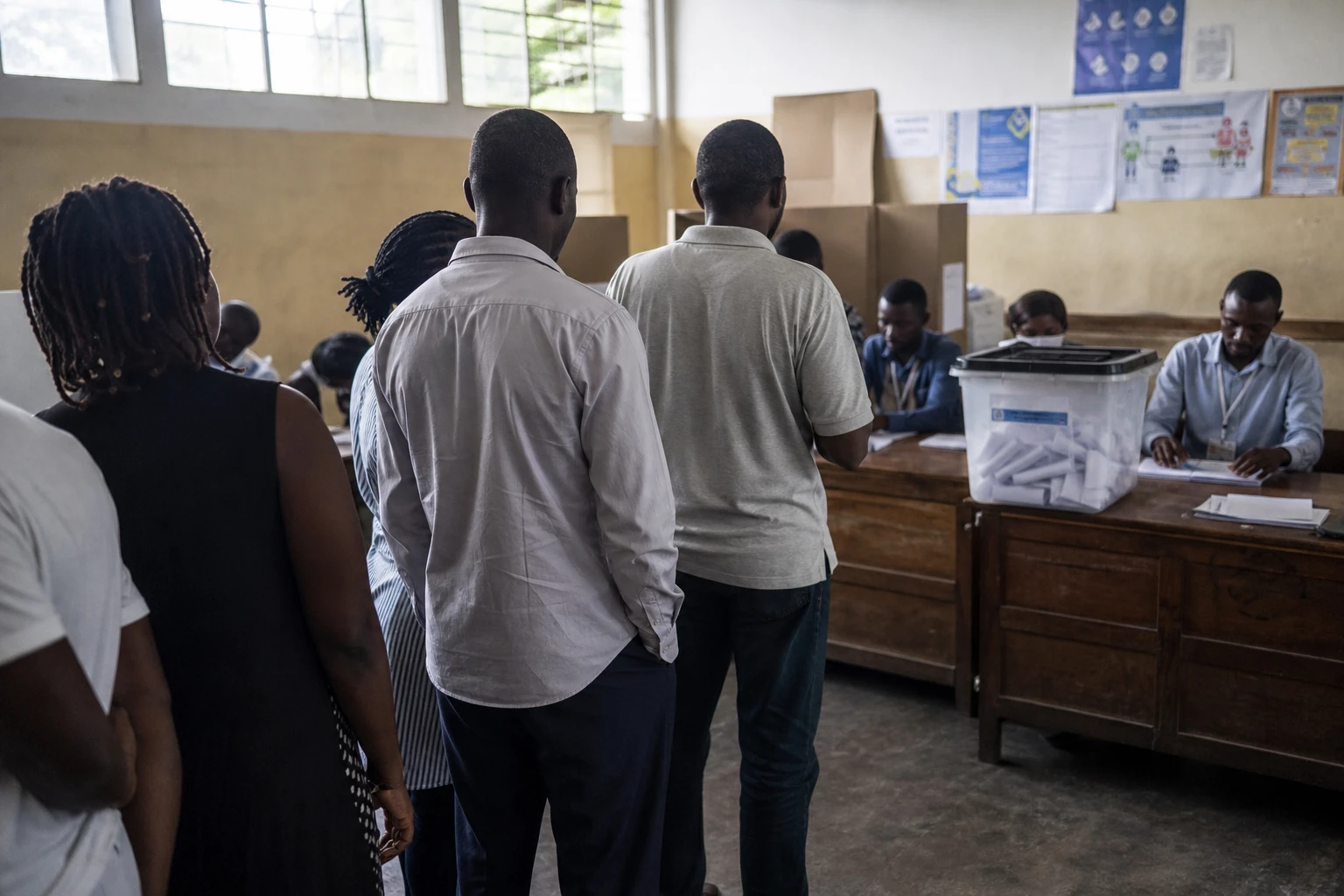
In Kinshasa, the battle over the Constitution has moved from the chamber to the streets
In Kinshasa, a foundational text is no longer debated only in the corridors of Parliament. It is also measured by the ability of political camps to occupy public space, hold it or block it. On Tuesday 15 September 2026, the Congolese capital saw two opposing forces come together: an opposition determined to challenge any move towards constitutional reform, and a government intent on controlling the pace, location and framework of mobilisation.
In this kind of episode, the legal debate matters as much as the political balance of power. In the Democratic Republic of the Congo, the issue goes to the heart of the institutional pact, as the country remains marked by serious security tensions, particularly in the east, and persistent mistrust over the balance between the majority, the opposition and the streets. The Congolese capital, Kinshasa, thus remains the centre of gravity for national decision-making.
What happened on 15 September
The Article 64 coalition, which brings together several opposition figures, had called for a peaceful march against any plan to change the Constitution. The original meeting point was near the Palais du Peuple, the seat of Parliament. The route was, however, rearranged the day before following discussions with the authorities in Kinshasa province, with the final destination moved outside the immediate vicinity of Parliament.
On 15 September, the mobilisation took place amid a heavy police presence. Gatherings were observed at several locations in Kinshasa, including the Limete interchange. Clashes later broke out near 11th Street, in the same area, between opposition supporters and activists close to the government, according to reports from the capital. No consolidated official toll had been issued immediately.
Arrests were also reported in other cities, while demonstrations were dispersed elsewhere. In Uvira, in the east of the country, local sources reported that four people had been arrested during a gathering linked to the same mobilisation. Here too, figures remain subject to official confirmation.
Why the Constitution is such a flashpoint
The conflict is political before it is technical. The opposition fears that a constitutional review process could give President Félix Tshisekedi a second institutional lease of life, or even pave the way to circumventing term limits. It therefore presents its mobilisation as a defence of the constitutional order and the principle of alternation in power.
The government, for its part, has signalled that no sensitive site could be left without oversight, particularly on the eve of the parliamentary session. In this context, moving the sit-in away from the Palais du Peuple is not a mere logistical detail. It shows that in Kinshasa, control of locations remains a political variable in its own right. Parliament, the city hall and the police thus become actors in the episode, not merely its backdrop.
For residents of the capital, the stakes are tangible. A political march affects traffic, security, access to work and the functioning of strategic neighbourhoods. For traders, transport operators and the informal economy, tensions often result in immediate losses, even when a movement is intended to be peaceful. In Kinshasa, public life therefore remains directly exposed to the shocks of partisan clashes.
A Congolese episode, but a regional signal
This mobilisation extends beyond the Congolese capital. In Central Africa, the question of term limits, constitutional review and the management of political transitions continues to shape relations between governments and oppositions. The DRC, a member of the Southern African Development Community, is following this trajectory in a regional environment where institutional stability remains a major concern.
The timing is all the more sensitive because Congolese political leaders are debating amid an atmosphere darkened by the war in the east, security tensions and distrust of institutions. In a country the size of a subcontinent, any constitutional dispute in Kinshasa quickly reverberates across the provinces, where acceptance or rejection of the central government often takes a more direct form.
At continental level, the day is a reminder of a reality familiar to several African capitals: when the rules of the institutional game themselves become a point of confrontation, the streets take on renewed importance. The next steps will therefore be closely watched, particularly the tone of official responses, any possible opening of political dialogue and how Parliament does — or does not — take up the constitutional issue. In the Congolese capital, the episode has probably only just begun.



