Algeria
 Egypt
 Libya
 Morocco
 Sudan
 Tunisia
 Benin
 Burkina Faso
 Cabo Verde
 Côte d'Ivoire
 Ghana
 Guinea
 Guinea-Bissau
 Liberia
 Mali
 Mauritania
 Niger
 Nigeria
 Senegal
 Sierra Leone
 The Gambia
 Togo
 Cameroon
 Central African Republic
 Chad
 Equatorial Guinea
 Gabon
 Republic of the Congo
 São Tomé and Príncipe
 Burundi
 Comoros
 Djibouti
 Eritrea
 Ethiopia
 Kenya
 Madagascar
 Malawi
 Mauritius
 Mozambique
 Rwanda
 Seychelles
 Somalia
 South Sudan
 Tanzania
 Uganda
 Angola
 Botswana
 Eswatini
 Lesotho
 Namibia
 South Africa
 Zambia
 Zimbabwe
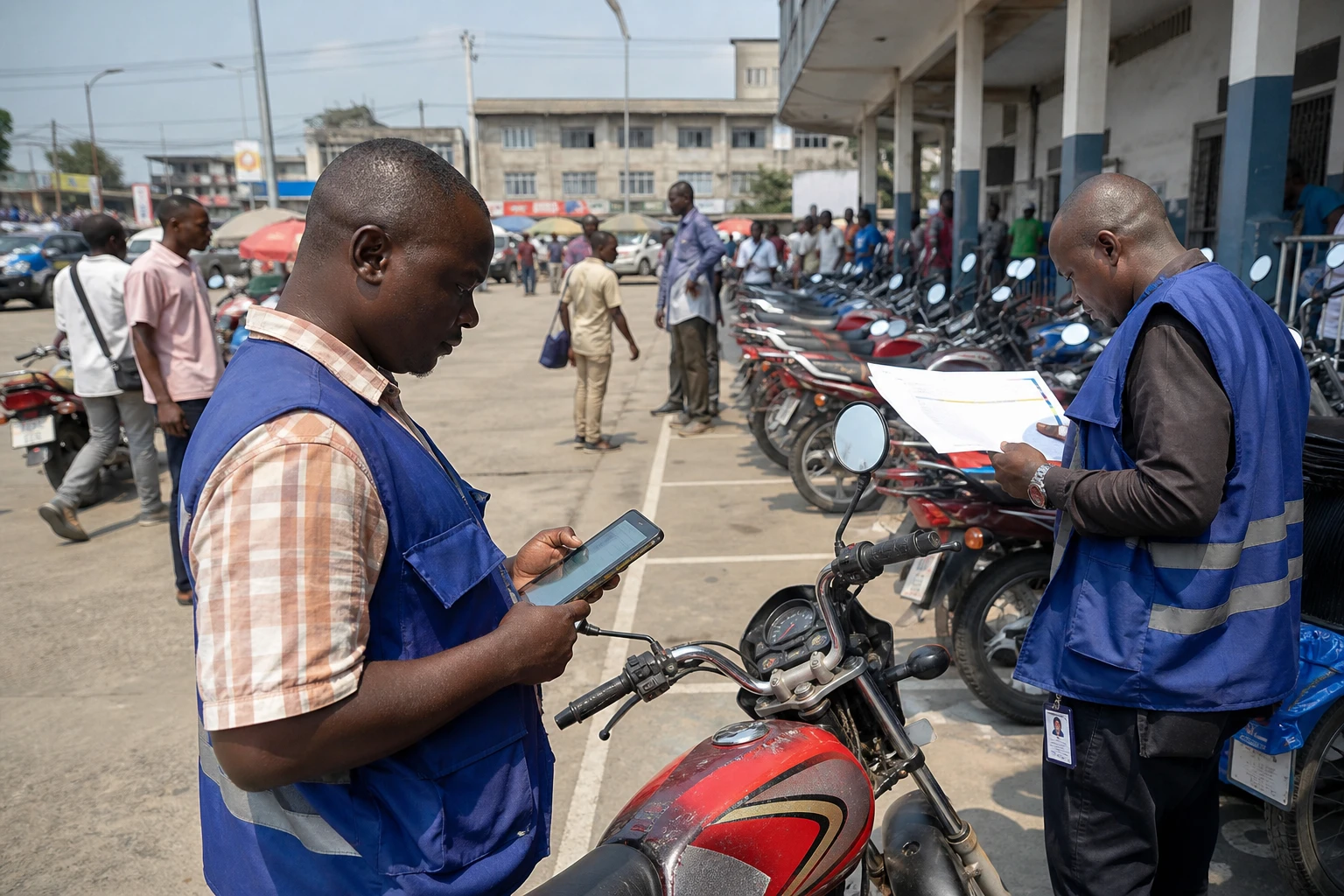
In Kinshasa, digital transformation is beginning to address very concrete problems: traffic jams, the monitoring of public revenue, the organisation of car parks and the promotion of urban heritage. But the capital of the Democratic Republic of the Congo still has several steps to take between political intent and a service that people can actually access.
Cooperation envisaged on urban services
Provincial minister responsible for planning, the budget and transport, among other areas, Jésus-Noël Sheke, met Africell RDC managing director Kory Webster on Monday 5 October 2026. According to information released after the meeting, the discussions covered several possible uses of digital technology in the management of Kinshasa.
The city wants to make progress in digitising its administration and finances. The aim is to monitor certain operations more effectively, limit manual processes and improve the traceability of provincial revenue. No public timetable or investment figure has yet been announced for the proposed partnership.
Transport also featured prominently in the discussions. Modernising car parks for motorbikes and taxis was among the options considered. In a city where daily journeys rely heavily on public transport, taxis and motorcycle taxis, the issue goes beyond parking alone. It also involves vehicle identification, safety, traffic and the collection of municipal fees.
Kinshasa has also presented the Kin City Guide, a tourist guide available in print and digital formats. The province also wants to develop a heritage tourism trail covering several historic sites in the capital. The initiative aims to raise awareness of Congo’s urban history while diversifying the offer for visitors and residents.
The city wants to link its data to its revenue
The meeting with Africell comes amid a broader drive to digitise public services in Kinshasa. On 24 April 2026, the city-province and the water distribution authority, REGIDESO, signed an agreement to share certain databases and digitise the collection of several revenues, including property and rental taxes. The Agency for Digital Development described the agreement as a way to improve taxpayer identification and payment traceability.
The system draws in particular on data from the REGI-RELEVE platform, which REGIDESO staff use to record meter readings electronically. An initial communication on the project referred to a database of more than 800,000 dwellings listed in the city. That figure comes from information shared by programme participants and should be understood as an operational database, not a comprehensive census of Kinshasa’s population. The first institutional discussions on sharing this data date back to February 2026.
For provincial authorities, the benefits are twofold. A better understanding of neighbourhoods and their occupants can broaden the tax base. Digital payments can also reduce losses linked to cash-based procedures. But using data from a public utility requires clear safeguards: protection of privacy, restricted access to files, secure data exchanges and the ability for taxpayers to challenge decisions.
Digital technology alone will not solve the difficulties of local taxation. It can, however, provide more effective monitoring tools, provided databases are updated regularly and administrations have trained staff.
Urban mobility as the first testing ground
The project comes as Kinshasa gradually reorganises its traffic. The first phase of the new traffic plan came into force on 20 September 2026 in an area linking Kintambo Magasin to the central railway station, with routes connected to Boulevard du 30 Juin and Avenue de la Libération. The rollout of this first zone is accompanied by the gradual installation of traffic-control equipment and new traffic rules.
Digitisation could complement this work with tools to monitor traffic, locate car parks or identify authorised vehicles. It could also help the province assess the effects of a decision across different neighbourhoods. A traffic change that eases congestion in the centre, for example, could shift bottlenecks to outlying municipalities.
Motorcycle taxis illustrate this complexity. In Mont-Ngafula, local authorities banned unidentified motorcycle taxis in September, giving drivers a deadline to comply. The measure announced by local authorities combines safety with administrative identification. It directly affects a sector that is essential for travel in areas where transport options remain limited.
Digital tools will therefore need to be designed with transport professionals. Without consultation, an identification or payment app may be seen as yet another formality, or even as an additional source of harassment. For drivers and small operators, the cost of a phone, connectivity and administrative procedures matters as much as the technology itself.
A telecoms operator looking for new markets
For Africell, the discussions reflect a shift in its position in the Democratic Republic of the Congo. The operator, which has been in the country since 2012, is no longer limited to mobile services for the general public. It is also developing solutions for businesses and institutions, including fibre, dedicated internet, private networks, and VPN and APN services.
Africell Business targets organisations that need more stable connectivity and networks separate from ordinary use. In Kinshasa, this infrastructure could be used to connect provincial services, car parks, administrative centres or payment platforms. At this stage, however, there is no evidence that a definitive contract has been signed.
The rapprochement also has a regional dimension. Africell operates in the Democratic Republic of the Congo and Angola, two countries involved in discussions on the Lobito Corridor. The operator took part in the DRC-Angola Economic Forum, held in Kinshasa on 1 and 2 April 2026, where facilitating transactions and connectivity were among the topics discussed. Africell’s participation illustrates its ambition to position itself as a player in cross-border digital and economic exchanges.
For Kinshasa, the priority now will be to turn announcements into verifiable projects. The next steps will need to specify which data is involved, who is responsible for managing it, how the work will be funded, the timetable and the oversight mechanisms. Success will not be measured by the number of apps launched, but by whether residents can access services more easily, travel in better conditions and understand how their data is being used.