Algeria
 Egypt
 Libya
 Morocco
 Sudan
 Tunisia
 Benin
 Burkina Faso
 Cabo Verde
 Côte d'Ivoire
 Ghana
 Guinea
 Guinea-Bissau
 Liberia
 Mali
 Mauritania
 Niger
 Nigeria
 Sierra Leone
 The Gambia
 Togo
 Cameroon
 Central African Republic
 Chad
 DR Congo
 Equatorial Guinea
 Gabon
 Republic of the Congo
 São Tomé and Príncipe
 Burundi
 Comoros
 Djibouti
 Eritrea
 Ethiopia
 Kenya
 Madagascar
 Malawi
 Mauritius
 Mozambique
 Rwanda
 Seychelles
 Somalia
 South Sudan
 Tanzania
 Uganda
 Angola
 Botswana
 Eswatini
 Lesotho
 Namibia
 South Africa
 Zambia
 Zimbabwe
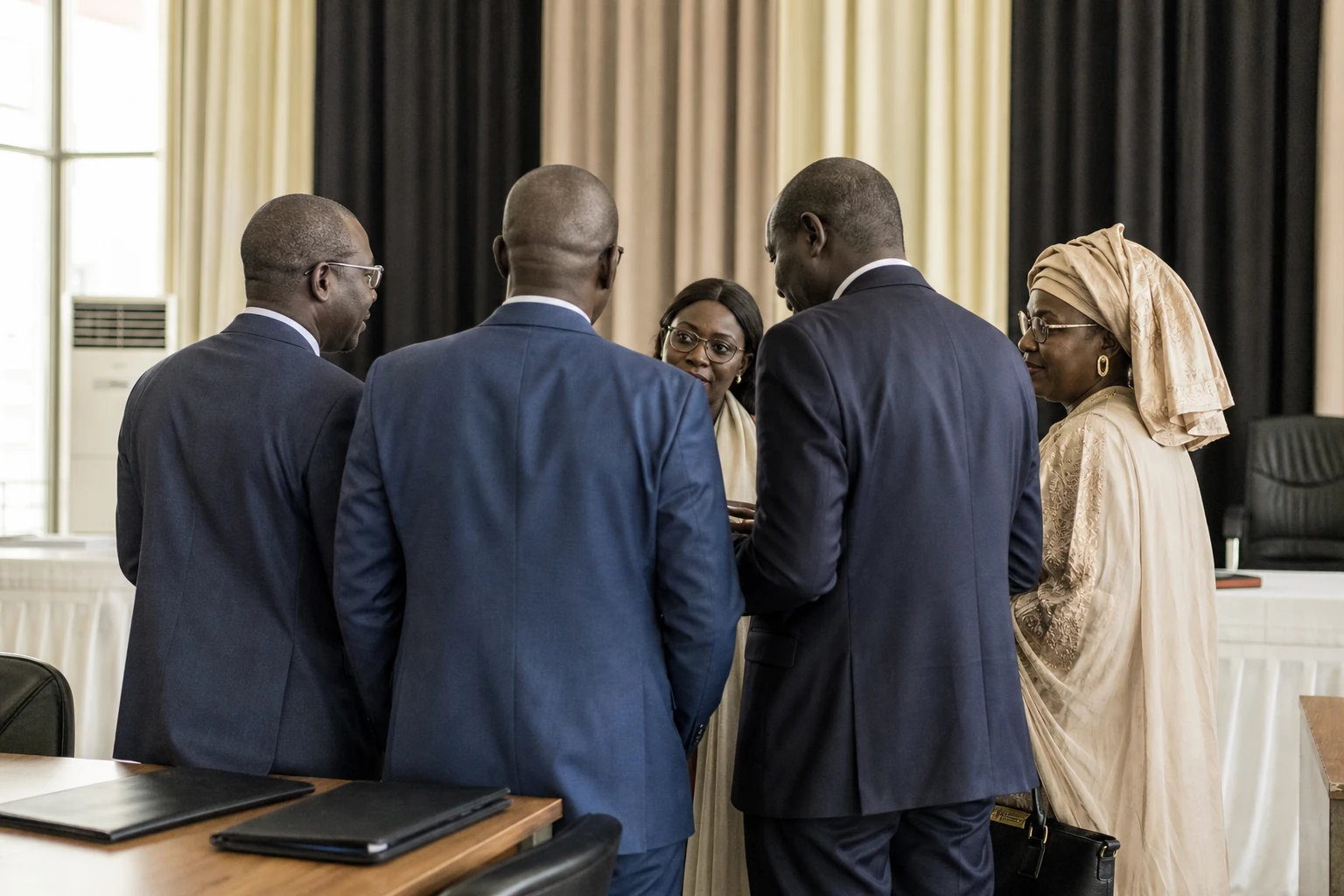
In Dakar, the birth of a presidential party is measured not only by the number of leaders in a room. It is tested in neighbourhoods, villages and municipalities. This is precisely the challenge facing Kiiraay, the movement launched by Bassirou Diomaye Faye: turning rapid institutional support into a lasting political organisation.
A young party already focused on local areas
Kiiraay — The Republican Patriots was officially launched on 25 July 2026. Senegalese President Bassirou Diomaye Faye is its central figure. The party was created after he became president, winning in the first round of the 24 March 2024 election under the banner of the coalition that brought him to power.
The new party is now seeking to establish itself in its own right. This shift is changing the balance within the majority. It is also taking place amid a realignment around Pastef, the party led by Ousmane Sonko, a former political ally who became prime minister and then the main reference point for part of the presidential camp.
The choice of name is not neutral. “Kiiraay” refers to the idea of protection or a shield in Wolof. The party promotes a simple slogan: “The homeland first”. Its message brings together national sovereignty, political unity, good governance and territorial development.
This position still needs to be defined more clearly. The word “sovereigntism” can encompass very different approaches. Kiiraay speaks of “pragmatic sovereigntism”, which does not mean withdrawing from the world. The party instead advocates international openness based on reciprocity, diversified partnerships and the protection of Senegalese interests.
First clarification of its doctrine in Dakar
Kiiraay’s first winter university was held in Dakar on Saturday 3 October 2026. Nearly 700 officials were expected to attend, with discussions covering several areas: the economy, social and environmental issues, health, politics and culture.
The meeting was intended to establish a method. The leaders present stressed moderation, restraint and calm in public debate. They also advocated “balanced diplomacy”: a foreign policy that seeks to maintain relations with several partners without automatically aligning with an external power.
Jean Birane Gning, the party’s leader in the Mbour department, summed up this approach by calling for an end to demagoguery and insularity. He advocated openness to the world while preserving Senegal’s identity and interests. This position extends Senegal’s tradition of regional dialogue and diplomatic diversification in a new register.
The issue extends beyond national borders. Senegal remains a member of ECOWAS, the Economic Community of West African States, which brings together 15 countries and coordinates economic, trade and security policies. In a region marked by tensions between ECOWAS and the countries of the Alliance of Sahel States, balanced diplomacy could allow Dakar to maintain channels of dialogue with different interlocutors.
The bet on mayors and local roots
Kiiraay’s main battle, however, is being fought within Senegal. The party claims the support of nearly 400 of the country’s 557 mayors. The figure comes from its leaders and still needs to be assessed against public lists and individual statements by the elected officials concerned.
The number of municipalities is confirmed by several institutional and administrative sources. The territorial elections of 23 January 2022 renewed municipal councils and selected mayors in these local authorities. The municipal network is therefore one of the main arenas for the next political contest.
Aminata Touré, Kiiraay’s general supervisor, acknowledged that speeches alone would not be enough. The party must convince voters at grassroots level and not limit itself to producing texts on institutions or democracy, she said. The next step announced is a campaign to distribute membership cards and establish branches in neighbourhoods and villages.
This work will be decisive. A mayor can join a national majority without the whole municipality automatically embracing the presidential party. Elected officials have local networks, but these networks are no substitute for either a grassroots organisation or a credible municipal programme.
In large cities, the contest will be fought in particular over public services, transport, urban development and employment. In rural areas, expectations centre more on access to water, rural roads, healthcare, agriculture, livestock farming and routes to market. Kiiraay will therefore have to adapt its message to the realities of each area, without reducing local roots to a mere tally of defections.
A realignment that also involves the former majority
Several elected officials from the Alliance for the Republic, the former party of President Macky Sall, have joined the new party. These departures reflect a realignment in Senegal’s political landscape. They may also reflect the familiar practice of repositioning ahead of local elections, as elected officials seek to secure their influence with the central government.
For Kiiraay, these defections offer an immediate advantage. They give it access to experienced figures, municipal networks and detailed knowledge of local power dynamics. They also carry a political risk: creating the impression of a grouping of elected officials rather than a popular movement built around a doctrine.
The party will therefore have to answer a central question. Can it attract former officials while also mobilising a new generation of activists, particularly young people who backed the political change of 2024? The answer will depend on Kiiraay’s ability to translate its themes — sovereignty, social justice and development — into concrete measures.
The 2027 local elections as a first test
The municipal elections expected in 2027 will be the new party’s first major test. Kiiraay says it is aiming for a strong presence across municipalities. But an administrative foothold does not guarantee electoral victory. Local polls are shaped by particular dynamics: the mayor’s reputation, neighbourhood alliances, the outgoing administration’s record and the ability to solve everyday problems.
The party will also have to clarify its relations with the other components of the majority. Open competition between Kiiraay and Pastef could fragment the electorate that backed the 2024 break with the past. Conversely, an overly broad agreement could make each party’s identity less clear.
Across West Africa, this development will be closely watched. Senegal retains a distinctive position in ECOWAS, as several neighbouring states have left the organisation to form the Alliance of Sahel States. The way Kiiraay balances national sovereignty, regional integration and international co-operation will offer an indication of Dakar’s political direction.
Over the coming months, three factors will show how firmly the party is established: the publication of a verifiable territorial organisation, the nature of its membership beyond elected officials, and its ability to put forward proposals suited to municipalities. For Kiiraay, the winter university of 3 October 2026 set a course. The local areas will now show whether it can become an electoral force.