Algeria
 Egypt
 Libya
 Morocco
 Sudan
 Tunisia
 Burkina Faso
 Cabo Verde
 Côte d'Ivoire
 Ghana
 Guinea
 Guinea-Bissau
 Liberia
 Mali
 Mauritania
 Niger
 Nigeria
 Senegal
 Sierra Leone
 The Gambia
 Togo
 Cameroon
 Central African Republic
 Chad
 DR Congo
 Equatorial Guinea
 Gabon
 Republic of the Congo
 São Tomé and Príncipe
 Burundi
 Comoros
 Djibouti
 Eritrea
 Ethiopia
 Kenya
 Madagascar
 Malawi
 Mauritius
 Mozambique
 Rwanda
 Seychelles
 Somalia
 South Sudan
 Tanzania
 Uganda
 Angola
 Botswana
 Eswatini
 Lesotho
 Namibia
 South Africa
 Zambia
 Zimbabwe
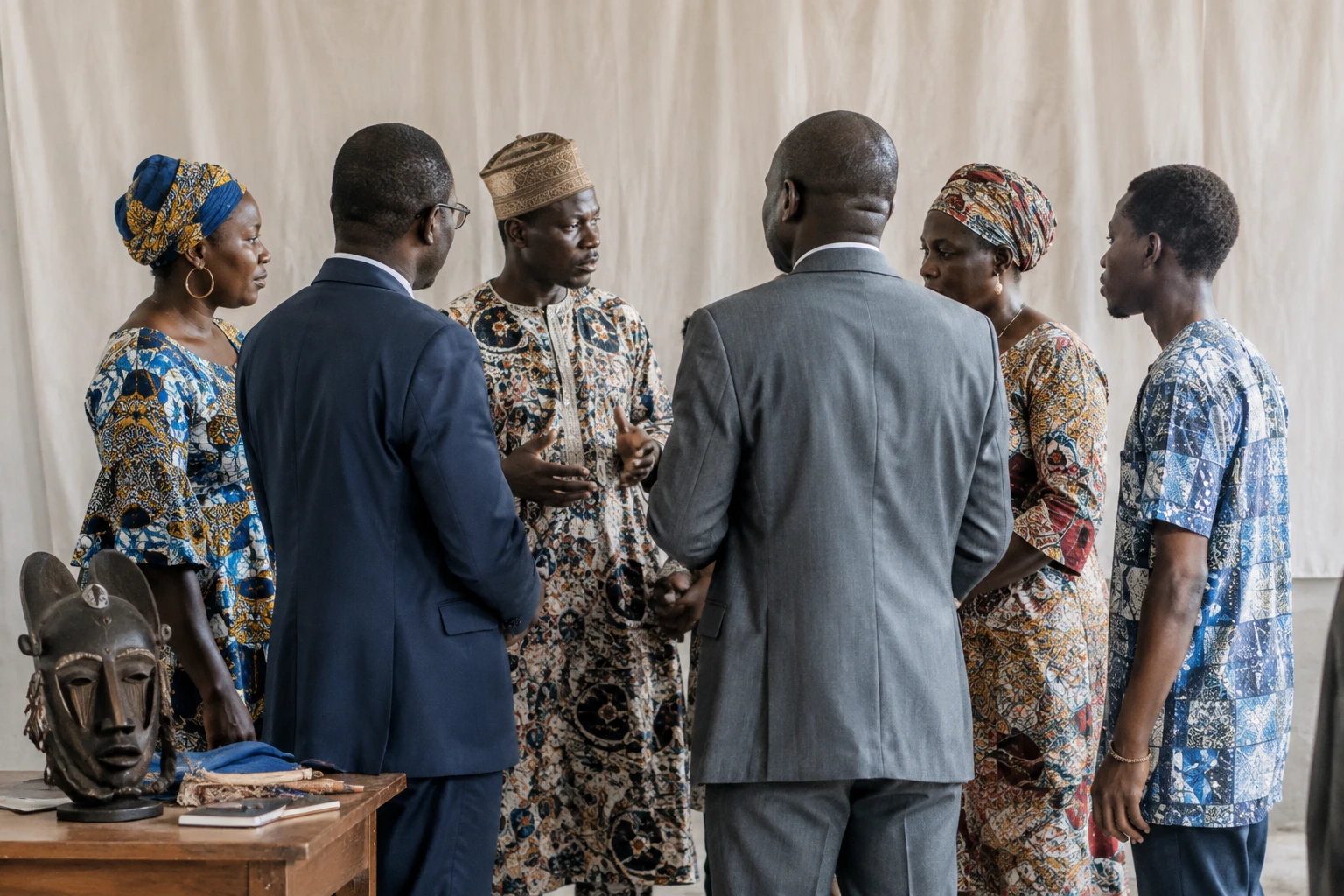
In Kétou, traces of the past are not confined to the walls of an ancient city. They are also passed on through songs, stories and ceremonies that connect communities on both sides of the border between Benin and Nigeria. This memory raises a practical question: how can living heritage be preserved without reducing it to a tourist backdrop?
A Beninese city at the crossroads of Yoruba-Nago heritage
Kétou is in the Plateau Department, in south-eastern Benin, near the Nigerian border. The city is about 140 kilometres from Cotonou and 100 kilometres from Porto-Novo, the country’s official capital. Its location is a reminder that contemporary borders have not erased the historical, linguistic and cultural ties between the region’s populations.
Oral tradition links the founding of the kingdom of Kétou to a migration from Ilé-Ifè, a major historic centre of the Yoruba world, now in Nigeria. This story forms part of local dynastic memory; it should be presented as a transmitted tradition rather than a founding date established by documents. Yoruba-Nago communities today span Benin, Nigeria and Togo.
Kétou also experienced conflicts with the kingdom of Danxomè, established in what is now Benin. Local historical accounts refer in particular to destruction in the 19th century and the city’s revival under the reign of King Oyingin, from 1894. The royal palace, or Aafin in Yoruba, remains a place associated with customary authority and dynastic memory. It should not be confused with Akaba Idéna, the kingdom’s old fortified entrance.
This distinction helps make sense of the city’s historic landscape. Akaba Idéna, often translated as “magic gate”, refers to a defensive complex linked to the old entrance to the city. The palace, by contrast, is the royal residence and a place of dynastic memory. The Beninese government lists both sites among Kétou’s heritage landmarks.
Gèlèdè, a practice shared across several countries
Kétou is also renowned for Gèlèdè, a Yoruba-Nago cultural practice combining carved masks, dance, songs and percussion. Performances may feature animal figures, characters or aspects of everyday life. They are artistic, social and spiritual: songs pass on stories and knowledge, while ceremonies pay tribute to Iyà Nlà, the primordial mother figure.
Gèlèdè does not belong to Kétou alone. UNESCO says it is practised by communities in Benin, Nigeria and Togo. Ceremonies are held in particular after harvests, but also during important events or difficult periods. The ritual’s organisation underscores the role of women in Yoruba social life, although responsibilities and practices can vary between communities.
Gèlèdè oral heritage was proclaimed a Masterpiece of the Oral and Intangible Heritage of Humanity in 2001, then inscribed on UNESCO’s Representative List of the Intangible Cultural Heritage of Humanity in 2008. This recognition applies to a tradition shared across national borders. It does not, however, replace the daily work of practitioners, families and communities who ensure its transmission.
In the early 2000s, a UNESCO-backed safeguarding programme included training and transmission activities in Benin, Nigeria and Togo. The organisation refers to workshops held in Kétou and Kilibo, as well as cooperation between Beninese practitioners and the University of Ifè in Nigeria. This approach is a reminder that safeguarding also involves learning songs, dance, carving and costume-making.
Preserving sites and supporting transmission
For residents, heritage is not simply a matter of international recognition. It encompasses places imbued with meaning, practices that shape collective life and skills passed down through generations. Markets, craft activities and the city’s other functions also form part of this cultural dimension. Tourism can bring visibility and income, but the benefits depend on the role given to communities and knowledge holders.
The challenges differ between stakeholders. Local and national authorities have a role in maintaining sites and organising visitor access. Traditional leaders and practitioners hold knowledge that cannot be reduced to a guided tour. Younger generations, meanwhile, need to be able to learn and adapt the practices without having their participation reduced to a performance for visitors. Aligning conservation, transmission and economic activity takes time and resources.
The regional context gives Kétou particular significance. The city lies in a borderland where human and cultural exchanges predate today’s states. ECOWAS, the economic community of West African countries, provides a regional framework for cooperation; but Gèlèdè is above all a reminder that cultural continuity also depends on ties between communities on both sides of the Benin-Nigeria border.
Across the continent, Kétou shows how heritage can be local in its practices and transnational in its history. The challenge is to ensure its transmission: maintain the sites, support practitioners and preserve the central role of communities. Only then will Gèlèdè remain a living tradition, rather than merely an emblem recognised beyond Benin.
For further information on these landmarks, the Beninese government presents Kétou’s heritage sites. UNESCO documents Gèlèdè’s inscription and practice, while the Beninese media outlet Banouto describes the cross-border cultural ties around Kétou.