Algeria
 Egypt
 Libya
 Morocco
 Sudan
 Tunisia
 Benin
 Burkina Faso
 Cabo Verde
 Côte d'Ivoire
 Ghana
 Guinea
 Guinea-Bissau
 Liberia
 Mali
 Mauritania
 Niger
 Nigeria
 Senegal
 Sierra Leone
 The Gambia
 Togo
 Cameroon
 Central African Republic
 Chad
 DR Congo
 Equatorial Guinea
 Gabon
 Republic of the Congo
 São Tomé and Príncipe
 Burundi
 Comoros
 Djibouti
 Eritrea
 Ethiopia
 Madagascar
 Malawi
 Mauritius
 Mozambique
 Rwanda
 Seychelles
 Somalia
 South Sudan
 Tanzania
 Uganda
 Angola
 Botswana
 Eswatini
 Lesotho
 Namibia
 South Africa
 Zambia
 Zimbabwe
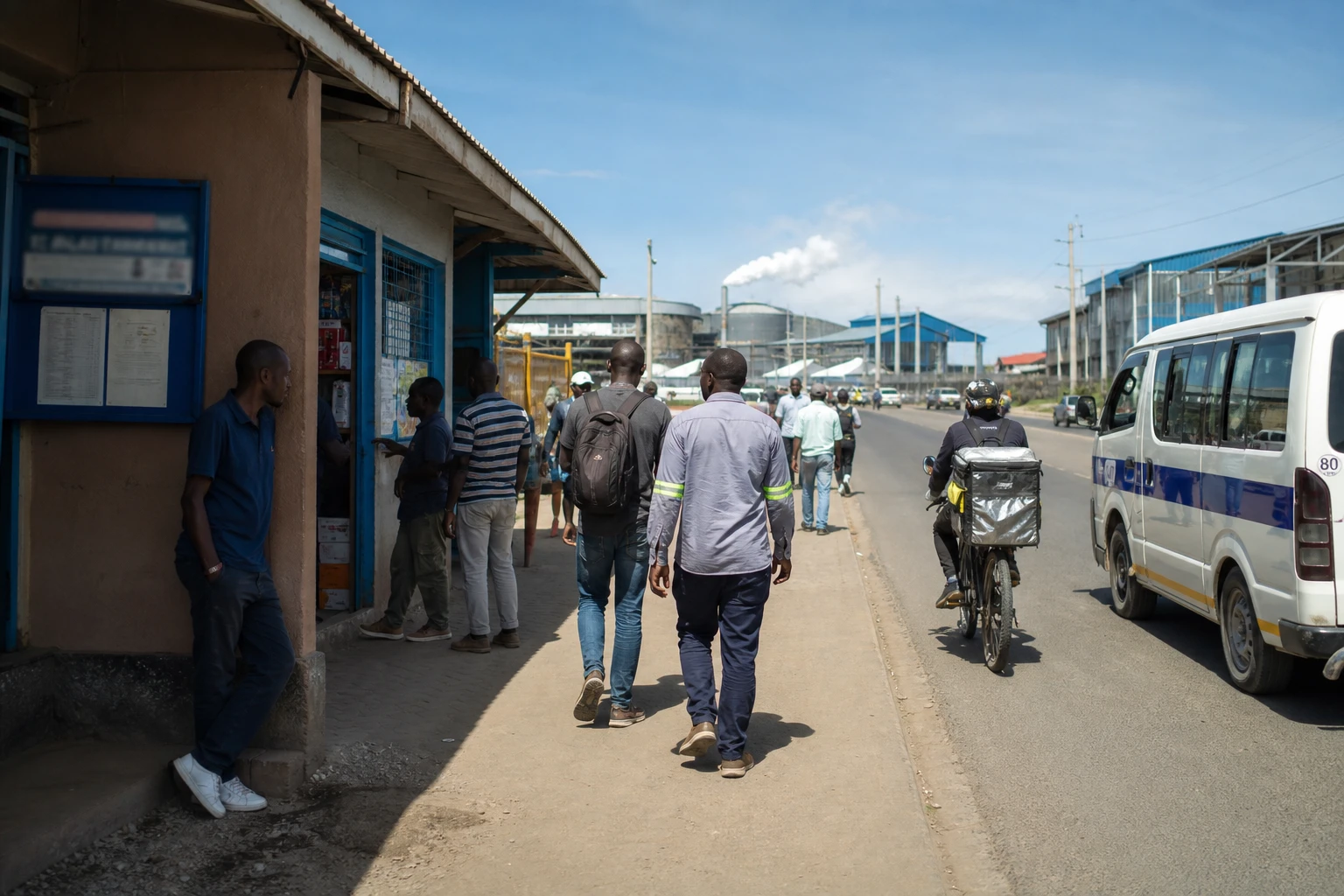
At Naivasha, electricity is no longer enough: it is becoming an industrial foundation
In Kenya, the energy debate is changing. For years, geothermal power mainly helped stabilise the national electricity grid. It is now also being seen as a magnet for industry, with a simple aim: to produce cleanly, but above all to produce locally, close to the energy source.
This shift is visible at Olkaria, in Nakuru County, near Naivasha. The KenGen Green Energy Park site is to host companies seeking reliable electricity, geothermal steam available on site and plots already connected to energy infrastructure. For an East African country where production costs remain a barrier to many activities, the goal is clear: turn a natural asset into a value chain.
A project rooted in Kenya’s energy strategy
The main player in this shift is KenGen, the state-owned company that produces a large share of the country’s electricity. The company says it has installed capacity of 1,786 MW, more than 90% of it from green sources, mainly hydropower and geothermal energy. It also says Kenya remains one of the continent’s most advanced markets for renewable power integrated into the grid. KenGen sets out its installed capacity; KenGen also outlines its role in Kenya’s electricity system.
The industrial park’s rationale fits this trajectory. The Naivasha site was designed as a zone where investors can access electricity, steam and serviced plots directly. KenGen has also confirmed that the project has customs-controlled zone status, a measure that could facilitate some industrial investment under the tax and logistics regimes of the East African Community Customs Management Act. The Green Energy Park’s customs status.
This is not an isolated move. KenGen also said in late June 2026 that it wanted to increase its renewable energy project pipeline to 5,500 MW, from 1,500 MW under its previous strategy. The company linked the revision to market developments, investor confidence and rising demand for clean energy in the region. KenGen unveiled its new renewable energy project pipeline.
Investors drawn by energy, steam and logistical access
The arrival of Maxim Agri & Samakgro as the Green Energy Park’s fifth investor marks another step forward. The announced project involves a fish-feed factory with a capacity of eight tonnes per hour, powered by 3 MW of green energy. The investment is valued at $3.95 million, or just under 520 million Kenyan shillings at the current exchange rate, approximately. This conversion is an estimate, not a figure provided by the company.
The choice of aquaculture is no coincidence. Kenya has been promoting farmed fish for several years, while demand for quality inputs remains high and the country works to organise its animal-feed and aquaculture supply chains. The Kenya Fisheries Service highlights the development of the sector, while its 2025 national plan stresses the need to improve the supply of inputs and move production upmarket. In this context, a factory closer to energy sources could reduce some operating costs, while also shortening delivery times to consumption centres in central Kenya and along the Nairobi–Naivasha corridor.
Samakgro, for its part, already presents itself as an aquaculture-feed player based in Naivasha, suggesting an investment more geared towards consolidating regional capacity than establishing a pioneering operation. The company outlines its work in aquaculture nutrition. In a market where feed prices weigh heavily on fish farmers’ margins, the question is not simply how to produce more. It is also how to produce at a more predictable cost, with stable energy and better-controlled industrial inputs.
What green industrialisation means for Kenya and the region
The model’s significance goes beyond a single fish-feed factory. What KenGen is testing at Olkaria is a new way of using geothermal energy: not just as a source of electricity for households and the grid, but as infrastructure to host industry, research, data centres and manufacturing activities that need continuous power. The park is targeting businesses sensitive to the cost of a kilowatt-hour, the availability of steam and the carbon footprint of their production. The industrial park is presented as an integrated ecosystem.
For Nairobi, the stakes are twofold. On the one hand, the government wants to show that the energy transition can create jobs and attract capital beyond the coastal cities and the capital. On the other, it must prevent a high-profile project from becoming an isolated enclave. Without reliable roads, efficient logistics, clear rules for investors and genuine industrial markets, the park could remain a showpiece. That is why KenGen is also advancing access projects, including a link to the Standard Gauge Railway terminal at Naivasha. This underlines that energy alone is not enough: it must be connected to transport and distribution.
Across East Africa, the initiative speaks to several economies still seeking ways to convert natural resources into productive transformation. Kenya, a member of the East African Community, is trying to show that clean energy can become a tool for reindustrialisation, not just a climate argument. If the model works at Olkaria, it could inspire other areas with geothermal, hydropower or solar potential, provided states can link electricity generation, land, taxation and the domestic market.
The next phase will hinge on specific milestones: the actual commissioning of the first units, the pace at which investors set up, and KenGen’s ability to turn its announced 5,500 MW pipeline into concrete projects. That is when green industrialisation will cease to be a rallying cry and become an economic reality — or not.