Algeria
 Egypt
 Libya
 Morocco
 Sudan
 Tunisia
 Benin
 Burkina Faso
 Cabo Verde
 Côte d'Ivoire
 Ghana
 Guinea
 Guinea-Bissau
 Liberia
 Mali
 Mauritania
 Niger
 Nigeria
 Senegal
 Sierra Leone
 The Gambia
 Togo
 Cameroon
 Central African Republic
 Chad
 DR Congo
 Equatorial Guinea
 Gabon
 Republic of the Congo
 São Tomé and Príncipe
 Burundi
 Comoros
 Djibouti
 Eritrea
 Ethiopia
 Madagascar
 Malawi
 Mauritius
 Mozambique
 Rwanda
 Seychelles
 Somalia
 South Sudan
 Tanzania
 Uganda
 Angola
 Botswana
 Eswatini
 Lesotho
 Namibia
 South Africa
 Zambia
 Zimbabwe
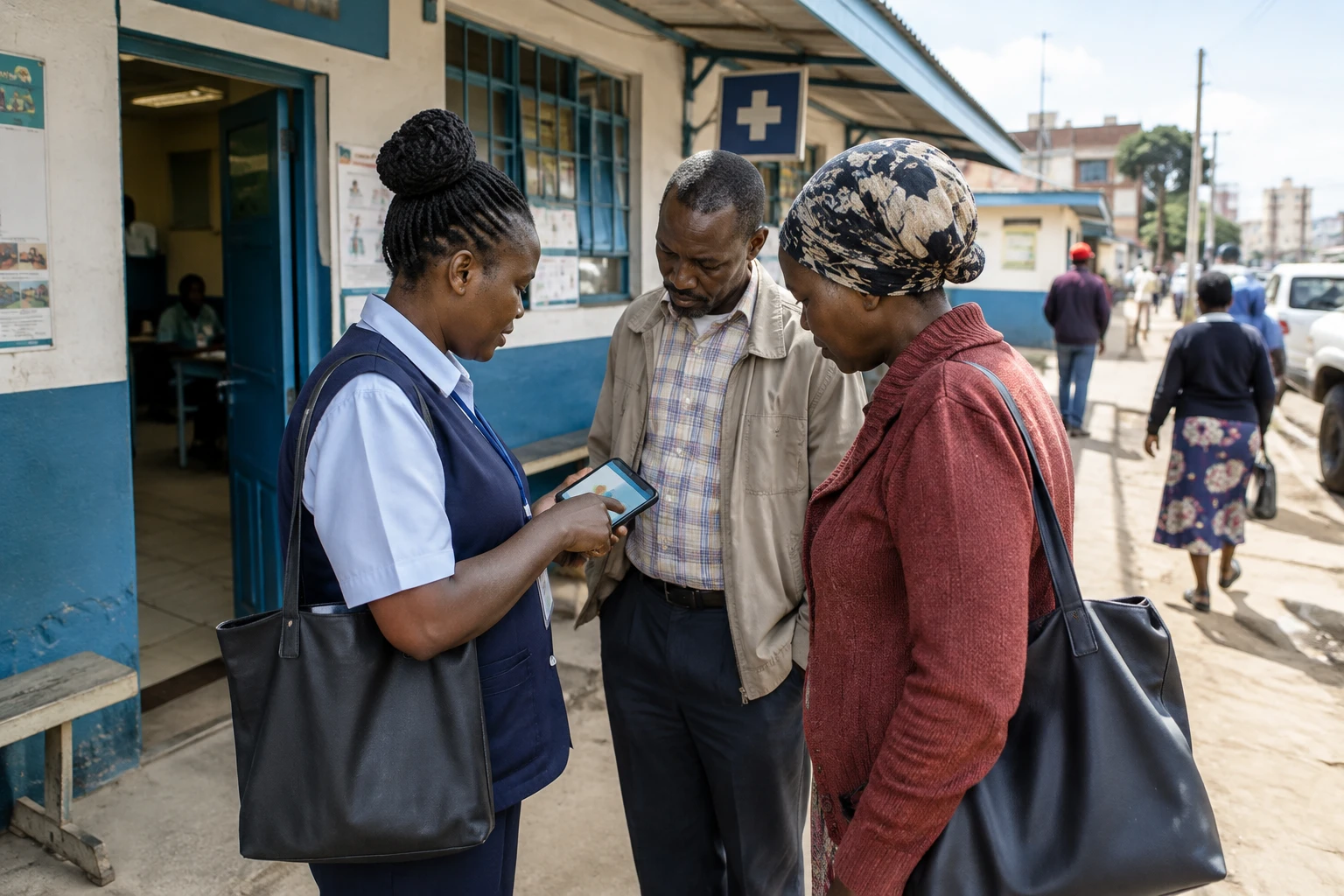
At a health centre, a missing data point can delay a vaccine, conceal a medicine shortage or prevent a rise in maternal deaths from being identified. In Nairobi, the first African Health Data Forum is highlighting a challenge less visible than building hospitals, but just as tangible: turning the information collected into decisions that benefit patients.
Data collected, but not always put to use
Kenya is hosting the meeting from 10 to 12 November 2026, organised by the World Health Organization (WHO), Kenya’s Ministry of Health and the Kenya Digital Health Agency. More than 300 participants from 51 countries are examining ways to strengthen health information systems.
The meeting is part of a regional effort: East African countries cooperate, among other frameworks, through the East African Community (EAC), while WHO has brought together states from its African and Eastern Mediterranean regions. The challenge therefore goes beyond digitising a ministry. It concerns institutions’ ability to share reliable information, protect data and allocate resources according to need.
A WHO report, based on an assessment conducted in 2024 in 40 of the 47 member states of its African Region, gives the systems studied an average maturity score of 59 out of 100. Results vary widely, from 26 to 93 points. These differences point to varying national circumstances, which call for tailored responses rather than a one-size-fits-all solution.
At health facilities, only 43% of the countries assessed say they have sufficient capacity to analyse data. The figure falls to 25% for checking data quality. In other words, data collection is advancing faster than the human and technical resources needed to interpret information where care is provided.
Gaps also affect civil registration and the monitoring of deaths. Of the 40 countries assessed, 19 say they notify the authorities of at least 80% of deaths. Twenty-one report recording the cause of death for at least 80% of registered deaths. These indicators, reported by WHO, show why decision-makers may lack the information needed to identify preventable causes or compare needs across regions.
Funding and interoperability under scrutiny
The issue is not simply whether computers or platforms are available. According to the WHO assessment, only 18% of the countries studied have a budget line dedicated to health information systems. Yet 43 of the Region’s 47 states have adopted a digital platform to collect and transmit routine data. Having a tool therefore guarantees neither sustainable funding nor quality or use.
Systems often remain fragmented. Information from a hospital, laboratory or vaccination programme may not flow between platforms. Fewer than half of the countries assessed have frameworks that enable their systems to exchange data, according to the report. Staff may then have to submit the same figures several times, while officials struggle to bring together an overall picture.
This fragmentation has a daily cost. If medicine stocks are not updated, a rural facility may report a shortage too late. If vaccination data cannot identify unprotected children, teams risk missing the communities most in need of a campaign. Examples in the report nevertheless show that better use of information can guide targeted interventions, including in Nigeria’s Bauchi State.
The Economic Commission for Africa also argues that data systems should be treated as sustainable public infrastructure. It says incomplete birth and death registers undermine the planning of services and budgets. Its warning echoes WHO’s: without predictable domestic funding, systems dependent on external projects remain vulnerable when that support diminishes.
The debate also concerns governance. Health data are sensitive: their collection, storage, sharing and any transfer must be subject to clear rules. Kenya’s Health Minister, Aden Duale, outlined in Nairobi the goal of a longitudinal health record for every patient, accessible wherever they receive care. He also announced plans to establish a national analytics centre within the Digital Health Agency.
For patients, a question of practical services
At population level, better data can help allocate midwives, vaccines or medicines according to observed needs. But the benefits will not be the same everywhere. Large cities often have more facilities and digital connectivity than remote areas. A system designed without taking local constraints into account therefore risks making disparities more visible without enabling them to be addressed.
Kenya highlighted the use of contact tracing during the recent Ebola response. According to WHO, Kenyan authorities tracked 135 contacts linked to the first case, in Kenya and abroad; the eight contacts who subsequently tested positive were already in quarantine. This example illustrates what timely information can make possible, without replacing the work of frontline teams.
Digitisation nevertheless raises questions of sovereignty and technological dependence. States must be able to set the terms of access to their data and avoid being locked into incompatible tools by parallel systems, sometimes developed for separate programmes. In August 2026, WHO launched a regional centre designed to bring together information from different programmes; its usefulness will depend on countries’ trust and their ability to govern these exchanges.
The Nairobi forum is expected to produce shared priorities and follow-up commitments, ahead of a new meeting announced for 2028. For governments, the test will be less the number of platforms launched than whether they are funded through national budgets, staff are trained and data are used in decision-making. For Kenyans and other populations concerned, the ultimate issue remains tangible: whether information actually improves access to care, in the capital as well as in the regions.
The WHO report on health information systems in Africa, information about the Nairobi forum and the Economic Commission for Africa’s analysis of their funding shed light on these issues.