Algeria
 Egypt
 Libya
 Morocco
 Sudan
 Tunisia
 Benin
 Burkina Faso
 Cabo Verde
 Côte d'Ivoire
 Ghana
 Guinea
 Guinea-Bissau
 Liberia
 Mali
 Mauritania
 Niger
 Nigeria
 Senegal
 Sierra Leone
 The Gambia
 Togo
 Cameroon
 Central African Republic
 Chad
 DR Congo
 Equatorial Guinea
 Gabon
 Republic of the Congo
 São Tomé and Príncipe
 Burundi
 Comoros
 Djibouti
 Eritrea
 Ethiopia
 Madagascar
 Malawi
 Mauritius
 Mozambique
 Rwanda
 Seychelles
 Somalia
 South Sudan
 Tanzania
 Uganda
 Angola
 Botswana
 Eswatini
 Lesotho
 Namibia
 South Africa
 Zambia
 Zimbabwe
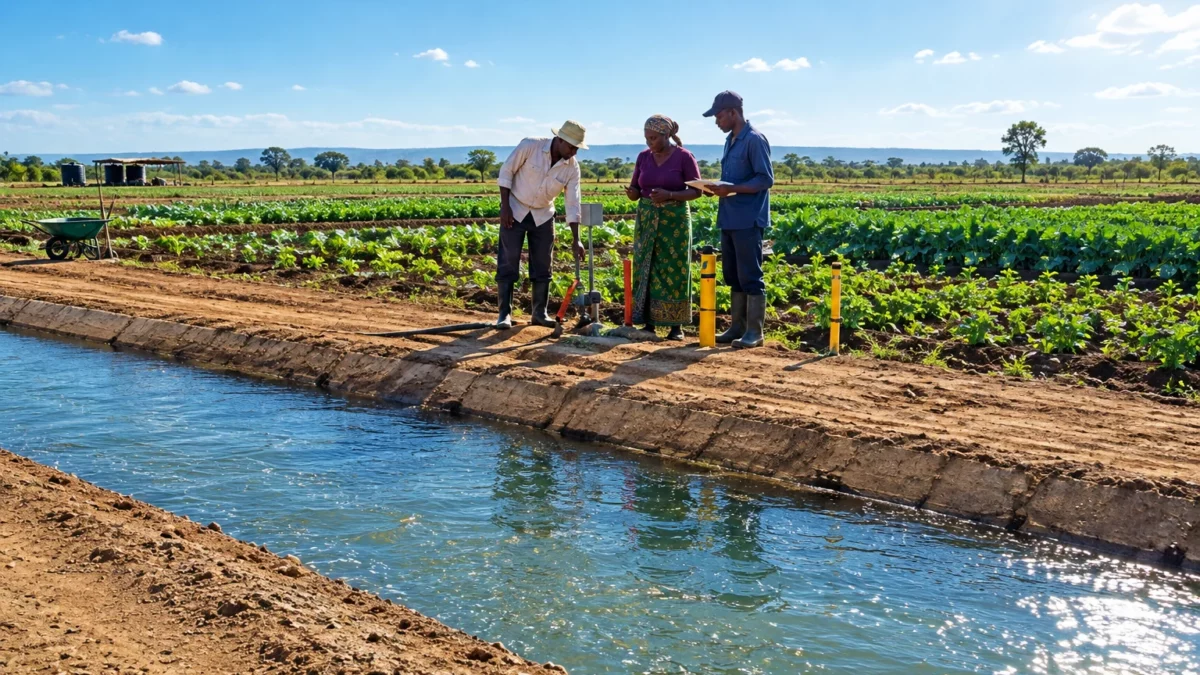
In Kenya, irrigation is expected to play a greater role in food security. But building canals and dams is not enough: projects must also be well designed, funded and adapted to local realities. The new agreement with the United Nations focuses on this preparation.
Technical support, not a funding package
On 23 November 2026, Kenya’s State Department for Irrigation and the United Nations Office for Project Services (UNOPS) signed a five-year cooperation agreement. The deal is intended to help prepare and deliver irrigation projects across the country, according to the public agency Kenya News Agency and UNOPS.
The UN organisation can contribute to feasibility studies, public procurement preparation, environmental and social assessments, as well as infrastructure management. Its role is also to improve the design of infrastructure and better incorporate climate risks. However, the agreement does not provide for direct UNOPS funding: it offers technical support to make projects more robust and more likely to attract investors.
This distinction matters. It means the agreement guarantees neither the construction of infrastructure nor the availability of funds. Rather, it is intended to help the authorities turn proposed projects into investments that are prepared, costed and presented to funders.
A decade-long plan with ambitious goals
The cooperation forms part of the National Irrigation Sector Investment Plan, or NISIP, which covers the period 2025–2035. The official document aims to bring an additional one million acres under irrigation, or about 405,000 hectares. It also seeks to improve the performance of existing infrastructure covering 319,000 acres.
The estimated total cost is 598 billion Kenyan shillings, equivalent to about $4.6 billion according to the plan. It divides the funding needs between 233 billion shillings expected from public resources and development finance institutions, and 365 billion in private capital. UNOPS has therefore not committed to providing this sum: the financial challenge remains to be addressed project by project.
The government presents irrigation as a way to boost agricultural production and reduce dependence on imports. However, expanding irrigated areas alone does not guarantee a sustained increase in food supplies. Yields will also depend on access to water, infrastructure maintenance, energy costs, inputs and market access for farmers.
Higher harvests are not enough to reduce imports
Available data show why Nairobi is seeking to act on several fronts. According to the Kenya National Bureau of Statistics (KNBS), maize production rose from 44.8 million bags in 2024 to 45.8 million in 2025. At the same time, maize imports increased by 51.4%, reaching 468,109 tonnes in 2025. These figures, also reported from national data by Business Daily Africa, illustrate the tension between local supply and market needs.
This trend does not mean irrigation can quickly replace imports. Maize is a staple, and domestic production remains exposed to variations in rainfall. In addition, imports may meet different needs, particularly those of the animal feed sector. The challenge, then, is to make supplies more resilient, without confusing an increase in irrigated acreage with immediate self-sufficiency.
For farms with the means and regular access to water, new equipment can stabilise harvests and make several growing cycles possible. For smallholdings, the benefits will depend more on the terms of access to networks, tariffs, local water governance and land distribution. Projects will also need to limit their impact on ecosystems and existing uses.
Implications for counties and East Africa
Implementation will not be decided in Nairobi alone. National authorities will need to work with county administrations, farming communities and water agencies. Technical preparation can improve tenders and maintenance, but it cannot replace consultation on sites, water-use rights and resource sharing.
Regionally, Kenya is a member of the East African Community (EAC), which brings together several economies linked through trade and agricultural exchanges. More consistent production could help stabilise regional supply, but the impact will depend on the volumes actually harvested, transport infrastructure and trade rules between countries.
The next thing to watch will be the move from agreement to concrete projects: completed studies, funds raised, construction started and maintenance secured. Kenya’s plan sets a 2035 deadline; its credibility will also be measured by its ability to distribute investment between major infrastructure and community-based systems. That is where the difference between a national ambition and more reliable access to water for producers will be determined.
Documentary sources: Kenya News Agency on the agreement and its objectives ; UNOPS statement ; Kenya’s National Irrigation Sector Investment Plan ; KNBS Economic Survey 2026 ; Business Daily Africa analysis of maize imports.