Algeria
 Egypt
 Libya
 Morocco
 Sudan
 Tunisia
 Benin
 Burkina Faso
 Cabo Verde
 Côte d'Ivoire
 Ghana
 Guinea
 Guinea-Bissau
 Liberia
 Mali
 Mauritania
 Niger
 Nigeria
 Senegal
 Sierra Leone
 The Gambia
 Togo
 Cameroon
 Central African Republic
 Chad
 DR Congo
 Equatorial Guinea
 Gabon
 Republic of the Congo
 São Tomé and Príncipe
 Burundi
 Comoros
 Djibouti
 Eritrea
 Ethiopia
 Madagascar
 Malawi
 Mauritius
 Mozambique
 Rwanda
 Seychelles
 Somalia
 South Sudan
 Tanzania
 Uganda
 Angola
 Botswana
 Eswatini
 Lesotho
 Namibia
 South Africa
 Zambia
 Zimbabwe
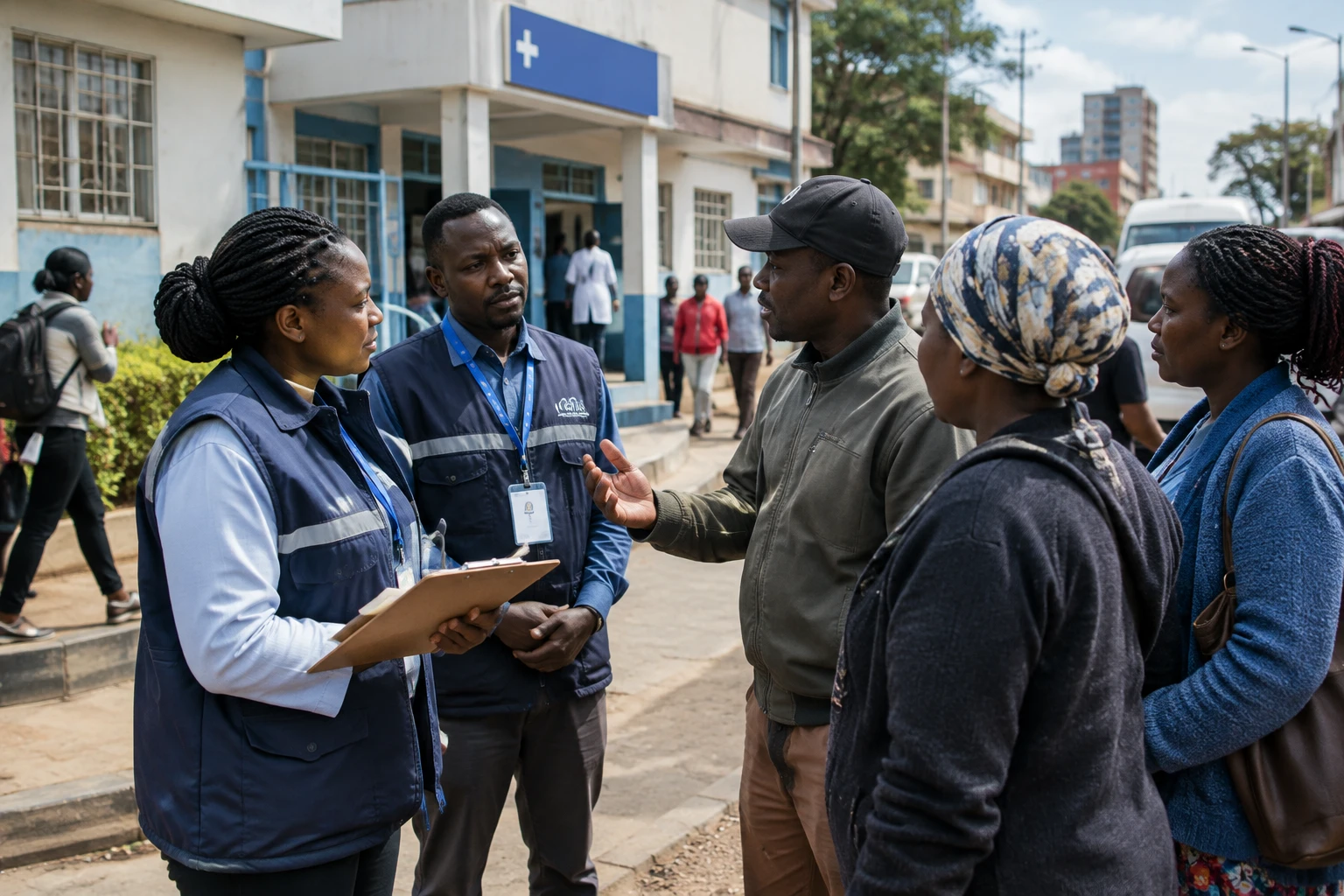
In Nairobi, containing Ebola depends on more than treatment centres. It also requires finding people who may have been exposed, explaining the measures being taken and maintaining public trust. In Kenya, the rise in cases identified among contacts of the first patient is putting all three requirements to the test.
A transmission chain still under close watch
Kenya confirmed a ninth case on Tuesday 20 October. The person was already in quarantine and had been identified as a contact of the first patient, who arrived in Nairobi on 3 October after travelling through the Democratic Republic of the Congo (DRC) and Uganda. He died on 5 October, the day his infection was detected. Kenya’s health ministry says it has found no transmission beyond known contacts. The number of cases confirmed in Kenya was reported the same day by the Associated Press.
Health monitoring now covers 135 contacts linked to the nine patients. According to the authorities, 134 were in quarantine at the time of the 20 October update. That is more than the 129 people cited in the first reports of the crisis: contact tracing is ongoing and the list changes as new exposures are identified. The first group of contacts was due to complete its 21-day monitoring period from 25 October, provided they remained symptom-free.
Another concern is a Ugandan national whom Kenyan authorities are trying to locate. Director-General of Health Patrick Amoth said officials had his passport and telephone details but had been unable to find him. He may have used a “panya route”, a local term for an informal crossing that bypasses official controls. This remains an explanation attributed to the authorities; it does not in itself confirm the man’s route. Kampala has reportedly been informed, according to Patrick Amoth.
An unchecked route makes monitoring more difficult, but does not prove that a person is infected. The search aims to establish whether the man was exposed and to identify any potential contacts. The distinction matters: someone being sought is not automatically a confirmed case.
Trust, a condition for isolation
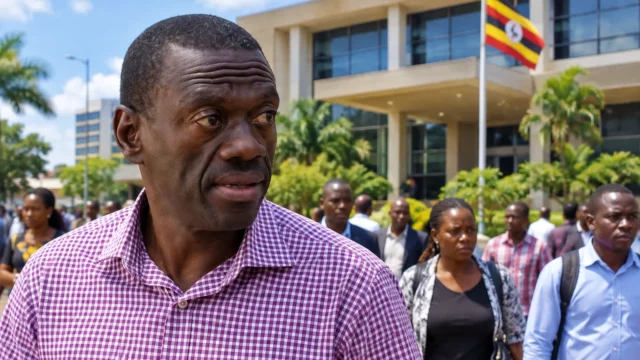
The health response has also come under criticism in Kenya. David Maraga, a former chief justice and declared candidate in the 2027 presidential election, denounced a lack of transparency. He said quarantine centres risked becoming “incubation units”. The phrase reflects a political concern; it is not an independent medical assessment of the centres.
The criticism nevertheless raises a practical question: are people in isolation receiving appropriate care and clear information, and are conditions genuinely limiting infections? Well-managed quarantine protects patients and their families. Poorly organised facilities can fuel mistrust and make contacts less willing to come forward. The authorities have not confirmed that the centres are facilitating transmission.
After several days of pressure, the doctors’ union joined the national response task force on 20 October. This could bring political decision-making closer to the experience of health workers, who are on the front line of detecting symptoms and applying protocols. It does not, by itself, answer questions about transparency or conditions in isolation.
The response also affects workers, families and economic activity. Healthcare workers are among those exposed in transmission chains, while relatives often have to make arrangements when a household member is placed in isolation. Restrictions or fear of attending a healthcare facility can also make it harder to access routine care. The challenge is therefore to limit risky contact without turning prevention into social exclusion.
A regional emergency, not just a Kenyan one
The outbreak is part of a Bundibugyo virus disease outbreak, an Ebola strain, detected in the DRC and Uganda in May. Africa CDC and the World Health Organization announced on 27 August that the outbreak in Uganda had ended, after 42 days without a new confirmed case. The country recorded 20 cases and two deaths during the outbreak. However, continued transmission in the DRC and cross-border travel maintain the risk of imported cases. Africa CDC provided details on the end of the outbreak in Uganda.
Kenya is a member of the East African Community (EAC), a regional organisation that includes Kenya and Uganda, among others. Trade, family travel and road links do not stop at borders. Surveillance must therefore involve neighbouring countries through the sharing of alerts, verification of travel routes and cooperation between health teams. Indiscriminate border closures risk penalising communities and trade without replacing screening and contact tracing.
On 21 October, Africa CDC called on African health ministers to attend an extraordinary meeting scheduled for 28 October, as Nigeria was also reporting a case linked to someone who had travelled through Uganda. Kenya is therefore no longer the only country outside the main outbreak area affected by infections associated with regional travel. The WHO recommends that countries maintain a high level of preparedness as the situation in the DRC develops. The call for continent-wide coordination highlights the widening health challenge.
For Kenya, the next milestones are monitoring people in quarantine, locating the Ugandan contact and publishing regular, consistent updates. At regional level, the 28 October meeting will need to clarify how countries share alerts and strengthen preparedness. The number of cases remains important, but it is not enough to measure whether the outbreak is under control: the quality of contact tracing, the safety of care and community trust will also shape the response.