Algeria
 Egypt
 Libya
 Morocco
 Sudan
 Tunisia
 Benin
 Burkina Faso
 Cabo Verde
 Côte d'Ivoire
 Ghana
 Guinea
 Guinea-Bissau
 Liberia
 Mali
 Mauritania
 Niger
 Nigeria
 Senegal
 Sierra Leone
 The Gambia
 Togo
 Cameroon
 Central African Republic
 Chad
 DR Congo
 Equatorial Guinea
 Gabon
 Republic of the Congo
 São Tomé and Príncipe
 Burundi
 Comoros
 Djibouti
 Eritrea
 Ethiopia
 Madagascar
 Malawi
 Mauritius
 Mozambique
 Rwanda
 Seychelles
 Somalia
 South Sudan
 Tanzania
 Uganda
 Angola
 Botswana
 Eswatini
 Lesotho
 Namibia
 South Africa
 Zambia
 Zimbabwe
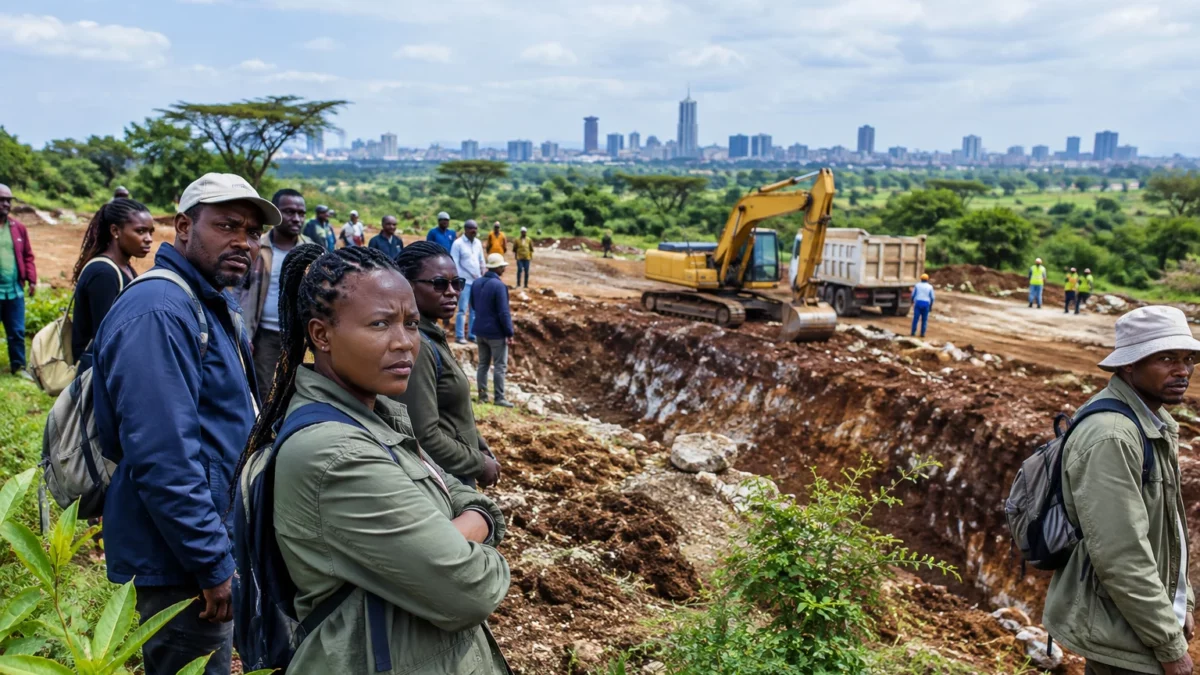
Can construction work in Nairobi improve visitor facilities without encroaching on a protected area? This question lies at the heart of a stand-off between infrastructure development and the preservation of living nature in Kenya’s capital.
Growth transforming the city
Kenya’s construction sector rebounded in 2025. It grew by 6.8%, after contracting by 0.7% in 2024, according to the Kenya National Bureau of Statistics’ economic survey. The Central Bank of Kenya also reported this growth and noted a 56.7% increase in the value of building permits approved in Nairobi.
This activity meets concrete needs: housing, roads and facilities. It also supports jobs and construction businesses. But in an expanding metropolis, pressure on land can put trees, open spaces and the habitats on which urban species depend at risk. National growth alone does not measure the impact of each project on the local environment.
Birds make these changes particularly visible. When trees and nesting sites become scarce, some species may settle on buildings or signs. Kenyan ornithologist John Musina, cited in reports on the issue, considers the bird population an indicator of urban environmental health. This observation points to the need to monitor changes in habitats, without reducing biodiversity to a single indicator.
National park at the centre of a legal dispute
The debate has taken on a legal dimension around Nairobi National Park, a protected area on the city’s outskirts. On 27 October 2026, Judge Grace Kemei, of Kenya’s court responsible for land and environmental matters, ordered a temporary halt to works in a disputed area of the park. The measure concerns, among other things, a car park and prohibits, for four months, clearance, tree-felling, excavation and construction work covered by the case.
The petition was filed by 4,642 Kenyans, with support from groups working to protect the environment. The ruling maintains the status quo pending a hearing on the merits of the case. It does, however, allow interventions strictly necessary to secure the section already excavated and limit erosion. Care for the animals at the existing orphanage is not suspended.
The dispute therefore does not mean that the project has been definitively cancelled. It concerns the legality and effects of the contested developments, while proceedings continue. Kenyan media have reported the interim measures and the number of petitioners. Earlier coverage by the Associated Press had also described protests over planned works in the park and reported the position of the Kenya Wildlife Service, which defended the project on the grounds that it would serve visitors and the orphanage.
Rules, uses and competing interests
The controversy involves several public responsibilities. The Kenya Wildlife Service manages national parks. The National Environment Management Authority is involved in impact assessments and permits. Nairobi County Government, meanwhile, must organise land use and urban services. The court’s interim ruling has not yet determined the parties’ arguments over permits or public participation.
For the authorities and managers, a car park or visitor facilities may meet operational and tourism needs. For the petitioners, the works risk altering a protected environment and raise questions about procedure. The distinction matters: at this stage, objections raised in a petition are arguments to be examined, not definitive judicial findings.
The effects of poorly planned urbanisation are not limited to species. Tree-covered spaces and permeable soils also contribute to residents’ comfort and water management. Their loss can affect neighbourhoods differently, depending on the availability of trees, parks and infrastructure. However, the available evidence does not allow the loss of tree cover across Nairobi to be quantified here, or a precise share to be attributed to the property boom alone.
A governance issue for East Africa
The ruling comes in a country where legal challenges and citizen protests have become ways of contesting public and private projects. In June 2026, the temporary arrest of former Chief Justice David Maraga during a protest linked to works in the park had already drawn attention to the case. This episode shows that environmental protection also depends on procedures, transparency and citizens’ right to challenge decisions.
Regionally, Kenya is a member of the East African Community, which brings together states facing rapid urbanisation and trade-offs between infrastructure, housing and conservation. Nairobi, the country’s economic and political centre, concentrates these tensions. But local decisions do not, on their own, represent the full range of Kenya’s environmental policies, let alone those of all East Africa.
The next step is judicial: the interim orders are limited to four months from 27 October 2026, unless extended, and the petition is to proceed to a hearing on its merits. The case will clarify which activities can continue in the disputed area and how conservation requirements can be reconciled with development projects. For Nairobi, the issue goes beyond a car park: it is about how an expanding capital can plan its facilities without treating natural spaces as land available by default.