Algeria
 Egypt
 Libya
 Morocco
 Sudan
 Tunisia
 Benin
 Burkina Faso
 Cabo Verde
 Côte d'Ivoire
 Ghana
 Guinea
 Guinea-Bissau
 Liberia
 Mali
 Mauritania
 Niger
 Nigeria
 Senegal
 Sierra Leone
 The Gambia
 Togo
 Cameroon
 Central African Republic
 Chad
 DR Congo
 Equatorial Guinea
 Gabon
 Republic of the Congo
 São Tomé and Príncipe
 Burundi
 Comoros
 Djibouti
 Eritrea
 Ethiopia
 Madagascar
 Malawi
 Mauritius
 Mozambique
 Rwanda
 Seychelles
 Somalia
 South Sudan
 Tanzania
 Uganda
 Angola
 Botswana
 Eswatini
 Lesotho
 Namibia
 South Africa
 Zambia
 Zimbabwe
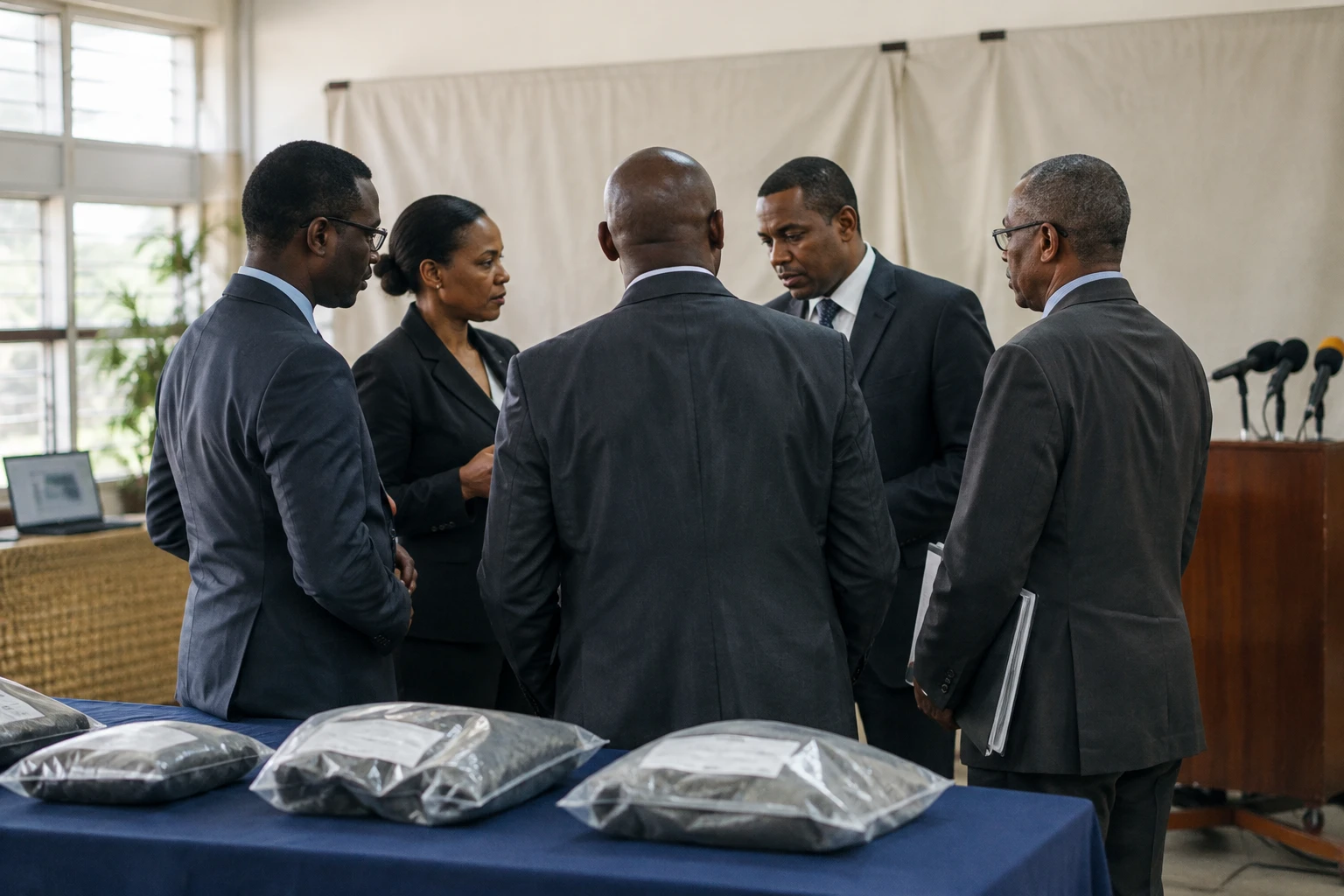
In Kenya, drug seizures are not decided only on roads and in ports. They also depend on information-sharing between neighbouring countries, where criminal networks can quickly move their cargo across borders.
This cooperation led to an operation in the coastal county of Kwale, south of Mombasa. Kenyan authorities announced the discovery of 454 kilograms of suspected methamphetamine. The case highlights a wider challenge: preventing East Africa from serving both as a transit zone and a market for synthetic drugs.
An operation on both sides of the border
On 7 November 2026, an operation based on intelligence shared between Kenyan and Tanzanian authorities led to the arrest of three suspects in Kwale County. Two are Tanzanian and the third is Ugandan, according to information released by Kenyan police and reported by several media outlets in the country.
Investigators seized 454 kilograms of crystals identified as suspected methamphetamine. Mohamed Amin, Director of the Directorate of Criminal Investigations, estimated their value at 3.6 billion Kenyan shillings on the illicit market. This police estimate is not a sale value verified by an independent assessment.
The figure of 454 kilograms and the arrests were reported by the state-run Kenya News Agency and the Kenyan daily Daily Nation. Tanzanian authorities also described operational cooperation between the two countries in an announcement by their anti-narcotics agency.
Police have presented the operation as a breakthrough made possible by cross-border intelligence. In the information made public, they have not detailed the cargo’s full route or established the substance’s origin. These issues remain under investigation.
The Kenyan coast, a regional surveillance challenge
Kwale lies on the Indian Ocean coast, near the border with Tanzania. Its position connects Kenya to maritime trade and regional movement, but also obliges authorities to monitor extensive coastal areas, roads and several crossing points.
The case is a reminder that trafficking networks do not stop at national borders. An investigation may begin in one country, advance in another and target markets further afield. In this case, Nairobi and Dar es Salaam exchanged intelligence. Uganda also features in the case through the nationality of one of the suspects.
This dimension directly concerns the East African Community (EAC), a regional organisation that includes Kenya, Tanzania and Uganda, among others. The movement of people and goods is an integration objective. This makes common procedures for sharing information, conducting investigations and carrying out checks all the more necessary, without turning borders into obstacles to legitimate trade.
A major seizure does not, however, measure the scale of trafficking or consumption in the country on its own. It shows that one shipment was intercepted. It does not reveal how many shipments escaped checks, or what proportion was intended for Kenya, other East African countries or more distant destinations.
Beyond arrests, tracing networks and local effects
Mohamed Amin described the operation as an operational success and stressed the role of intelligence and cooperation with neighbouring countries. The next step for investigators will be to determine who financed, transported and organised the cargo. The announced arrests do not amount to convictions: the suspects’ responsibility must be established by the courts.
Combating trafficking is not limited to intercepting drugs. It also requires tracing the financial and logistical channels that make such operations possible. This involves investigating networks, as well as judicial procedures capable of distinguishing organisers from people recruited for one-off tasks.
Local effects can also differ. Police operations first affect storage and transit locations, while the health effects of methamphetamine concern people who use it and those close to them. Public health responses, access to treatment and prevention are not the same as suppressing trafficking, even if these policies must complement one another.
Kenyan authorities have also said that 1,631 people were arrested for drug-related offences between January and October 2026. This figure, reported in local coverage of the announcement, relates to arrests and does not show the number of convictions or the proportion attributable to each type of drug.
The precedent often cited is a maritime seizure of more than one tonne of methamphetamine, intercepted off the Kenyan coast in October 2025. Police described that shipment at the time as a record seizure. It is a separate case from the one in Kwale, which took place on land and involved suspects of several nationalities.
A test for East African cooperation
The significance of the operation will therefore depend less on the weight seized than on what the investigation establishes: the links between the suspects, the routes used and any financial resources behind the network. These details will help determine whether regional cooperation disrupted an enduring supply chain or intercepted an isolated shipment.
For Kenya, the challenge is to secure its coastal areas while strengthening information-sharing with its neighbours. For the EAC, the case is a reminder that an effective response to transnational trafficking requires practical coordination between agencies and judicial systems. Further police statements and court proceedings in Kwale will show how far investigators have been able to trace the network.