Algeria
 Egypt
 Libya
 Morocco
 Sudan
 Tunisia
 Benin
 Burkina Faso
 Cabo Verde
 Côte d'Ivoire
 Ghana
 Guinea
 Guinea-Bissau
 Liberia
 Mali
 Mauritania
 Niger
 Nigeria
 Senegal
 Sierra Leone
 The Gambia
 Togo
 Cameroon
 Central African Republic
 Chad
 DR Congo
 Equatorial Guinea
 Gabon
 Republic of the Congo
 São Tomé and Príncipe
 Burundi
 Comoros
 Djibouti
 Eritrea
 Ethiopia
 Madagascar
 Malawi
 Mauritius
 Mozambique
 Rwanda
 Seychelles
 Somalia
 South Sudan
 Tanzania
 Uganda
 Angola
 Botswana
 Eswatini
 Lesotho
 Namibia
 South Africa
 Zambia
 Zimbabwe

In Kenya, growth is holding up, but some of its value is lost before reaching public services, businesses and households. The cost of corrupt practices extends beyond diverted funds: it also weighs on state finances, investment and job creation.
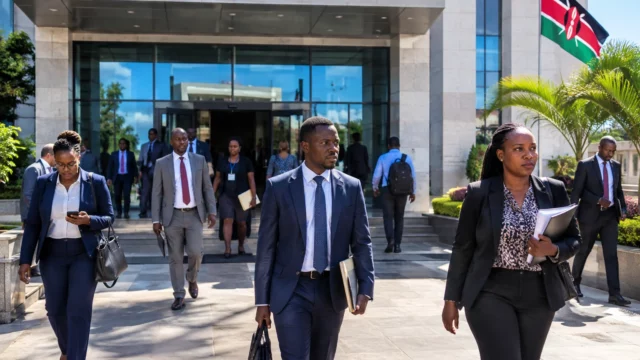
This tension is at the heart of the World Bank’s latest economic assessment, presented in Nairobi on 4 November 2026. It describes an economy that is moving forward, but whose potential is constrained by rules applied inconsistently and insufficiently monitored public spending.
A resilient economy under fiscal pressure
Kenya remains a major economic hub in East Africa. Nairobi is home to corporate headquarters, financial services and technology businesses, while trade with neighbouring countries gives the port of Mombasa a regional role. The country belongs to the East African Community (EAC), which seeks to facilitate trade and movement among its member states.
Economic conditions nevertheless remain constrained. According to the World Bank presentation, economic activity grew by 5.2% in the first half of 2026, after 4.6% in 2025. The institution forecasts annual growth of 4.6% in 2026, owing to an expected slowdown in the second half of the year.
At the same time, the budget deficit reached 6.8% of gross domestic product (GDP) in the 2025-2026 financial year, according to the same assessment. Public debt stood at 72.3% of GDP in August 2026. Interest payments absorb about a third of public revenue, reducing the funds available for infrastructure and services.
The cost of bypassed rules
The report estimates that corruption and collusion in public procurement widen the deficit by about two percentage points of GDP a year. This figure does not represent an amount that could be recovered into a single fund: it measures the combined impact of inflated spending, lost tax revenue and practices that make public action more expensive.
The World Bank also estimates that 39% of Kenyan businesses considered corruption a major or severe constraint in 2025, up from 25% in 2013. In addition, 36% of businesses surveyed said they had faced a request for a bribe in the previous year. These figures appear in the 34th Kenya Economic Update.
For a business, these practices add costs and make decisions less predictable. Smaller firms often have fewer resources to absorb these expenses or wait for an administrative process to move forward. Larger companies, too, may decide against investing when rules on the awarding of contracts or oversight seem opaque.
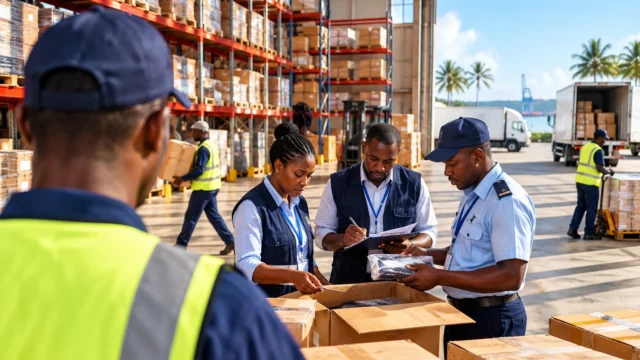
The report also draws attention to multiple checks on goods passing through the port of Mombasa. These can slow trade and create more opportunities to solicit informal payments. The impact therefore extends beyond Kenya’s borders: Ugandan, Rwandan and other landlocked East African businesses also depend on corridors running through Kenyan territory.
Different effects across households and regions
Households face another kind of cost: informal payments demanded to access a service, obtain a document or speed up a process. For low-income households, even small, repeated sums eat into budgets for transport, food or education. The report notes that these practices also undermine trust in institutions.
The consequences are not the same everywhere. In Nairobi, the concentration of government offices and businesses makes the issues around public procurement and administrative processes more visible. In rural areas, access to services depends more on the local presence of public officials and infrastructure. In both cases, people with few alternatives or avenues for redress find it harder to bear the additional costs.
The labour market compounds this vulnerability. The World Bank says that 83.8% of jobs remain informal. These workers often have less regular incomes and limited social protection. They therefore benefit less directly from aggregate growth if it does not translate into more stable jobs and accessible services.
The response also lies in institutions
The report does not present corruption as the only obstacle to growth. It highlights a range of governance problems affecting public spending, taxation, procurement and the enforcement of rules. The World Bank estimates that improvements to these mechanisms could raise GDP by up to 20% by 2035 compared with a scenario in which no progress is made. This is a projection, not a guaranteed outcome.
The issue is therefore as much institutional as economic. More open tenders, audits followed by consequences and accessible complaints procedures can reduce risks. But publishing rules is not enough: their enforcement must be verifiable, including when officials or influential companies are involved.
The Kenyan government remains the key decision-maker. Oversight bodies, Parliament, the courts, local authorities and civil society also have a role to play. The challenge is to make oversight robust enough to protect public money without creating administrative delays that penalise legitimate business activity.
An issue extending beyond Kenya
Kenya’s economic weight gives these choices regional significance. Kenyan investment, transport and trade are linked to EAC markets. More transparent public procurement could strengthen business confidence and ease the flow of trade along regional corridors. Conversely, inefficient spending and costly debt limit the resources available for infrastructure on which several neighbouring economies depend.
What happens next will depend on concrete decisions: how Nairobi follows up on the recommendations, oversees contracts and protects public revenue. The next challenge will not simply be the announced growth rate, but the ability to turn that growth into more productive jobs and services that Kenyans can actually benefit from.