Algeria
 Egypt
 Libya
 Morocco
 Sudan
 Tunisia
 Benin
 Burkina Faso
 Cabo Verde
 Côte d'Ivoire
 Ghana
 Guinea
 Guinea-Bissau
 Liberia
 Mauritania
 Niger
 Nigeria
 Senegal
 Sierra Leone
 The Gambia
 Togo
 Cameroon
 Central African Republic
 Chad
 DR Congo
 Equatorial Guinea
 Gabon
 Republic of the Congo
 São Tomé and Príncipe
 Burundi
 Comoros
 Djibouti
 Eritrea
 Ethiopia
 Kenya
 Madagascar
 Malawi
 Mauritius
 Mozambique
 Rwanda
 Seychelles
 Somalia
 South Sudan
 Tanzania
 Uganda
 Angola
 Botswana
 Eswatini
 Lesotho
 Namibia
 South Africa
 Zambia
 Zimbabwe
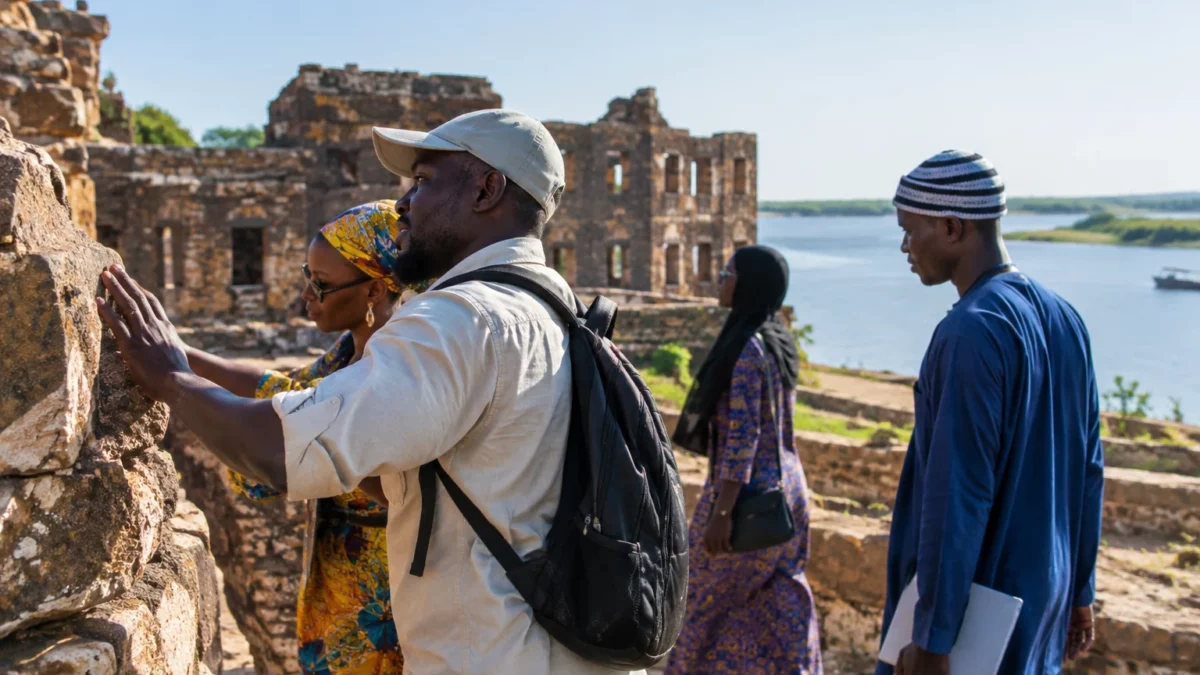
At Kayes, in western Mali, the Senegal River links places whose histories intersect without merging. Médine Fort recalls resistance to colonial expansion and the balance of power in the 19th century. Further upstream, the Gouina Falls reveal the power of the river, now also harnessed to generate electricity.
A territory shaped by the river and trade
Kayes lies near the Senegalese border, on a river route long used for travel and trade. The city is the capital of the region of the same name. In this part of Mali, local history has been shaped by contact between kingdoms, riverside communities and powers seeking to control the crossings.
The Senegal River now extends beyond national borders. It flows through or borders several West African countries and is the subject of regional cooperation, particularly on water management and infrastructure. This dimension matters at Gouina: developments along the river meet energy needs that go beyond Mali alone.
Médine, between local memory and colonial conquest
About 12 kilometres from Kayes, Médine Fort overlooks a strategic site on the riverbank. It was built in 1855 at the instigation of Louis Faidherbe, then governor of Senegal. For the French administration, the fort served as a base for expansion into the interior. But its history is not simply one of conquest: Médine was part of a region already organised by the powers and populations of Khasso.
The siege of 1857 left a lasting mark on the site. On 20 April, El Hadj Omar Tall’s forces attacked the fortress before laying siege to it. The defenders held out until reinforcements led by Faidherbe arrived on 18 July. These dates are reported by historical and institutional sources, although accounts of the episode sometimes reflect the perspective of the colonial authorities who produced them.
The fort retains remnants of its walls and military buildings, including a powder magazine and a former prison. It has been listed as part of Mali’s national heritage since 1st December 1992. It is also on UNESCO’s Tentative List, a step in the nomination process that does not mean a site has been inscribed on the World Heritage List.
This recognition invites a nuanced reading of the monument. The fort bears witness to the French military presence, but also to the resistance, alliances and local authorities caught up in this period. Presenting it solely as a heroic fortress would erase the power relations that accompanied colonisation.
At Gouina, the river also holds energy potential
The Gouina Falls are on the Senegal River, several dozen kilometres from Kayes, towards Bafoulabé. Malian tourism sources place them about 80 kilometres from the city. Here, the water flows over a series of rocks and rapids. The height of the falls is often estimated at about 15 metres, although descriptions vary depending on the documents and measurements used.
The landscape is not the only issue at stake. The Gouina hydroelectric dam was inaugurated in 2022. The project is part of an approach to electricity generation across the Senegal River basin. It is a reminder that the same river is a natural environment, a resource for riverside communities and a strategic infrastructure asset.
These uses can complement one another, but they require careful management. Electricity generation depends on the dam’s operation and the river’s flow. The activities of people upstream and downstream, meanwhile, are linked to access to water, land and local resources. The information available here does not make it possible to quantify the project’s precise effects on each community.
Preserving and bringing heritage to life
For the people of Kayes and neighbouring communities, Médine and Gouina are heritage assets and places of memory. Promoting them can support cultural and tourism activities. This requires, however, maintained access, reliable information and ongoing site conservation. Visitor numbers alone are not enough to guarantee benefits for riverside communities.
The challenge also lies in connecting the stories. The fort does not tell only of the French army’s arrival; the falls are not merely a natural backdrop. Together, these places shed light on the river’s role in the region’s political history, trade and development choices.
Across West Africa, Gouina is a reminder that energy and water are managed across borders. Médine, for its part, shows how local memories can shed light on the history of colonisation beyond the account given solely by European powers. Preserving the fort and monitoring the river’s uses will be crucial to passing on this heritage without reducing it to an attraction or a single symbol.