
 Algeria
 Egypt
 Libya
 Morocco
 Sudan
 Tunisia
 Benin
 Burkina Faso
 Cabo Verde
 Côte d'Ivoire
 Ghana
 Guinea
 Guinea-Bissau
 Liberia
 Mali
 Mauritania
 Niger
 Nigeria
 Senegal
 Sierra Leone
 The Gambia
 Togo
 Cameroon
 Central African Republic
 Chad
 Equatorial Guinea
 Gabon
 Republic of the Congo
 São Tomé and Príncipe
 Burundi
 Comoros
 Djibouti
 Eritrea
 Ethiopia
 Kenya
 Madagascar
 Malawi
 Mauritius
 Mozambique
 Rwanda
 Seychelles
 Somalia
 South Sudan
 Tanzania
 Uganda
 Angola
 Botswana
 Eswatini
 Lesotho
 Namibia
 South Africa
 Zambia
 Zimbabwe
When custom corrects its own excesses
In Kananga, in Kasaï-Central, a decision by traditional authorities has changed the tone of the debate on women’s rights. Where some practices were presented as unchangeable customs, traditional chiefs have chosen to remove several that humiliate, expose or confine women and girls.
The move matters first because it comes from within the customary system. In the Democratic Republic of the Congo, custom remains highly influential in many communities, especially in rural areas. When it evolves, the effects can be quicker than those of a conventional awareness campaign, because it reaches those who settle everyday disputes, families and local alliances.
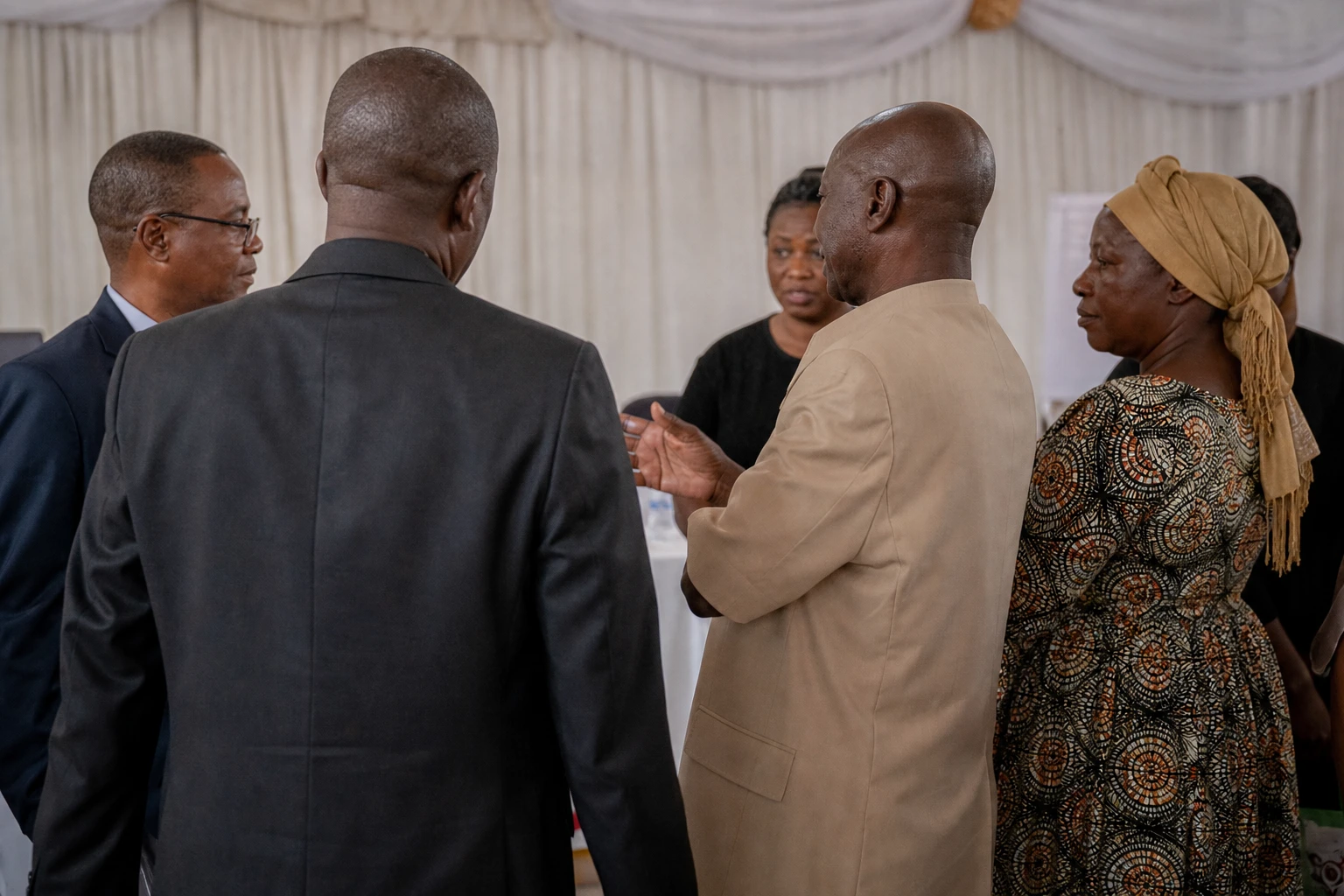
The meeting in Kananga took place on Thursday 3 September 2026, in the presence of Denise Nyakeru Tshisekedi and the wives of traditional leaders. The chiefs of Kasaï-Central then pledged to ban several practices deemed degrading: customary punishments related to adultery, early marriage, as well as sororate and levirate marriage. In some communities, a woman accused of adultery could still be fined and, in the most symbolically violent cases, forced to endure public humiliation.
This shift is not an isolated one. It is part of long-term work carried out over several years by local organisations and UN partners, including UNFPA in the DRC and the NGO Femme Main dans la Main pour le Développement Intégral. These actors have repeatedly raised the alarm about the persistence in Kasaï-Central of sexual violence, early marriage and other social practices that make women more vulnerable.
A region marked by trauma that remains visible
The context of Greater Kasai gives the announcement in Kananga particular significance. The region suffered violence linked to the Kamuina Nsapu phenomenon between 2016 and 2017. The social fallout lasted long after the clashes. Survivors of rape were rejected, stigmatised or forced to leave their homes. Traditional authorities say they have been asked to help facilitate some returns to families, showing that social reintegration remains a practical, not merely legal, issue.
Available figures should be treated with caution. Traditional authorities cite more than 700 cases of rape recorded in the province during that period. Other humanitarian and UN actors have also documented high exposure to gender-based violence among women and girls in Kasaï-Central. This convergence is enough to show the scale of the problem, even if the exact totals vary according to the methods of collection and areas covered.
Against this backdrop, ending compulsory sororate and levirate marriage has very concrete significance. Sororate, in which a man is joined to the sister of his deceased wife, and levirate, which sometimes requires a widow to marry her late husband’s brother, are longstanding social practices. They are not in themselves problematic when the choice remains free. They become problematic when they are made compulsory and deprive women of their consent.
The issue also concerns early marriage. Congolese law already prohibits it. The law of 15 July 2016 amended the Family Code, establishing 18 as the minimum age for marriage. The legal framework is therefore in place. The real challenge is enforcement in villages, chiefdoms and families where the word of the traditional chief still carries considerable weight.
Between written law, custom and local power dynamics
The debate in Kananga highlights a familiar reality in the DRC: national law is advancing, but its effectiveness often depends on local intermediaries. In Kinshasa, the laws are clear. On the ground, family arrangements, social sanctions and community pressure still carry weight. This is where the support of traditional chiefs becomes strategic. Without them, the ban on early marriage or the protection of survivors of sexual violence can remain theoretical.
For women, the stakes are twofold. On the one hand, reforming humiliating practices reduces symbolic violence, rejection and shame. On the other, it can open up a path to reintegration for survivors who have hesitated to return home for fear of exclusion. For families, it also means a shift in how marital conflicts and the legacy of violence are addressed.
For traditional chiefs, the message is important. They are not repudiating tradition. They are selecting the elements compatible with human dignity and the laws of the country. This distinction matters because it avoids a sterile confrontation between modernity and custom. Instead, it puts custom face to face with its own social responsibility.
Denise Nyakeru Tshisekedi’s presence in Kananga also had a political dimension. The First Lady has for several years worked on issues related to maternal health, violence against women and the protection of girls. Her presence gives national visibility to a local commitment. But the main test will not be on the podium. It will be in villages, customary courts and families, where old norms either endure or recede.
At regional level, the case of Kasaï-Central is part of a broader dynamic in Central and Southern Africa: societies seeking to reconcile written law, traditional authorities and the protection of women. For the DRC, a member of SADC, the issue therefore goes beyond Kananga. It concerns the credibility of policies to combat gender-based violence and the state’s ability to enforce its own laws without denying the role of local mediation. It is in this balance, more than in the announcements, that the real impact of the commitment made in Kasaï-Central will be measured.



