Algeria
 Egypt
 Libya
 Morocco
 Sudan
 Tunisia
 Benin
 Burkina Faso
 Cabo Verde
 Côte d'Ivoire
 Ghana
 Guinea
 Guinea-Bissau
 Liberia
 Mali
 Mauritania
 Niger
 Nigeria
 Senegal
 Sierra Leone
 The Gambia
 Togo
 Central African Republic
 Chad
 DR Congo
 Equatorial Guinea
 Gabon
 Republic of the Congo
 São Tomé and Príncipe
 Burundi
 Comoros
 Djibouti
 Eritrea
 Ethiopia
 Kenya
 Madagascar
 Malawi
 Mauritius
 Mozambique
 Rwanda
 Seychelles
 Somalia
 South Sudan
 Tanzania
 Uganda
 Angola
 Botswana
 Eswatini
 Lesotho
 Namibia
 South Africa
 Zambia
 Zimbabwe
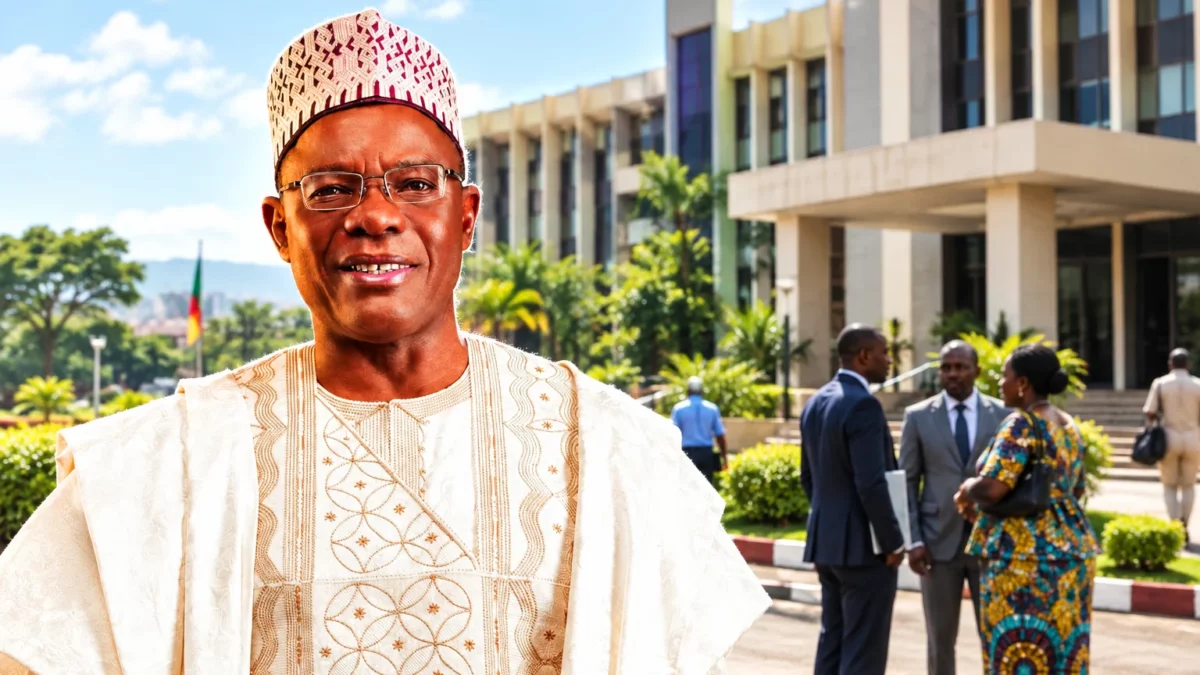
In Yaoundé, filing a candidacy can also test a party’s ability to reorganise. By standing in Mfoundi, Maurice Kamto is bringing the Cameroon Renaissance Movement (MRC) back to the centre of an electoral contest the party avoided in 2020.
A return to the arena after a year of reshaping
The election scheduled for 7 February 2027 will renew the membership of parliament and municipal councils. These nationwide elections will have particular significance in the capital: candidates in Mfoundi are competing for seven seats in the National Assembly, according to the Cameroonian press. The department includes Yaoundé, where political institutions, government offices and party headquarters are concentrated.
Kamto’s candidacy comes after several episodes that have reshaped his political position. In 2025, his candidacy for the presidential election was rejected by the electoral authorities, a decision he contested. Then, on 8 September 2026, he stepped down as national president of the MRC, amid disagreements over his re-election as party leader and tensions with the Ministry of Territorial Administration. Deutsche Welle reported on his resignation and the circumstances surrounding it.
His departure therefore did not mean he was withdrawing from political life. On the contrary, it left open a strategic question: what role does the former MRC president now intend to play within the party and the opposition? His legislative candidacy offers an initial answer, without resolving questions about the party’s leadership and internal cohesion.
Filing is not yet approval
On Tuesday 24 November, just hours before the deadline, Kamto submitted his application to Elections Cameroon (Elecam), the body responsible for organising and supervising elections. Two Cameroonian media outlets, Journal du Cameroun and Le Bled Parle, report that he filed in Mfoundi. Available information indicates that he is leading the MRC list in the constituency.
This is an administrative step, not a final decision. Elecam must examine the applications before publishing the list of approved or rejected candidates. Journal du Cameroun says the list is expected to be published on 9 December 2026. Kamto’s presence on the ballot therefore still depends on approval of his application and, if applicable, any pre-election appeals.
The late filing nevertheless has immediate political significance. It gives the MRC a national figure around whom to organise its campaign in the capital. It also allows Kamto to return to a constituency-level contest after being at the forefront of the 2018 presidential election and then being excluded from the 2025 race.
A test for the MRC and the ruling party
For the MRC, taking part in the legislative elections offers a route to institutional representation. The party boycotted the 2020 legislative and municipal elections, leaving it without elected representatives from those polls. In 2027, a candidacy in Mfoundi therefore puts its strategy back in play: turning a national political presence into seats in an urban constituency where the contest may be particularly visible.
For voters, the stakes go beyond the candidates’ name recognition. Members of parliament vote on laws and scrutinise government action; municipal councillors are involved in local administration. Priorities differ across neighbourhoods and social groups, including access to services, transport, urban planning and formal and informal economic activity. The campaign will show what solutions the lists propose, but their filing alone is not enough to judge them.
The Cameroon People’s Democratic Movement (CPDM), which is in power and holds a majority in the institutions, will have to defend its position amid internal rivalries over nominations. Kamto’s candidacy may intensify competition in Mfoundi, but it is not enough to conclude that the CPDM is losing electoral support. The election, the composition of the approved lists and voter turnout will determine the real balance of power.
Kamto’s decision also raises an organisational question for the MRC: how will his candidacy be coordinated with the party’s current leadership, now headed by Tiriane Balbine Noah, according to Cameroonian media? The campaign and any decisions by Elecam will show whether this new arrangement strengthens the party or brings its internal divisions further into view.
A national election with regional resonance
The election will take place in a member country of the Economic and Monetary Community of Central Africa (CEMAC), which brings together six states for economic and monetary co-operation. This membership does not determine the election results, but it places Cameroon in a regional space where institutional stability and political predictability matter for trade and cross-border investment.
Across the continent, the Cameroonian vote will be watched for answers to two practical questions: which candidates will Elecam approve in December, and what place will opposition parties secure in the institutions after the vote on 7 February 2027? For Kamto, filing marks a return to the contest. It does not prejudge the approval of his list or his result at the ballot box.