Algeria
 Egypt
 Libya
 Morocco
 Sudan
 Tunisia
 Benin
 Burkina Faso
 Cabo Verde
 Côte d'Ivoire
 Ghana
 Guinea
 Guinea-Bissau
 Liberia
 Mali
 Mauritania
 Niger
 Nigeria
 Senegal
 Sierra Leone
 The Gambia
 Togo
 Central African Republic
 Chad
 DR Congo
 Equatorial Guinea
 Gabon
 Republic of the Congo
 São Tomé and Príncipe
 Burundi
 Comoros
 Djibouti
 Eritrea
 Ethiopia
 Kenya
 Madagascar
 Malawi
 Mauritius
 Mozambique
 Rwanda
 Seychelles
 Somalia
 South Sudan
 Tanzania
 Uganda
 Angola
 Botswana
 Eswatini
 Lesotho
 Namibia
 South Africa
 Zambia
 Zimbabwe

For residents of Cameroon’s North-West and South-West, the proceedings opened in Oslo go beyond the fate of a separatist leader. They raise a concrete question: how far can justice pursue, from abroad, those suspected of responsibility for violence committed in Cameroon?
A trial opening far from the regions concerned
The trial of Lucas Cho Ayaba opened on 24 November 2026 before the Oslo District Court. The Cameroonian separatist leader pleaded not guilty to the nine charges brought against him. If convicted, he faces up to 30 years in prison, according to accounts of the hearing. Proceedings are expected to continue until March 2027; the sources consulted differ on the exact closing date announced.
Norwegian prosecutors accuse him of complicity in war crimes and terrorist acts. They say Ayaba led the Ambazonia Governing Council (AGovC), a separatist organisation, and commanded its armed wing, the Ambazonia Defence Forces (ADF), from 2017 until his arrest in September 2024. The court is examining, in particular, the role he is alleged to have played in planning attacks from Norway.
According to the prosecution, investigators are relying, among other things, on WhatsApp messages and audio recordings. Prosecutors argue that these communications could establish his alleged involvement in selecting targets and financing explosives. The defence disputes the charges. Lawyer Morten Engesbak presents his client as a leader of a struggle for independence. These are the positions of the parties; the court will have to assess the evidence.
Two attacks attributed by prosecutors to separatist networks feature prominently in the case. On 25 February 2023, three explosive devices detonated near Buea, in the South-West region, during a mountain race. The prosecution says a woman was killed and at least 19 civilians were injured. In February 2024, an explosion during Youth Day celebrations in Nkambe, in the North-West, is alleged to have killed a teenage girl and injured 92 people. These casualty figures are reported as allegations in the proceedings, not as a judicial finding establishing Ayaba’s responsibility.
The case also concerns alleged violence against prisoners and four women accused of having relationships with Cameroonian soldiers. A voice message attributed to Ayaba, sent after he received images showing a prisoner being mistreated, is presented by the prosecution as evidence to be examined. The authenticity, context and significance of this material are matters for the court to consider.
A crisis rooted in political and linguistic grievances
The current conflict has its roots in the protests of 2016. Lawyers and teachers in the English-speaking regions were protesting the place given to French in courts and schools, as well as the appointment of French-speaking magistrates with little familiarity with common law, the legal system inherited from the British tradition. The suppression of the protests contributed to the escalation. In 2017, separatist groups declared the independence of a state they call Ambazonia.
The separatist movement is not a unified bloc. It comprises distinct organisations and commands, while the Cameroonian authorities maintain sovereignty over the two regions. The crisis pits state forces against armed groups, but civilians also bear its consequences: attacks, kidnappings, movement restrictions and disruptions to schooling and economic activity. Human rights organisations have also documented abuses attributed to government forces. None of these findings prejudges the individual criminal responsibility being examined in Oslo.
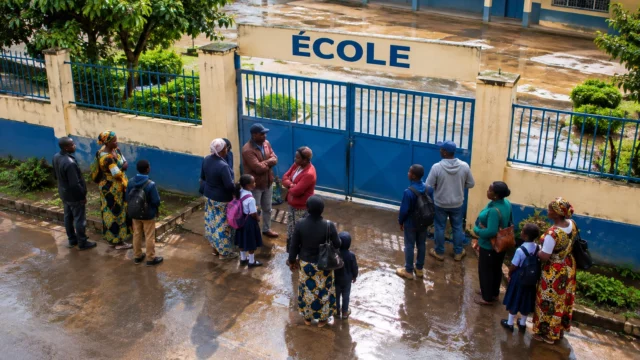
The conflict affects territories and livelihoods in different ways. In cities such as Bamenda and Buea, calls for shutdown days can interrupt businesses, services and classes. In rural areas, insecurity restricts travel and access to markets. Informal economy workers, pupils and displaced families often have fewer alternatives than those established in major urban centres.
Individual responsibility examined outside Cameroon
The Norwegian proceedings move part of the judicial debate outside the country where the alleged offences took place. They resolve neither English-speaking political grievances nor the conflict itself. They can, however, examine the responsibility of an alleged leader based abroad, on the basis of communications and evidence gathered by investigators. The distinction matters: prosecuting one person is not the same as judging an entire community or a whole movement.
The proceedings have evolved since Ayaba’s arrest in September 2024. Norwegian authorities initially arrested him as part of an investigation into alleged crimes against humanity. According to Cameroon News Agency, the corresponding charge was later dropped for lack of sufficient evidence to support it. The trial therefore concerns the charges retained after the investigation, not all the initial lines of inquiry.
At the regional level, the effects of the crisis extend beyond Cameroon’s borders. Neighbouring Nigeria hosts people who have fled the violence, while internal displacement puts pressure on host families and local services. Cameroon belongs to CEMAC, the Economic and Monetary Community of Central Africa, but the English-speaking crisis is not a conflict between states in the sub-region. Its development nevertheless has implications for regional cooperation on displacement, border security and humanitarian access.
Civilians watch the coming months
The hearings in Oslo will allow the prosecution and defence to be heard, before the court examines the evidence against Ayaba and the responses to it. When it is delivered, the verdict can establish only individual responsibility under Norwegian law. In Cameroon, civilian protection, continuity of education and the possibility of a political settlement will remain separate challenges that cannot be resolved by a trial abroad.
The case is also a reminder that contemporary conflicts cross borders through digital networks as well as population movements. But an alleged communication does not, on its own, constitute proof of guilt: it is for the court to determine its evidential value. Cameroonians in the English-speaking regions will closely follow the judicial outcome, which will not erase the political causes of the crisis or the daily needs of affected communities.