Algeria
 Egypt
 Libya
 Morocco
 Sudan
 Tunisia
 Benin
 Burkina Faso
 Cabo Verde
 Côte d'Ivoire
 Ghana
 Guinea
 Guinea-Bissau
 Liberia
 Mali
 Mauritania
 Niger
 Nigeria
 Senegal
 Sierra Leone
 The Gambia
 Togo
 Central African Republic
 Chad
 DR Congo
 Equatorial Guinea
 Gabon
 Republic of the Congo
 São Tomé and Príncipe
 Burundi
 Comoros
 Djibouti
 Eritrea
 Ethiopia
 Kenya
 Madagascar
 Malawi
 Mauritius
 Mozambique
 Rwanda
 Seychelles
 Somalia
 South Sudan
 Tanzania
 Uganda
 Angola
 Botswana
 Eswatini
 Lesotho
 Namibia
 South Africa
 Zambia
 Zimbabwe
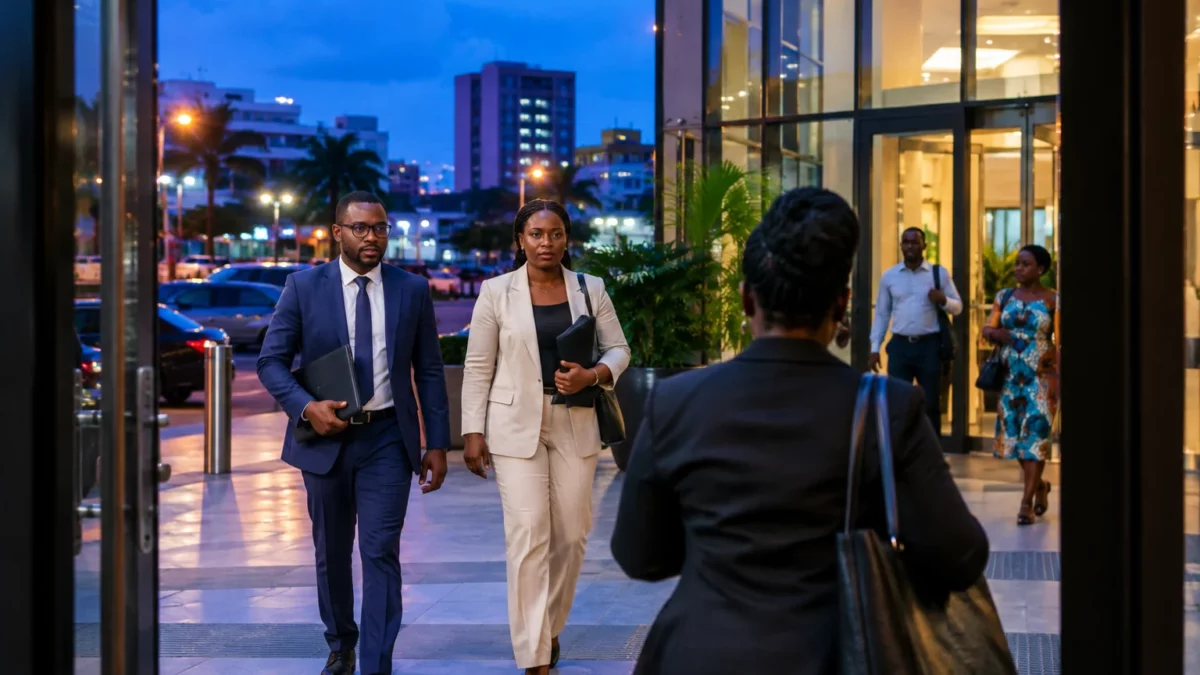
For a Cameroonian business looking to invest, access to a loan also depends on the resources available to banks. A new agreement between Afriland First Bank and a German institution adds funding to this effort, though the terms of its use have not yet been made public.
FCFA 13.1 billion in funding, but terms remain unknown
On 12 November 2026 in Cologne, Afriland First Bank Cameroon signed a €20 million financing agreement, equivalent to around FCFA 13.1 billion, with Deutsche Investitions- und Entwicklungsgesellschaft (DEG). The bank announced the deal on 24 November. DEG, a subsidiary of Germany’s public development bank KfW, finances private businesses in developing countries.
The stated aim is to support businesses and entrepreneurship in Cameroon by strengthening the bank’s lending capacity. But the signing does not, in itself, mean that the full amount has already been disbursed. Afriland has not made public the instrument chosen, its duration or cost, any potential guarantees, or the payment schedule. Nor does the agreement specify how the financing will be allocated between sectors or categories of business.
This distinction matters to borrowers. A credit line for a bank does not automatically translate into a loan available to a business. Eligibility criteria, the cost of credit and distribution arrangements will determine who can actually access the funds.
A longstanding partnership in a regional market
Afriland describes its cooperation with DEG as a partnership of more than 30 years, marked by financial and technical support. Gudrun Busch, DEG’s senior director for financial institutions and capital markets, said the transaction reflected her institution’s confidence in the bank and its ability to channel funding to businesses that create jobs.
Cameroon is part of the Central African Economic and Monetary Community (CEMAC), which brings together six countries under common monetary and banking institutions. Banking supervision falls in particular to the Central African Banking Commission, COBAC. The resources mobilised by a Cameroonian bank therefore operate within a regional prudential framework, even when the businesses financed initially operate in the domestic market.
DEG had previously granted Afriland a subordinated loan of €10 million, reported in 2010 by Entwicklungspolitik Online. In the event of difficulties, a subordinated loan is repaid after ordinary creditors; depending on its characteristics, it can help strengthen a bank’s financial base. This precedent sheds light on the length of the relationship, but does not allow the terms of the new agreement to be inferred.
A contribution to compare with lending already provided
As at 31 October 2026, Afriland said its outstanding loans totalled FCFA 1,684.5 billion. The FCFA 13.1 billion facility represents less than 1% of that amount. The comparison provides a sense of scale, not a forecast: the impact will depend on disbursements, the duration of the financing and the loans actually granted to businesses.
In April, the bank said it had provided FCFA 1,200 billion in loans to private businesses in 2025. The figure, released by the bank and reported by several Cameroonian media outlets, describes annual activity; it does not specify the share going to small businesses, rural areas or particular sectors. The financing needs of a local SME are not necessarily the same as those of a large, well-established company.
On 5 November 2026, Afriland also announced that its share capital had risen from FCFA 50 billion to FCFA 110 billion. The FCFA 60 billion increase was achieved by capitalising reserves. In other words, it converts resources already recorded in the accounts into share capital, without a new cash injection. It therefore does not, by itself, provide additional funds immediately available for lending.
Multiple sources of funding, effects to be assessed
The agreement with DEG adds to other financing initiatives. In 2025, the International Finance Corporation (IFC), a member of the World Bank Group, announced a facility of up to $60 million to support small and medium-sized Cameroonian businesses, with particular focus on companies owned or led by women. In September 2026, a letter of intent for a proposed €50 million facility for Afriland was also mentioned in connection with operations linked to the Islamic Corporation for the Development of the Private Sector. A letter of intent, however, does not confirm that funds have been disbursed.
For businesses, the issue therefore goes beyond the amount announced. The sums actually paid out, the terms of credit and the distribution of loans across activities and regions will need to be monitored. Businesses with guarantees and sound financial statements may be better placed than small informal operations or those located far from major urban centres. The promised technical assistance may also matter, but its beneficiaries and scope remain to be specified.
The regional impact also warrants attention: within CEMAC, banks’ ability to finance businesses affects investment and employment beyond Cameroon’s borders. Afriland says it will hold an initial review of its cooperation with DEG in June 2027. That meeting will provide an opportunity to assess how the partnership is being implemented; in the meantime, the detailed terms and businesses’ actual access to credit remain the main questions to be answered.