Algeria
 Egypt
 Libya
 Morocco
 Sudan
 Tunisia
 Benin
 Burkina Faso
 Cabo Verde
 Côte d'Ivoire
 Ghana
 Guinea
 Guinea-Bissau
 Liberia
 Mali
 Mauritania
 Niger
 Nigeria
 Senegal
 Sierra Leone
 The Gambia
 Togo
 Central African Republic
 Chad
 DR Congo
 Equatorial Guinea
 Gabon
 Republic of the Congo
 São Tomé and Príncipe
 Burundi
 Comoros
 Djibouti
 Eritrea
 Ethiopia
 Kenya
 Madagascar
 Malawi
 Mauritius
 Mozambique
 Rwanda
 Seychelles
 Somalia
 South Sudan
 Tanzania
 Uganda
 Angola
 Botswana
 Eswatini
 Lesotho
 Namibia
 South Africa
 Zambia
 Zimbabwe
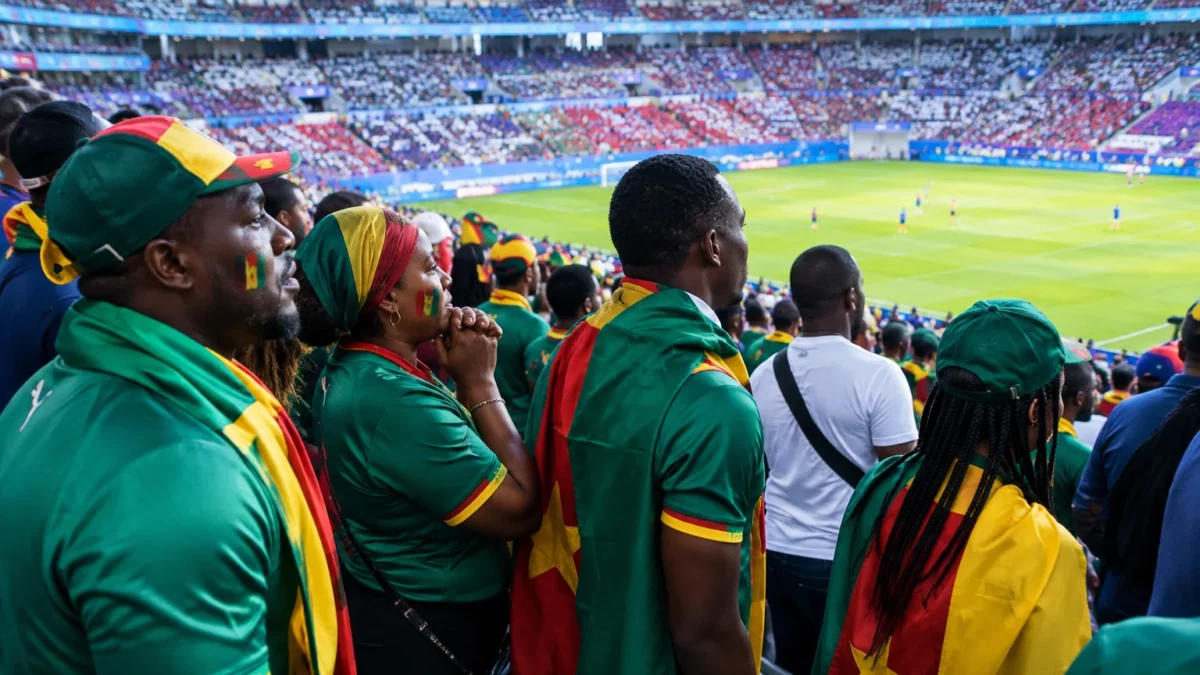
A solid first half is not always enough to see out a match. For the young Cameroonians competing at the U-17 World Cup in Qatar, defeat by Mexico has complicated their route to the round of 32 and put their final Group K fixture at the centre of attention.
A tight group and little room for error
Cameroon are in Group K with Mexico, Romania and Venezuela. The competition brings together 48 teams divided into 12 groups. The top two teams in each group and the eight best third-placed teams progress to the round of 32. This format broadens the paths to qualification, but makes every result and every goal important.
The Cameroonian side had already lost 2-1 to Venezuela on 21 November. Three days later, on 24 November, they were beaten 4-0 by Mexico. In the other group match played the same day, Venezuela defeated Romania 1-0. These results, published by FIFA, leave Cameroon without a point after two matches, ahead of their final group game against Romania.
The tournament is taking place in Qatar, but its significance extends beyond the competition itself. For young players, a World Cup at this level is an international showcase. For the Cameroonian Football Federation and youth development structures, it is also an opportunity to assess their level of preparation against teams with different styles.
Mexico took control after the break
In Doha, Cameroon held their own against their opponents in the first half, according to post-match comments attributed to coach Thomas Libiih. The second half changed the course of the match, however: Mexico scored four goals and won comfortably. FIFA confirms the score and names Miguel Rivera as player of the match. An African sports media outlet also reported the result on 24 November.
Thomas Libiih said his team had lost their concentration after the break and «the thread of the match». Midfielder William Gueke also spoke of a drop in tempo. According to comments reported after the match, Mexico converted all four of their chances. These assessments describe the Cameroonian bench’s point of view; they are not a substitute for a detailed analysis of the passages of play.
The score nevertheless highlights a concrete problem for the Indomitable Lions: maintaining their organisation when an opponent steps up the pace. A team can start well and stay in the match, then lose its bearings after conceding a goal or facing a series of attacks. At this level, managing transitions — switching quickly from defence to attack, and vice versa — can quickly affect the result.
The defeat therefore cannot be reduced to a question of defence or attack in isolation. The adjustments called for by Cameroonian supporters in the stands will also need to address the team’s ability to maintain its intensity and stay coordinated for 90 minutes. The details of the goals and full statistics would make it possible to identify the weaknesses observed more precisely.
Romania, the final group fixture
The match against Romania is now a decisive fixture for Cameroon’s progress. FIFA states that teams ranked among the eight best third-placed sides can also reach the round of 32. Cameroon will therefore need to seek a positive result, while knowing that their goal difference has been affected by the defeat by Mexico. Qualification will also depend on results in the other groups and on the comparison of third-placed teams.
This situation calls for a cautious assessment. A win in the final match would not, by itself, guarantee qualification. Conversely, the defeat by Mexico is not enough to conclude that Cameroon’s tournament is over. The rules of the format and the results still to come will determine whether they can continue in the competition.
For the coaching staff, preparation time between matches is limited. They will need to address lapses in concentration without unsettling the players, and prepare a plan suited to Romania. Managing effort, substitution choices and the response to an opponent’s spell of pressure will matter as much as the instructions given before kick-off.
Implications for Cameroonian youth development and African football
In Yaoundé and across the regions, the performances of youth teams are followed for reasons beyond the result alone. They fuel expectations around talent identification, development and support for players. However, a heavy defeat in a tournament is not enough, by itself, to judge an entire system: the quality of the opposition, preparation and players’ backgrounds must also be taken into account.
Cameroon are not the only African representatives in Qatar. The Confederation of African Football has named ten teams from the continent taking part in this edition. Their campaigns reflect distinct trajectories, without reducing African football to a uniform collective performance. The results of African teams will be watched in a tournament where the new format offers more places, but competition remains fierce.
For the Indomitable Lions, the immediate priority is clear: regain control against Romania and keep their qualification hopes alive. Then, whatever their final position, the assessment will need to focus on specific factors — consistency, tactical discipline and the ability to respond to changes in tempo. It is at this level that the campaign can also offer insight into youth development work in Cameroon.
Tournament results and format: FIFA’s review of the day’s action at the U-17 World Cup on 24 November. Group line-up and qualification rules: FIFA’s official tournament guide.