Algeria
 Egypt
 Libya
 Morocco
 Sudan
 Tunisia
 Benin
 Burkina Faso
 Cabo Verde
 Côte d'Ivoire
 Ghana
 Guinea
 Guinea-Bissau
 Liberia
 Mali
 Mauritania
 Niger
 Nigeria
 Senegal
 Sierra Leone
 The Gambia
 Togo
 Central African Republic
 Chad
 DR Congo
 Equatorial Guinea
 Gabon
 Republic of the Congo
 São Tomé and Príncipe
 Burundi
 Comoros
 Djibouti
 Eritrea
 Ethiopia
 Kenya
 Madagascar
 Malawi
 Mauritius
 Mozambique
 Rwanda
 Seychelles
 Somalia
 South Sudan
 Tanzania
 Uganda
 Angola
 Botswana
 Eswatini
 Lesotho
 Namibia
 South Africa
 Zambia
 Zimbabwe
An injury sustained at the age of 15 can sum up what statistics do not say: what a protracted war does to a body, a family and a future. In Cameroon’s North-West and South-West, the conflict has also displaced communities, interrupted schooling and weakened economic activity.
From language grievances to armed struggle
Cameroon is officially bilingual. Yet its English-speaking regions have denounced the appointment of French-speaking magistrates and teachers to their courts and schools. In October 2016, lawyers and teachers launched strikes to demand greater recognition of their legal and educational heritage.
The repression of the first demonstrations and rising tensions contributed to the growth of separatist groups. They are calling for the independence of the two regions and refer to their proposed state as Ambazonia. Since 2017, clashes have pitted these groups against government forces. Human rights organisations have documented abuses attributed to both sides, including kidnappings, attacks on civilians and arbitrary detention.
The stakes extend beyond the two regions. Cameroon is a member of CEMAC, the Economic and Monetary Community of Central Africa, and the African Union. The crisis affects cross-border movement, particularly towards Nigeria, and tests regional mechanisms for protecting populations.
The figures show the scale, not the full picture
Estimates vary according to the dates and scope used. UN data cited in available reports point to more than 500,000 people displaced within Cameroon because of the conflict. UNHCR says tens of thousands of Cameroonians have also sought refuge in Nigeria. These figures do not always describe the same categories of people and should therefore be read with caution.
The human cost also includes deaths and injuries. Human Rights Watch has estimated that at least 6,000 people have been killed since the conflict began. This toll is attributed to the organisation and is not a comprehensive count verified by an independent source in the available information. Humanitarian organisations also report that insecurity hampers movement, access to healthcare and the continuity of public services.
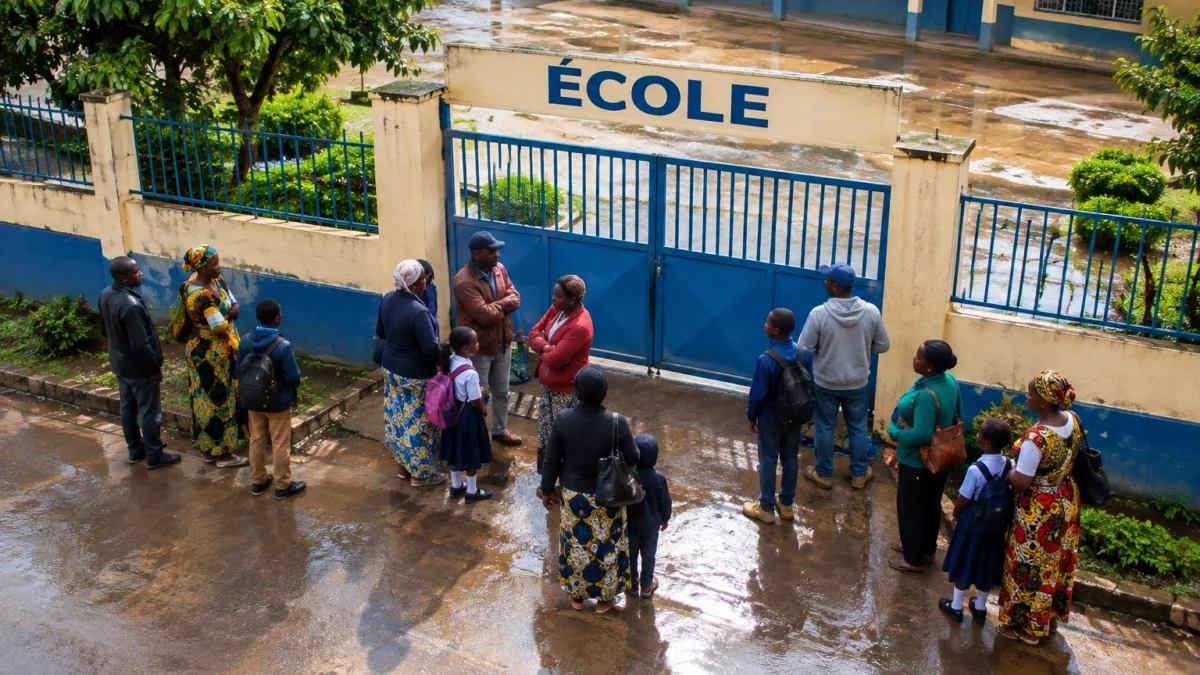
Schools remain particularly exposed in the affected regions. For 2025, UNICEF estimated that 2,460 schools were closed and more than 223,000 children had no access to learning in the North-West and South-West. The agency says these figures are based on Cameroonian education authorities. They show the extent of the disruption, but do not account for every interrupted educational journey.
Interrupted journeys, lives rebuilt
Median Bah was 15 when she was shot on her family’s property in the South-West on 7 April 2018. She says armed men opened fire as she tried to flee. Her injuries to her face and jaw required several reconstructive operations in Cameroon, Ghana and India. After eight years with a tracheostomy, she has recently been able to breathe without the opening in her neck.
Her story does not sum up the experience of every victim. It does, however, show the lasting consequences of an attack: specialist care, travel for surgery, rehabilitation and reliance on medical support. For people living far from urban centres, accessing such care can be even more difficult.
Flight to Nigeria has also reshaped lives. In Ogoja, in Cross River State, Cameroonian refugees live in camps while a return remains uncertain. Glory Akom, a mother of two, says she lost her business and financial independence in Cameroon. A monthly allowance provided by UNHCR covers only part of essential expenses, she says.
Other stories show an ability to regain a foothold without erasing losses. Maurine Mangha, who fled Akwaya with relatives, won a scholarship for refugees and is studying microbiology. But not all the friends she left behind have been able to continue their studies. Access to education thus depends on where people live, security and available resources.
Local dialogue faces a political crisis
In September 2026, Prime Minister Joseph Dion Ngute launched a community dialogue initiative in Buea, then delivered a similar message in Bamenda. The authorities presented former fighters as having abandoned the struggle. An official with the disarmament, demobilisation and reintegration programme said that about 1,500 former fighters were then being supported in the two regions.
These efforts can help fighters return to civilian life. However, on their own, they are not enough to address the political and institutional grievances that preceded the armed struggle. An earlier initiative, launched in 2019, did not bring the fighting to an end. Attacks continue and separatist groups remain fragmented.
A way out of the crisis therefore depends on addressing several fronts at once: protecting civilians, ensuring a lasting return to classes, access to healthcare, the voluntary return of displaced people and the possibility of dialogue that addresses the grievances voiced in the English-speaking regions. Local communities, traditional authorities and civil society can contribute to these discussions, but they cannot replace national political decisions.
A reach beyond Cameroon’s borders
For neighbouring countries, displacement and protection needs make this a regional concern. For the African Union, it is a reminder that stability is measured not only by a decline in clashes: it also depends on trust in institutions and effective access to essential services.
In Cameroon, the next step will therefore not be judged solely by the number of surrenders announced. It will be necessary to see whether schools reopen for good, whether families can return safely and whether the grievances that gave rise to the crisis find a credible political forum. For Median, survival and surgery have already made personal rebuilding possible. For affected communities, lasting peace remains tied to changes that go beyond each individual journey.