Algeria
 Egypt
 Libya
 Morocco
 Sudan
 Tunisia
 Benin
 Burkina Faso
 Cabo Verde
 Côte d'Ivoire
 Ghana
 Guinea
 Guinea-Bissau
 Liberia
 Mali
 Mauritania
 Niger
 Nigeria
 Senegal
 Sierra Leone
 The Gambia
 Togo
 Cameroon
 Central African Republic
 Chad
 Equatorial Guinea
 Gabon
 Republic of the Congo
 São Tomé and Príncipe
 Burundi
 Comoros
 Djibouti
 Eritrea
 Ethiopia
 Kenya
 Madagascar
 Malawi
 Mauritius
 Mozambique
 Rwanda
 Seychelles
 Somalia
 South Sudan
 Tanzania
 Uganda
 Angola
 Botswana
 Eswatini
 Lesotho
 Namibia
 South Africa
 Zambia
 Zimbabwe
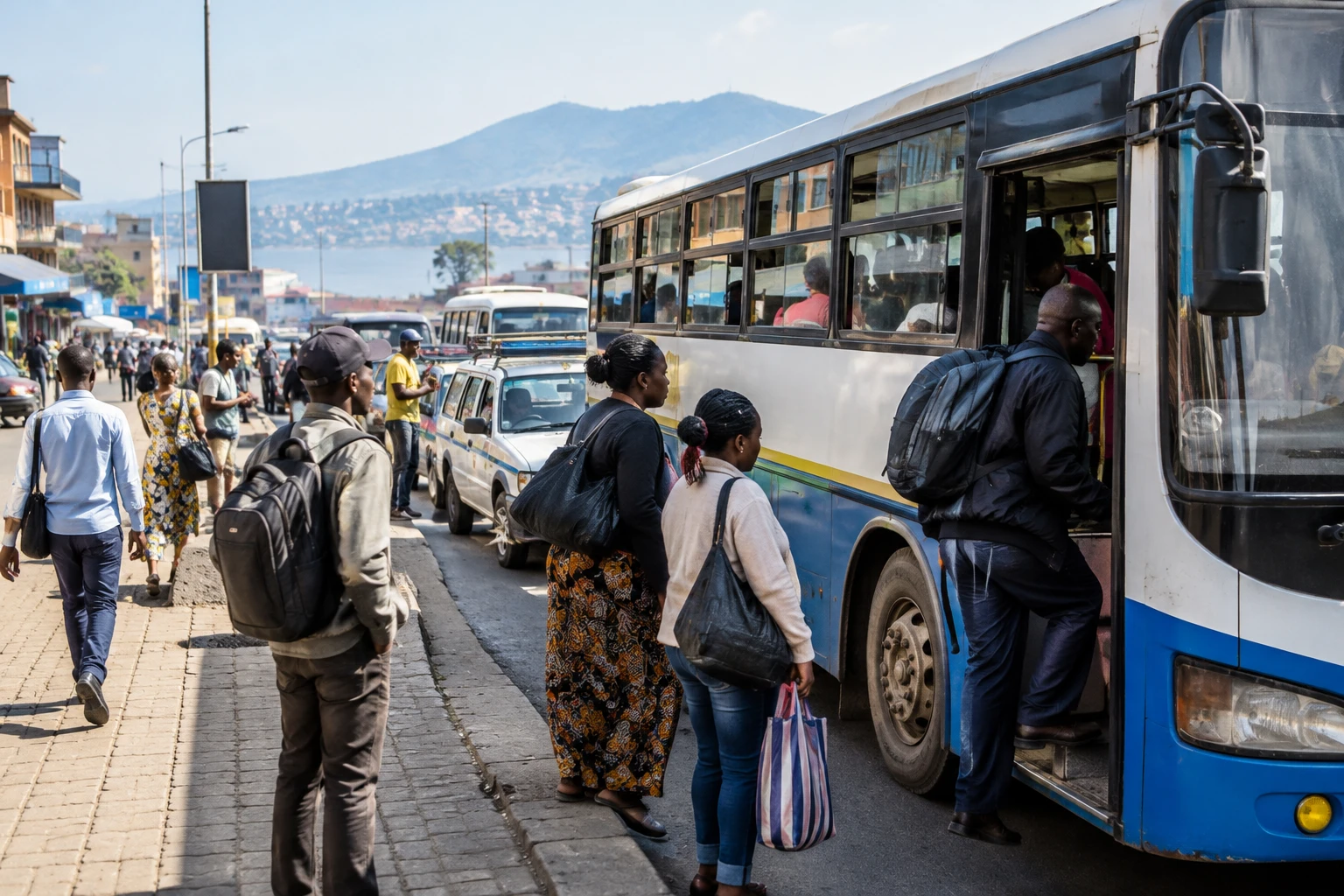
In Goma, a city in eastern Democratic Republic of the Congo (DR Congo) held by the M23, the announcement of a new armed coalition has reshuffled the political landscape. It places a former head of state at the centre of a movement that explicitly claims the right to use force.
A coalition launched from a rebel-controlled city
On 12 October 2026, Joseph Kabila was named president of the Front for the Refoundation of the Nation (FRN) at an announcement held in Goma. The news was reported by several media outlets, including the Congolese outlet Actualite.cd and the Associated Press.
The FRN brings together figures associated with the Congo River Alliance (AFC) and the March 23 Movement (M23). In its founding document, cited by Actualite.cd, the new front says it is succeeding the AFC. It does not separately specify the status of the M23, which formed the AFC/M23 politico-military alliance with the AFC.
Corneille Nangaa and Bertrand Bisimwa were named vice-presidents. Sultani Makenga, the M23’s military leader, becomes chief of staff of the Congolese Revolutionary Army and is given the rank of vice-president. This distribution of roles is set out in the movement’s statement and corroborated by reports in the Congolese press.
The FRN says it aims to coordinate the “forces of resistance” and put an end to what it calls “tyranny”, “by all means, including force”. These are the movement’s terms. No timetable for operations was announced in the document made public.
From political opposition to politico-military leadership
Joseph Kabila led DR Congo from 2001 to 2019, when Félix Tshisekedi succeeded him following the presidential election in December 2018. The former president, long discreet, has recently spoken out against his successor’s governance. He had previously denied any links to the M23.
The new role announced in Goma marks a major shift from that past public position. It comes after Kabila was sentenced to death in absentia by a Congolese military court for treason and other charges related to the conflict. Kabila has contested the proceedings and the charges. The court ruling must be distinguished from the facts now established: he has indeed been named head of the FRN, while the criminal charges remain allegations brought by the Congolese judicial authorities.
Félix Tshisekedi’s government had not commented publicly at the time of the initial reports. The FRN’s statement criticises his governance and accuses him, among other things, of violating freedoms. These allegations express the movement’s position and do not, in themselves, constitute verified facts.
For residents of Goma and neighbouring areas, the stakes go beyond rivalries at the top. The presence of a new political and military structure in a city controlled by armed forces could affect security, movement and access to services. The impact will vary by area, front line and the authorities’ ability to maintain public services.
Doha peace process faces a new equation
The war in eastern DR Congo pits government forces against the AFC/M23 in an area where numerous armed groups are active. Local issues — security, power and control of resources — are intertwined with regional tensions. Kinshasa and United Nations experts have accused Rwanda of supporting the M23; Kigali has rejected the allegations.
Since 2025, diplomatic efforts have sought to halt the fighting. The African Union has backed a peace framework agreed in Doha between the Congolese government and the AFC/M23. MONUSCO, the UN mission in DR Congo, had also welcomed progress in talks facilitated by Qatar, the United States and the African Union. But Kabila’s appointment clouds the picture of who the interlocutors are: leaders linked to the AFC/M23 are now part of a coalition claiming a broader ambition.
The change in structure raises a practical question: does the FRN intend to honour the commitments made by the AFC, or change the terms of negotiations? The public statement does not resolve this point. The next positions taken by the parties and mediators should therefore be followed, rather than the future of the talks being presumed.
Security crisis intersects with constitutional battle
The reshuffle comes as DR Congo is also facing acute political tensions in Kinshasa. Debate over possible constitutional reform has fuelled protests and clashes between opposition supporters and security forces. Critics fear the reform could open the way to a third term for Félix Tshisekedi; the president has raised the possibility if the population approves it.
The issues are distinct, but they reinforce one another politically. The conflict in the east weakens state authority and complicates preparations for elections. In Kinshasa, opposition to constitutional change is fuelling distrust of institutions. In the eastern provinces, people are directly experiencing insecurity and changes in territorial control.
The regional implications are immediate. DR Congo belongs to the Southern African Development Community (SADC) and the East African Community (EAC), two organisations involved in the balance of power in the Great Lakes region. The war, population displacement and accusations between neighbouring states spill beyond national borders. An armed coalition led by a former president could therefore complicate regional mediation efforts, although its practical impact cannot yet be measured.
The next test will be the FRN’s ability to turn its announcement into an operational organisation, and the response from the Congolese authorities and mediators. For the Congolese people, the central concern remains the protection of civilians and the possibility of a political solution that does not amount merely to a new arrangement among armed leaders.