Algeria
 Egypt
 Libya
 Morocco
 Sudan
 Tunisia
 Benin
 Burkina Faso
 Cabo Verde
 Côte d'Ivoire
 Ghana
 Guinea
 Guinea-Bissau
 Liberia
 Mali
 Mauritania
 Niger
 Nigeria
 Senegal
 Sierra Leone
 The Gambia
 Togo
 Cameroon
 Central African Republic
 Chad
 Equatorial Guinea
 Gabon
 Republic of the Congo
 São Tomé and Príncipe
 Burundi
 Comoros
 Djibouti
 Eritrea
 Ethiopia
 Kenya
 Madagascar
 Malawi
 Mauritius
 Mozambique
 Rwanda
 Seychelles
 Somalia
 South Sudan
 Tanzania
 Uganda
 Angola
 Botswana
 Eswatini
 Lesotho
 Namibia
 South Africa
 Zambia
 Zimbabwe
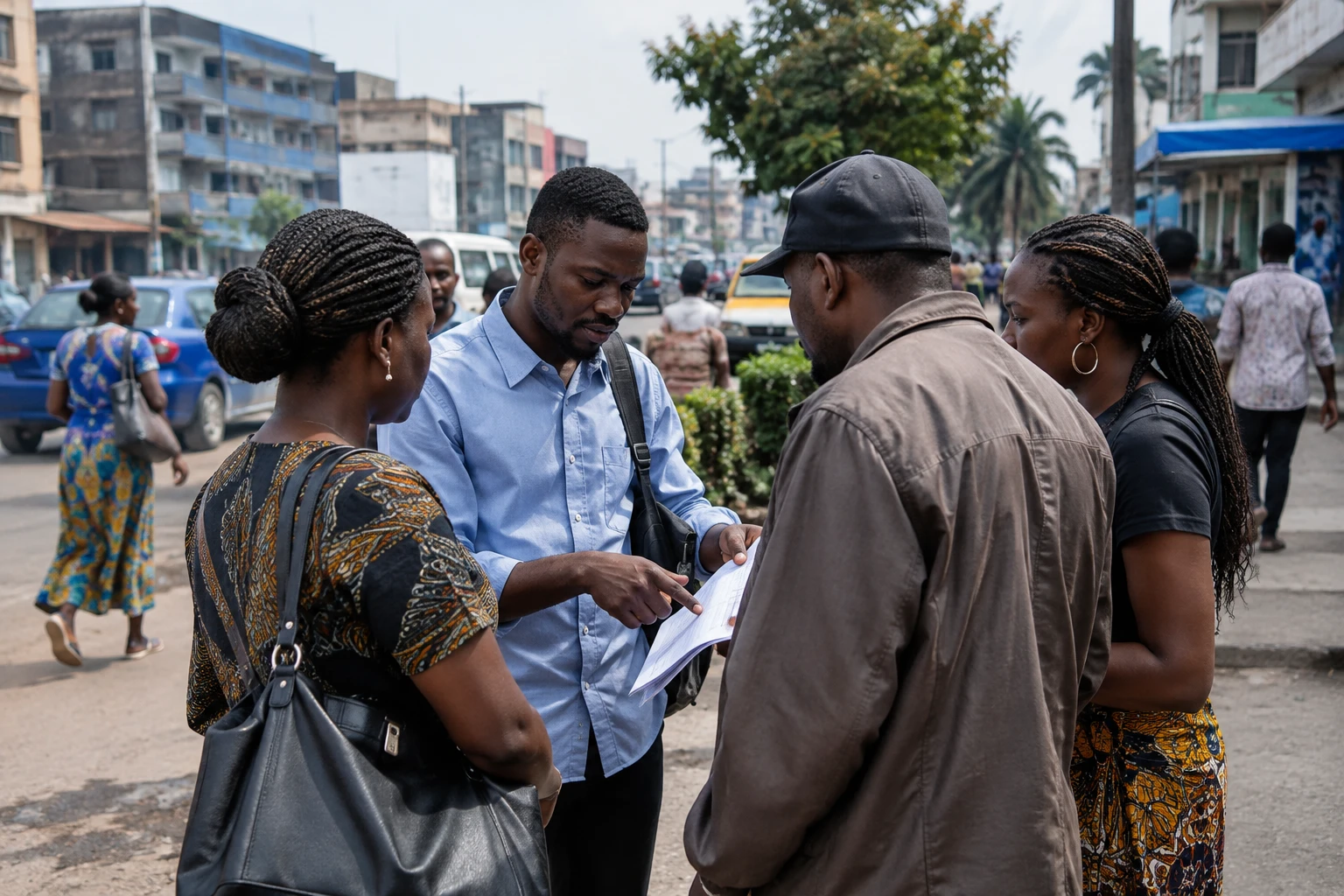
In the Democratic Republic of the Congo (DR Congo), debate over national dialogue is now being fought on two fronts: who can take part, and what place to give the political struggle in the face of war in the east. The creation of a new coalition around Joseph Kabila complicates opposition calculations, while Kinshasa defends its interests over the Congo River and the National Assembly is considering allegations linked to agricultural funds.
An opposition facing a difficult choice
For several months, the Coalition 64 (C64), which includes Martin Fayulu, Moïse Katumbi, Delly Sesanga, Jean-Marc Kabund and Augustin Matata Ponyo, has been calling for inclusive national dialogue. The platform has made its participation conditional on the rejection of the constitutional reform project it attributes to the authorities. Dialogue remains a process yet to be defined, with no framework accepted by all sides.
The situation changed on 12 October 2026. In Goma, Joseph Kabila took the lead of the Front for the Refoundation of the Nation (FRN), a political-military coalition bringing together groups previously associated with the Congo River Alliance and M23. The announcement, reported by several media outlets, ties the former president more closely to a grouping that includes armed actors. It makes any discussion of his participation in civil dialogue more delicate. Actualite.cd’s report on the creation of the FRN and the Anadolu news agency’s account give the date and location.
This rapprochement does not, in itself, settle the question of inclusion. Inviting a figure to talks does not mean endorsing his political choices; but the C64 will have to explain how it distinguishes Joseph Kabila’s participation from his role in a political-military coalition. At the time the source material was published, the five leaders were due in Rome for a conclave. A report published on 23 October places the meeting on 26 October, rather than 25 October: the deadline should therefore be read with this correction.
The context matters. Goma has been under AFC-M23 control since January 2025, according to information available on the conflict. In the east of the country, the armed crisis directly affects residents’ security and the authority of the state. In Kinshasa, the political debate also concerns institutions and the conditions for dialogue. Conflating these two realities risks reducing civilian voices to a mere extension of armed actors.
The river, a national resource and an issue for cooperation
On 22 October, at the fourth Luanda Biennale, Félix Tshisekedi set out Kinshasa’s conditions for any potential transfer of water from the Congo Basin to other African basins. The president called for respect for Congolese laws, a referendum to consult citizens and scientific guarantees to protect national interests and ecological balance. The Congolese presidency and the ACP news agency reported these conditions.
This position combines sovereignty with regional cooperation. The Congo River is a resource shared across the basin, but any transfer project would have consequences for populations, ecosystems and water-dependent activities that need to be assessed. The principle of consultation does not resolve the technical questions: the volumes involved, upstream and downstream effects, and monitoring mechanisms will also need to be established. At this stage, the cited announcements concern DR Congo’s position, not a concluded agreement or a project under way.
The statement came at a continental forum devoted to water governance as a tool for preventing and resolving conflicts. It highlights a tangible tension: states may seek joint responses to water pressures while insisting that decisions respect their institutions and populations. For Kinshasa, the next step would be to translate these conditions into studies and transparent procedures, if a specific project were to be presented.
Agricultural funds under parliamentary scrutiny
In the National Assembly, MP Hermione Bolumbe filed a motion of no confidence on 23 October targeting the Minister of State for Agriculture and Food Security, Muhindo Nzangi. She is seeking clarification over $57 million linked to the Youth Entrepreneurship in Agriculture and Agribusiness Project (PEJAB), funded by the African Development Bank (AfDB). The AfDB confirms the project exists and is funded; the allegations of mismanagement remain the MP’s claims and do not constitute an investigative finding.
The move follows an oral question with debate. According to reports in Congolese media, Bolumbe believes the minister’s answers have not resolved her concerns. Filing a motion opens a period of political scrutiny; it does not prove misappropriation. It is for the competent institutions to examine the documents, disbursements and programme outcomes, particularly its impact on young agricultural entrepreneurs.
The issue goes beyond a standoff between an MP and a minister. When funds intended for agriculture are disputed, the people most directly affected are the beneficiaries waiting for access to finance, training or support. Transparency over the use of resources and the results would help distinguish implementation delays from possible irregularities.
Three issues, one question of public trust
Political dialogue, water governance and the scrutiny of agricultural funding are not the same issue. They nevertheless raise a common question: how are decisions made, and to whom are those responsible accountable? For DR Congo, a Central African country, the answer also affects its relations with its neighbours and regional organisations, notably the Southern African Development Community (SADC), of which it is a member.
In the coming days, the C64’s position after its planned meeting in Rome will indicate its ability to maintain a common political line. On water, it will be important to distinguish statements of principle from concrete technical proposals. In parliament, the motion’s progress will show whether parliamentary scrutiny can secure documented answers. These three developments will affect public trust in Kinshasa and across the provinces, although their outcomes are not yet known.