
 Algeria
 Egypt
 Libya
 Morocco
 Sudan
 Tunisia
 Benin
 Burkina Faso
 Cabo Verde
 Côte d'Ivoire
 Ghana
 Guinea
 Guinea-Bissau
 Liberia
 Mali
 Mauritania
 Niger
 Nigeria
 Senegal
 Sierra Leone
 The Gambia
 Togo
 Cameroon
 Central African Republic
 Chad
 Equatorial Guinea
 Gabon
 Republic of the Congo
 São Tomé and Príncipe
 Burundi
 Comoros
 Djibouti
 Eritrea
 Ethiopia
 Kenya
 Madagascar
 Malawi
 Mauritius
 Mozambique
 Rwanda
 Seychelles
 Somalia
 South Sudan
 Tanzania
 Uganda
 Angola
 Botswana
 Eswatini
 Lesotho
 Namibia
 South Africa
 Zambia
 Zimbabwe
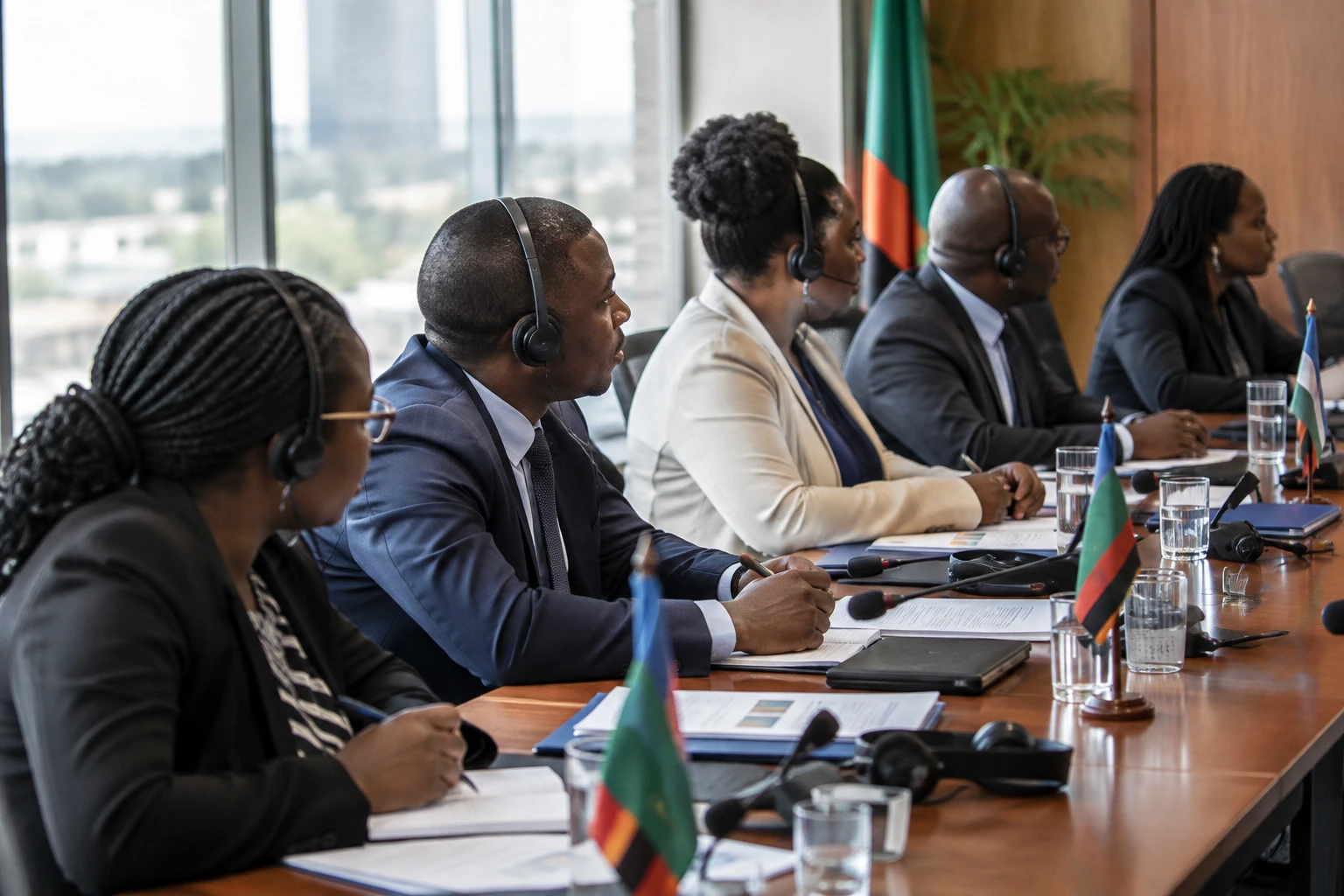
In the east of the Democratic Republic of the Congo, changes to the name and leadership of an armed movement are not enough to establish who is really in command. The question has become more pressing since former president Joseph Kabila took the lead of a new coalition bringing together officials from the AFC and M23, while Kinshasa accuses Kigali of supporting its actions.
A new banner, but persistent power dynamics
On 12 October 2026, in Goma, Joseph Kabila announced the creation of the Front for the Refoundation of the Nation (FRN). This political and military structure brings together actors previously linked to the Alliance Fleuve Congo (AFC), a political coalition associated with M23. The movement announced the end of the AFC and claimed the use of force against the government in Kinshasa. The creation of the FRN was reported by Congolese media outlet Actualite.cd and the US news agency Associated Press. Actualite.cd’s report on the creation of the FRN and Associated Press’s report describe this reshuffle.
In an interview broadcast on 11 November, Congolese foreign minister Thérèse Kayikwamba Wagner disputes the idea that Joseph Kabila is the alliance’s principal decision-maker. She identifies Rwandan president Paul Kagame as its “real leader”. This is the Congolese foreign minister’s analysis, not a fact established by publicly available evidence about the FRN’s command structure.
The minister describes the new front as a reconfiguration of the AFC-M23 rather than a break. This interpretation echoes questions raised by Congolese observers about the real significance of the change of banner. A United Nations experts’ report, cited in the Congolese press before the creation of the FRN, had already referred to a possible reorganisation of the movement’s leadership. However, on its own, it does not establish who exercises operational control over the coalition.
A peace deal under strain
The controversy is part of a longstanding regional conflict involving Rwanda’s security, Congolese sovereignty and the presence of armed groups in the eastern provinces. Kinshasa accuses Kigali of supporting M23 and keeping troops in the DRC. Rwanda rejects the accusations and cites, among other things, the threat posed by the Democratic Forces for the Liberation of Rwanda (FDLR), an armed group formed in part by Rwandans involved in the 1994 genocide against the Tutsis.
The two countries signed a peace deal in Washington on 27 June 2025, and then endorsed commitments at presidential level in December that year. The text provides, among other things, for respect for territorial integrity, a cessation of hostilities and measures concerning the FDLR and the withdrawal of forces. But the signing did not end disagreements over implementation or the fighting in eastern Congo.
A progress report published in November 2026 by the Africa Peace Agreements Barometer records a decline in implementation of the agreement between August and October. It notes deadlock over the timetable for operations targeting the FDLR, verification mechanisms and the lifting of Rwanda’s defensive measures. Congolese media outlet Actualite.cd also reported on the assessment. The Barometer’s monitoring report sets out these difficulties.
On allegations of collusion between the Congolese authorities and the FDLR, Kayikwamba Wagner acknowledges that individual cases may exist, but rejects the idea of a state policy. She also claims that five of the six areas where the FDLR is present overlap with sectors controlled by the Rwandan army. These points are made by the minister and should be understood as such, in the absence of independent verification presented in the interview.
Consequences beyond the capitals
For Kinshasa and Kigali, the question of who commands the FRN has a direct bearing on negotiations: dialogue between states alone cannot resolve the role of an armed coalition that challenges the Congolese government. US and regional mediation must therefore address both the commitments between the two governments and the situation of groups on the ground.
The most immediate consequences affect residents of areas under M23 control and neighbouring territories. Uncertainty over the chain of command could complicate ceasefires, humanitarian access and any return of the Congolese administration. In Kinshasa, the debate is also political: the initiative of a former head of state turns an eastern rebellion into an openly declared challenge to central government.
The crisis also concerns the Southern African Development Community (SADC) and the East African Community (EAC), two regional organisations whose member states have been involved in mediation and security efforts. It tests the ability of African and international frameworks to enforce agreements when fighting continues and the parties disagree over responsibility.
Another diplomatic issue is emerging in Phnom Penh, where the International Organisation of La Francophonie summit is due to take place on 15 and 16 November. The DRC has put forward Juliana Lumumba for the post of secretary-general, against, among others, incumbent Rwandan Louise Mushikiwabo, who is seeking a third term. Asked whether the DRC might leave the organisation if she is re-elected, the minister did not confirm such a threat. She did, however, say Kinshasa could reassess the OIF’s alignment with its values after the vote.
The result of this election will show whether rivalry between Kinshasa and Kigali spills further into multilateral forums. But the decisive indicator will remain the situation in the east of the DRC: verifiable compliance with the Washington commitments, developments among the forces present and the possibility of a political process involving Congolese actors without confusing negotiation with recognition of military realities.



