
 Algeria
 Egypt
 Libya
 Morocco
 Sudan
 Tunisia
 Benin
 Burkina Faso
 Cabo Verde
 Côte d'Ivoire
 Ghana
 Guinea
 Guinea-Bissau
 Liberia
 Mali
 Mauritania
 Niger
 Nigeria
 Senegal
 Sierra Leone
 The Gambia
 Togo
 Cameroon
 Central African Republic
 Chad
 Equatorial Guinea
 Gabon
 Republic of the Congo
 São Tomé and Príncipe
 Burundi
 Comoros
 Djibouti
 Eritrea
 Ethiopia
 Kenya
 Madagascar
 Malawi
 Mauritius
 Mozambique
 Rwanda
 Seychelles
 Somalia
 South Sudan
 Tanzania
 Uganda
 Angola
 Botswana
 Eswatini
 Lesotho
 Namibia
 South Africa
 Zambia
 Zimbabwe
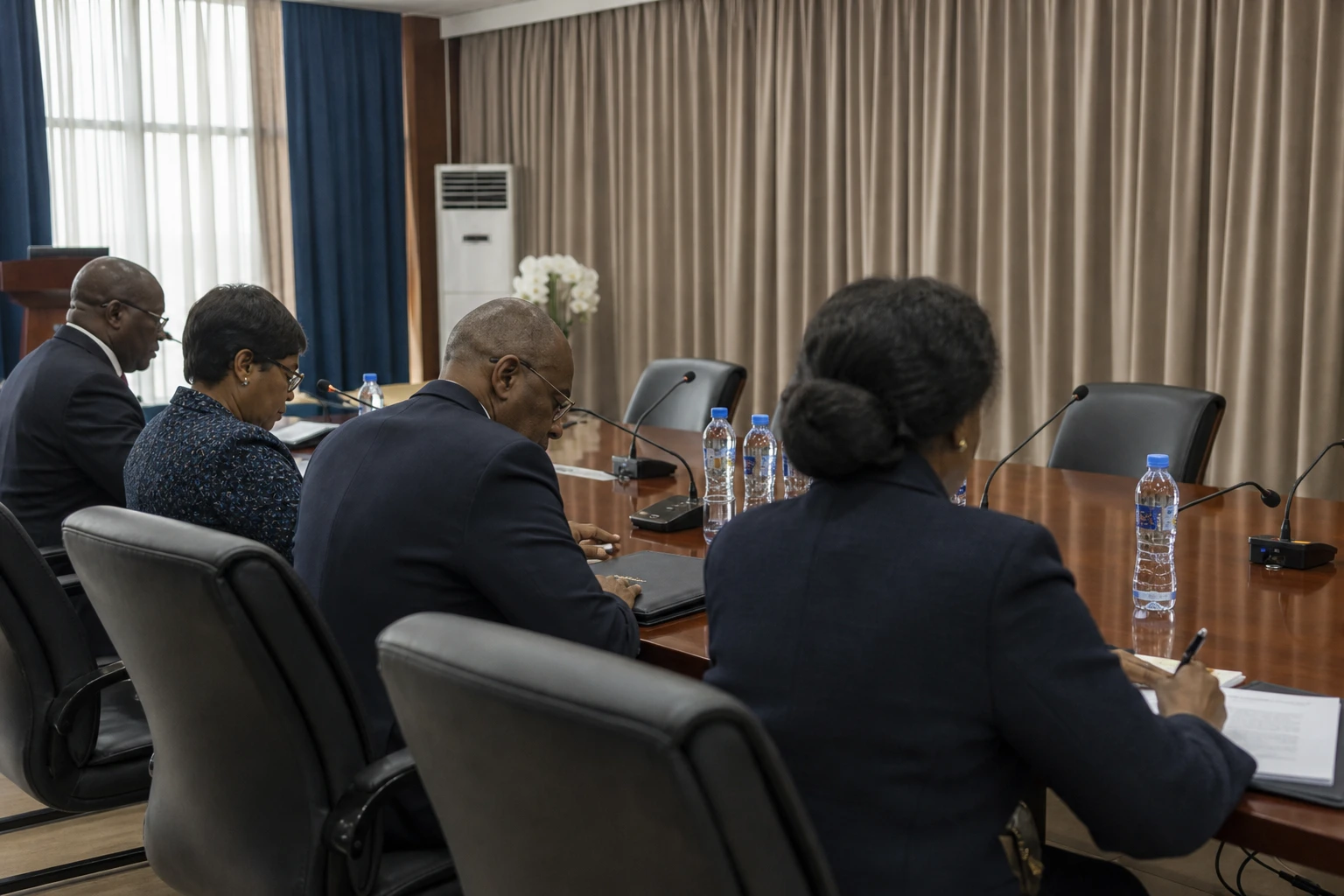
In Kinshasa, a political case also becomes a matter for an international court
In the Democratic Republic of the Congo, fighting in the east is not taking place only on the hills of North Kivu or South Kivu. It is also moving into courtrooms, chancelleries and financial networks. This is where a sanction can carry as much weight as a military offensive, because it affects reputation, accounts and alliances at once.
The case of Joseph Kabila illustrates this new dimension. The former Congolese president, who led the country from 2001 to 2019, was targeted on 30 April 2026 by the Office of Foreign Assets Control, the US Treasury agency responsible for financial sanctions, for his alleged support for M23 and the Congo River Alliance, the AFC. At the same time, Washington linked the decision to the war in eastern DRC and the destabilisation of the Congolese government.
What Washington accuses the former president of
The US Treasury statement is precise on the principle, but more political in its wording than in its public evidence. It says Joseph Kabila provided financial, material or logistical support to M23 and the AFC. It also links him to efforts to weaken the Congolese state. Kabila’s name was added to the list of sanctioned individuals, with assets subject to US jurisdiction blocked.
The military context explains the significance of the measure. In the first half of 2026, the United Nations described an escalating conflict in eastern DRC, with repeated violations of ceasefire commitments and fragmentation within the AFC/M23. UN reports and analysis reported from Kinshasa also point to growing links between the former head of state and this politico-military coalition. The region is not isolated: the crisis also involves the mechanisms of SADC, the EAC and ECCAS, which have been mobilised around security in the Great Lakes.
For Kinshasa, the sanction is part of a broader stand-off. The Congolese government publicly welcomed the US decision in May 2026, while allies of the former president denounced it as politically motivated. In the Congolese capital, the case is viewed through two lenses: individual responsibility for the security crisis, and a prolonged confrontation between the ruling camp and a former regime that remains highly organised.
Why Kabila has taken the case to the US courts
On 4 August 2026, Joseph Kabila Kabange filed a complaint in the US District Court for the District of Columbia in Washington. The case, registered under reference 1:2026cv02749, targets OFAC and its director, Bradley T. Smith. It is brought under the Administrative Procedure Act, a law that allows challenges to federal administrative decisions. The filing seeks to overturn the designation and lift the effects of the sanctions.
His central argument boils down to a simple idea: the US administration has not substantiated its accusations with enough specific facts. The defence considers the allegations vague and arbitrary. It disputes the existence of identified fund transfers, military personnel named individually or material evidence establishing assistance to M23 or the AFC. Implicitly, the complaint also seeks to shift the debate from the political arena to procedural grounds, where the burden of proof matters more than the din of accusations.
This choice of procedure is strategic. In the United States, a challenge to OFAC does not automatically remove a sanction, but it forces the administration to defend the strength of its case. For a former head of state, the stakes are twofold: to regain financial leeway and to try to reduce the reputational impact of being placed on the US blacklist. This also matters to his political networks in Kinshasa, because an international sanction weighs not only on an individual; it has repercussions for allies, funding and the balance between political camps.
What this battle says about the DRC and Central Africa
In the DRC, the case goes beyond Joseph Kabila alone. It raises a broader question: how should former leaders be dealt with when the boundary between institutional legacy, political influence and security suspicions becomes blurred? It also highlights the fragility of a public sphere in which accusations of collusion with the AFC/M23 are compounded by arrests of political figures, tensions over freedoms and growing polarisation in Kinshasa.
The implications are regional. Eastern Congo remains at the intersection of several interests: border security, the movement of armed groups, control of strategic minerals and diplomatic rivalries between neighbours. US sanctions, UN expert reports and regional initiatives show that the case is no longer only Congolese. It affects the Great Lakes and Central Africa and, by extension, the balance within the African Union, which is seeing a growing number of crises in which regional diplomacy must contend with intense external pressure.
The next point to watch is both judicial and political. The federal court in Washington will have to examine the substance of the complaint, while the security crisis remains unresolved in eastern DRC and regional mechanisms are still seeking common ground. For Kinshasa, the challenge is clear: to prevent war, justice and the struggle for legitimacy from feeding into one another. For the region, the episode is a reminder that no lasting way out of the crisis can ignore weapons, sanctions and political power struggles alike.



