Algeria
 Egypt
 Libya
 Morocco
 Sudan
 Tunisia
 Benin
 Burkina Faso
 Cabo Verde
 Côte d'Ivoire
 Ghana
 Guinea
 Guinea-Bissau
 Liberia
 Mali
 Mauritania
 Niger
 Nigeria
 Senegal
 Sierra Leone
 The Gambia
 Togo
 Cameroon
 Central African Republic
 Chad
 Equatorial Guinea
 Gabon
 Republic of the Congo
 São Tomé and Príncipe
 Burundi
 Comoros
 Djibouti
 Eritrea
 Ethiopia
 Kenya
 Madagascar
 Malawi
 Mauritius
 Mozambique
 Rwanda
 Seychelles
 Somalia
 South Sudan
 Tanzania
 Uganda
 Angola
 Botswana
 Eswatini
 Lesotho
 Namibia
 South Africa
 Zambia
 Zimbabwe
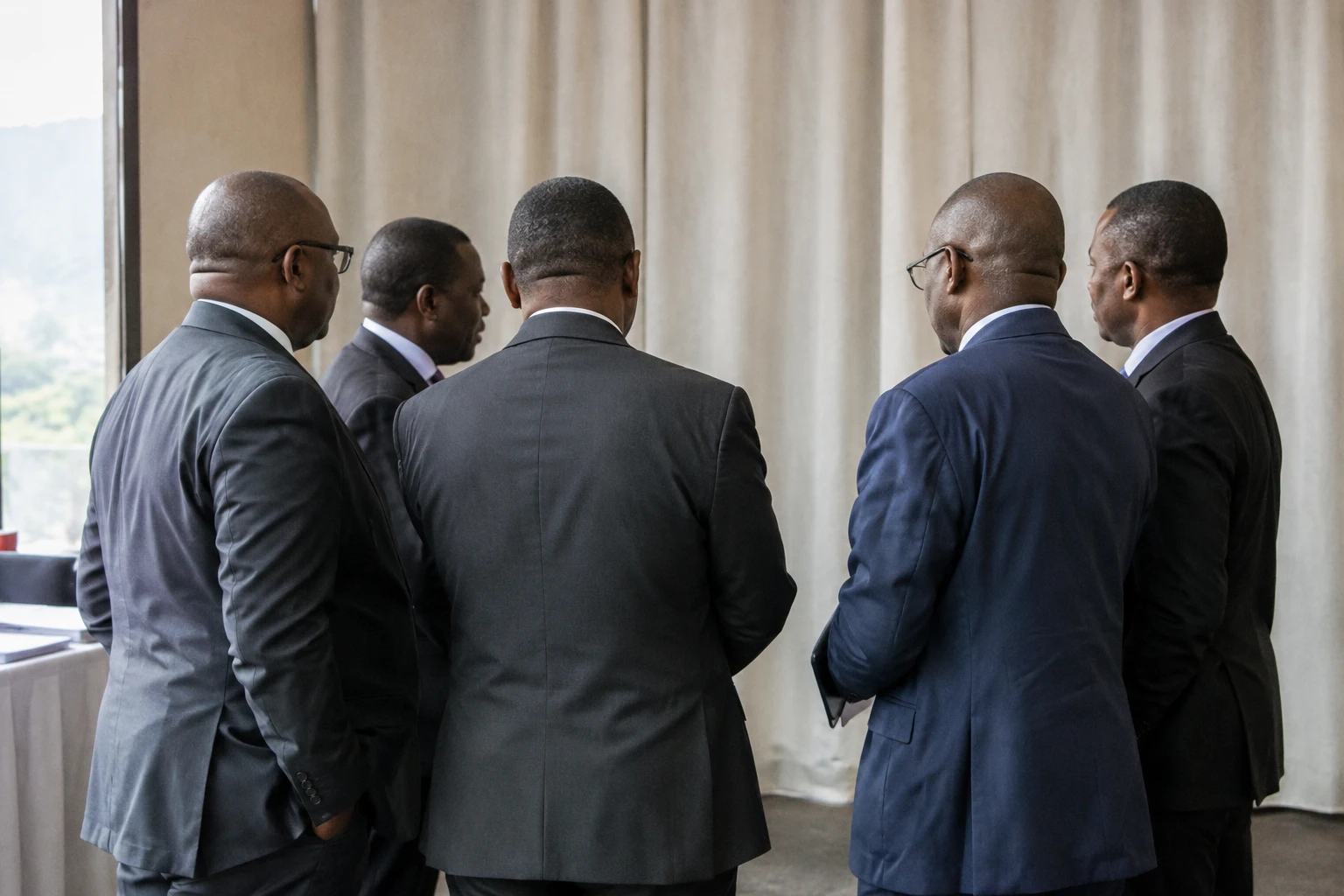
In Goma, any new alliance between political leaders and armed groups can influence negotiations as well as everyday life. The announcement of a Front for the Refoundation of the Nation (FRN), led by Joseph Kabila, adds a major political player to a conflict already shaped by several diplomatic initiatives.
A political announcement in a city under AFC-M23 control
On Monday 12 October 2026, in Goma, officials from the Congo River Alliance (AFC) announced the creation of the FRN and presented former president Joseph Kabila as its leader. Two Congolese media outlets reported the announcement. However, their accounts refer to communications from the AFC/M23: they are therefore not, on their own, independent confirmation of the structure or how it operates.
According to these announcements, the AFC and the March 23 Movement (M23) are part of the new platform. Corneille Nangaa, Bertrand Bisimwa and Sultani Makenga are said to be its vice-presidents. These details remain attributed to the movement’s communications unless independently confirmed. The announcement also does not specify decision-making rules, a political programme, the chain of command or arrangements for civilian representation.
Goma, the capital of North Kivu, has been under AFC-M23 control since January 2025, according to information available in accounts of the event. The location gives the announcement practical significance: it comes from a city where the authority of the Congolese state is contested by an armed group, rather than from an ordinary party launch in Kinshasa.
Kabila’s record and the fault lines in Kinshasa
Joseph Kabila led the Democratic Republic of the Congo from 2001 to 2019. His return to the centre of the political stage follows several critical statements about President Félix Tshisekedi. On 9 October, he again criticised the conduct of the government. Two days later, Actualité.cd reported reactions to the statement from figures in the governing majority.
The announced rapprochement with the AFC-M23 comes amid deep polarisation. The Congolese government and the former president disagree over how to interpret the crisis and where political responsibility lies. Kabila has previously disputed allegations that he supports the rebellion; they should not be presented as established facts without verifiable evidence. Likewise, the announcement of the FRN alone does not establish the existence of a unified command or a new military capability.
The distinction between a political movement and an armed group is crucial here. If the FRN intends to take part in discussions, its membership and mandate will need to be clarified. If it claims to have a joint military organisation, the implications for the ceasefire and civilian protection will be different. At this stage, the public announcement does not answer these questions.
Regional negotiations already under pressure
The crisis in eastern Congo is not limited to a face-off between Kinshasa and the AFC-M23. The African Union, the East African Community (EAC) and the Southern African Development Community (SADC) are involved, alongside the United Nations and other partners, in mediation and coordination efforts. SADC brings together several Southern African states; the EAC, countries in East Africa. The DRC belongs to both organisations.
In July 2026, the African Union announced a harmonised roadmap running until December, with political, security, humanitarian and regional components. The initiative aims, among other things, to better coordinate existing efforts and include civil society, women and young people. The African Union also said its facilitators had consulted the AFC-M23 in Goma on 5 October, a few days before the FRN announcement.
In this context, Kabila’s announced arrival at the head of a platform that includes the AFC-M23 could change the interlocutors and the political balance of power. But it guarantees neither progress in negotiations nor a break with existing structures. Mediators will need to determine whether the FRN is a new entity, a reconfiguration of the AFC or a broader political label, and how it intends to relate to commitments already under discussion.
The consequences are first felt in local communities
For residents of Goma and other areas in the east, the immediate issue is not simply the name of a coalition. Security, freedom of movement, access to services and the ability to resume economic activity depend on changes in territorial control and the fighting. The effects are not the same for everyone: urban traders, displaced families, rural communities and state employees face different constraints.
The latest report by the United Nations secretary-general on MONUSCO describes operational restrictions in areas controlled by the AFC-M23 and violations against civilians in the east of the country. It also stresses the importance of an effective ceasefire, humanitarian access and inclusive dialogue. This context underlines why announcements about new structures must be followed by observable action, particularly on the ground and in verification mechanisms.
The regional implications are just as important. The conflict affects relations between the DRC and its neighbours, drives population displacement and presents regional organisations with a challenge of coordination. In September, the African Union called for inclusive political solutions for the Great Lakes region. The participation of new figures will not replace essential guarantees: a verifiable ceasefire, civilian access to aid and representation for affected communities.
What to watch in the coming weeks
Three elements will help gauge the FRN’s real significance: the publication of its statutes and programme, independent confirmation of its leaders and structures, and its position on negotiations and ceasefire commitments. It will also be important to see whether the African Union, EAC and SADC mediators give it a formal role.
For now, the established fact is the announcement made in Goma and reported by several Congolese media outlets on the basis of communications linked to the AFC/M23. The new front’s degree of autonomy, its strategy and its impact on the conflict remain to be established. In a crisis where political statements can precede changes on the ground, this distinction is essential to report without conflating an announcement, an organisation and an outcome.