Algeria
 Egypt
 Libya
 Morocco
 Sudan
 Tunisia
 Benin
 Burkina Faso
 Cabo Verde
 Côte d'Ivoire
 Ghana
 Guinea
 Guinea-Bissau
 Liberia
 Mali
 Mauritania
 Niger
 Nigeria
 Senegal
 Sierra Leone
 The Gambia
 Togo
 Cameroon
 Central African Republic
 Chad
 Equatorial Guinea
 Gabon
 Republic of the Congo
 São Tomé and Príncipe
 Burundi
 Comoros
 Djibouti
 Eritrea
 Ethiopia
 Kenya
 Madagascar
 Malawi
 Mauritius
 Mozambique
 Rwanda
 Seychelles
 Somalia
 South Sudan
 Tanzania
 Uganda
 Angola
 Botswana
 Eswatini
 Lesotho
 Namibia
 South Africa
 Zambia
 Zimbabwe
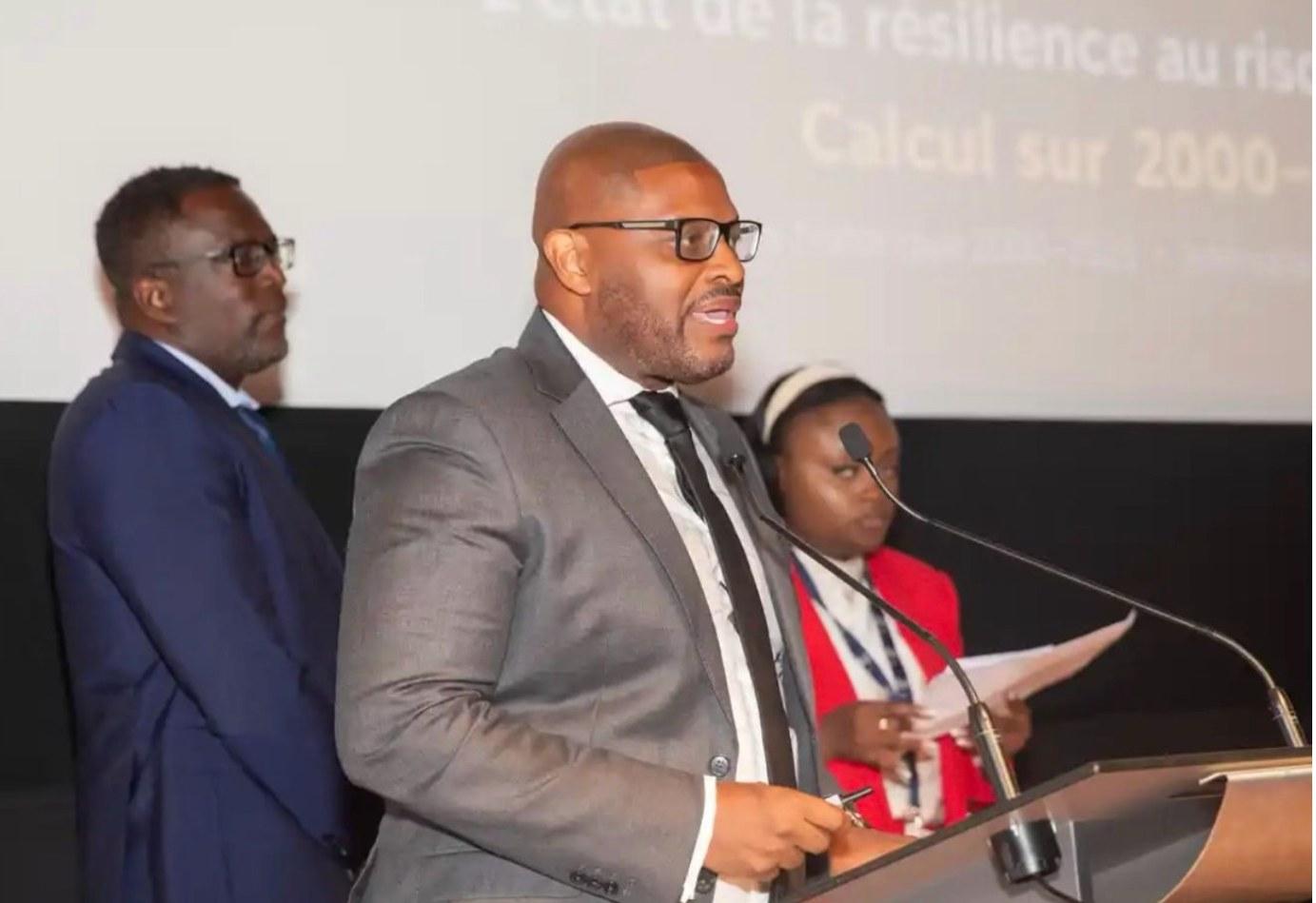
He belongs to a generation of African entrepreneurs and intellectuals seeking to move beyond the traditional discourse on the continent’s immense potential. In his view, the question is no longer whether Africa has the resources needed for its development, but how it can turn them into economic and political power. Junior Mbuyi, born in Kinshasa and brought to France at the age of five by his parents, who were political refugees, shaped some of his convictions through his experience of financial markets. After spending his youth in places including Champigny-sur-Marne, in the Paris region, he went on to study finance before joining several major international banks, including BNP Paribas, Société Générale, HSBC and Natixis.
This experience gave him insight into the mechanisms governing states’ access to international financing. It also strengthened his conviction that political independence remains fragile without genuine economic autonomy.
A strategic reading of global upheaval
In his newly published book From Chaos to Growth: Towards an African Revolution, Junior Mbuyi reflects on the role Africa could play in an international order undergoing profound change. The economic confrontation between China and the United States, the rise of BRICS and global competition for critical minerals all represent opportunities, he argues, for African countries to strengthen their negotiating power.
His proposal is based on a form of pragmatic non-alignment. Rather than choosing between major powers, African states should expand their partnerships and assess them in terms of their economic, industrial and strategic interests.
This approach departs from a conception of sovereignty that is essentially political. For Junior Mbuyi, sovereignty is also measured by a country’s ability to finance its infrastructure, process its raw materials, develop its skills and have its own analytical tools.
The ambition is all the more significant because African economies continue to face structural constraints: dependence on raw material exports, inadequate infrastructure and often costly access to international financing.
In Paris, a forum focused on risk management
This thinking found practical expression with the first Africa Risk Forum, held in Paris on 1 October 2026 at the initiative of Junior Mbuyi. Bringing together public officials, financial sector representatives and experts on African affairs, the meeting aimed to put risk management at the centre of the continent’s development strategies.
Participants included former French economy and finance minister Michel Sapin and former Senegalese foreign minister Cheikh Tidiane Gadio.
Beyond diplomatic and economic discussions, the forum highlighted a question that has yet to receive sufficient attention: how African risks are assessed by financial institutions and international investors.
For Junior Mbuyi, this question is decisive. Perceptions of risk directly affect the rates at which states, companies and banks borrow. They therefore determine their capacity to invest and support the transformation of economies.
The cost of capital, a new sovereignty challenge
The Africa Risk Index, developed by the Africa Risk Institute, an organisation established at Junior Mbuyi’s initiative, is part of this effort.
According to its designers, the tool covers all 54 African states and draws on 48 variables and more than 70,000 data points to assess their macroeconomic, banking and institutional resilience.
The aim is to provide analytical tools that can better distinguish genuine economic vulnerabilities from sometimes unfavourable perceptions attached to African markets.
Junior Mbuyi has developed the concept of a “Perception Premium”, which refers to a possible additional financing cost arising when risk is assessed as higher than a country’s economic fundamentals would warrant.
This hypothesis would, of course, need to be demonstrated through rigorous comparisons. Nevertheless, it raises an essential question: to what extent do African countries have the means to produce and defend their own economic analysis?
Because more costly access to capital can reduce public investment capacity, slow infrastructure construction and help perpetuate the very vulnerabilities it is supposed to reflect.
Building an African capacity to shape decisions
What is distinctive about Junior Mbuyi’s approach is the way it links a geopolitical vision with financial tools. Alongside reflection on Africa’s place in the world is a determination to develop autonomous capacities for expertise and foresight.
This ambition alone cannot resolve the continent’s structural difficulties. It requires, in particular, strong institutions, greater co-operation between states and the mobilisation of long-term capital.
But it is helping to shift the terms of the debate. As Africa assumes an increasingly prominent place in the strategies of major powers, the question is no longer simply what investment it can attract, but on what terms it intends to negotiate.
By bringing together politicians, financiers and risk specialists in Paris, Junior Mbuyi gave this thinking an institutional form. His initiative reflects the emergence of African expertise seeking to exert greater influence over international economic decisions.
The stakes of this development go beyond financial questions: they include enabling African countries to become not merely recipients of strategies devised elsewhere, but actors in shaping them.