Algeria
 Egypt
 Libya
 Morocco
 Sudan
 Tunisia
 Benin
 Cabo Verde
 Côte d'Ivoire
 Ghana
 Guinea
 Guinea-Bissau
 Liberia
 Mali
 Mauritania
 Niger
 Nigeria
 Senegal
 Sierra Leone
 The Gambia
 Togo
 Cameroon
 Central African Republic
 Chad
 DR Congo
 Equatorial Guinea
 Gabon
 Republic of the Congo
 São Tomé and Príncipe
 Burundi
 Comoros
 Djibouti
 Eritrea
 Ethiopia
 Kenya
 Madagascar
 Malawi
 Mauritius
 Mozambique
 Rwanda
 Seychelles
 Somalia
 South Sudan
 Tanzania
 Uganda
 Angola
 Botswana
 Eswatini
 Lesotho
 Namibia
 South Africa
 Zambia
 Zimbabwe
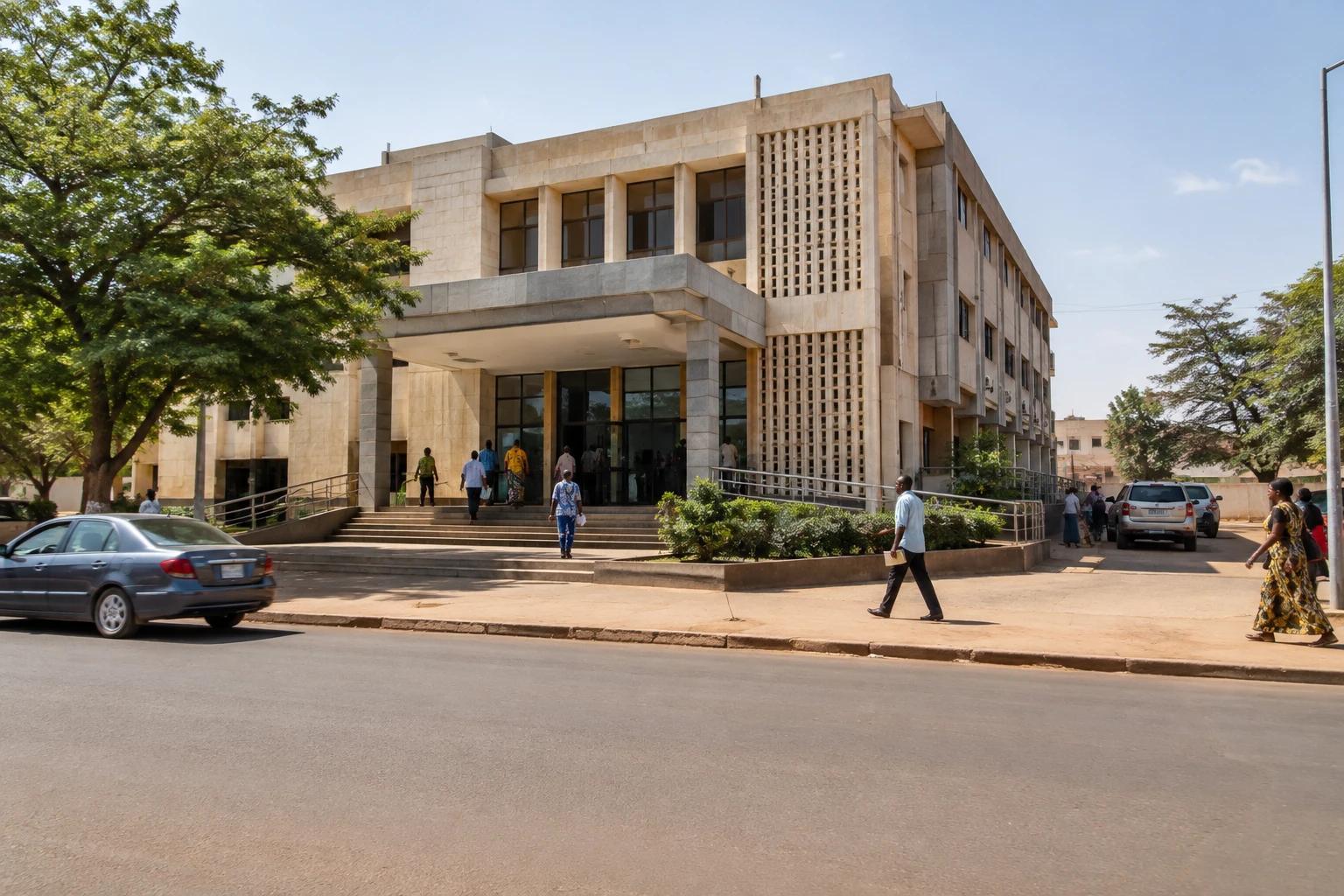
In rural areas of the central Sahel, two armed groups fighting states are also vying for the same roads, villages and resources. When this rivalry flares up, residents find themselves exposed to several fronts at once: military operations, clashes between factions and restrictions on movement.
Since September 2026, fighting between the Al-Qaeda-affiliated Group for the Support of Islam and Muslims (GSIM, or JNIM by its English acronym) and the Islamic State Sahel Province (ISSP) has intensified. Clashes reported in Burkina Faso illustrate a longstanding rivalry whose geography is now expanding beyond its historic strongholds.
A rivalry rooted in the central Sahel
Mali, Burkina Faso and Niger form the heart of this regional crisis. Their border areas, particularly Liptako-Gourma, are difficult to control and are criss-crossed by trade and movement that do not stop at national borders.
JNIM brings together several factions linked to Al-Qaeda and was formed in 2017. ISSP, also known as the Islamic State Sahel Province, pledges allegiance to the Islamic State group. The two organisations are not only fighting national forces: they are also seeking to impose their authority in territories where their presence overlaps.
The first clashes between them date back to 2019. According to conflict-monitoring project ACLED, about 320 confrontations have reportedly killed more than 2,200 combatants since then. These figures record events attributed to the two groups; they are not a comprehensive count of civilian casualties in the conflict.
The rivalry combines territorial competition with ideological differences. But control of territory also has practical value: it can provide access to transport routes, resources, recruits and local networks. ACLED’s analysis of clashes between JNIM and ISSP notes that the Islamic State has often given particular priority to this confrontation, while JNIM is also fighting on several fronts against states and their allies.
More violent clashes, tolls to be treated with caution
In Burkina Faso, clashes reported in September 2025 near Sebba, in the Sahel region, reportedly killed at least 60 JNIM members, according to the toll reported at the time by the International Crisis Group. The figure remains attributed: casualty counts announced in such fighting are difficult to verify independently.
In September 2026, the rivalry flared up again in northern Burkina Faso. In Kacham, ISSP claimed a major victory over its rival. ACLED reports that the group said it had killed more than 200 JNIM fighters, wounded several dozen others and captured and executed more than 30 people. The organisation says these losses are unconfirmed. If accurate, this would be the deadliest battle between the two groups recorded by its teams.
The figure claimed by ISSP should therefore not be presented as an established toll. Armed groups have an incentive to exaggerate their successes, minimise their losses and undermine their opponents’ morale. Difficult access to combat zones also makes cross-checking by independent observers harder.
However, ACLED data point to a more firmly established geographical shift: since April 2026, clashes between the two factions have also been reported in Niger’s Tillabéri and Dosso regions, as well as in Nigeria’s Kebbi State. The competition is no longer confined to the areas where it was mainly concentrated in Mali and Burkina Faso.
For communities, pressure on movement and livelihoods
When two groups seek to control the same area, civilians risk being suspected of supporting one side or the other. Residents may face threats, forced displacement or restrictions on access to markets, fields and services. The effects vary from place to place: a trade route, an isolated village and a secondary town are not exposed in the same way.
Rivalry between armed groups is compounded by operations by national forces and self-defence groups. This overlap can make it difficult to establish responsibility after an attack. It also complicates the work of humanitarian organisations and the flow of local information.
The consequences are not only military. Fighters may seek to levy taxes, control trade or secure smuggling routes. ACLED’s analysis of the expansion of armed groups and economic warfare describes these strategies in the Sahel and border regions. For traders and households, a blocked road or an inaccessible market can have an immediate effect on prices and incomes.
In rural areas, the ability of administrations to maintain a regular presence remains crucial. Capital cities, meanwhile, may face indirect consequences: higher transport costs, disrupted supplies and increased pressure on security budgets. The effects are therefore neither uniform nor limited to places where fighting is taking place.
A regional crisis spreading towards coastal countries
Niger occupies a pivotal position between the Sahelian regions and the borders of Benin and Nigeria. Armed groups have expanded their activities there in the Dosso and Tillabéri regions. This development brings several conflict theatres, previously monitored separately, closer together.
For West Africa’s coastal countries, the challenge is prevention and cross-border co-operation. Information-sharing, protection for border communities and continuity of public services matter as much as military responses. The political divide between the Sahel and the coast does not reflect the routes used by armed groups or local economic networks.
The institutional context has also changed. Mali, Burkina Faso and Niger have left the Economic Community of West African States (ECOWAS), a regional integration and co-operation organisation, and drawn closer together within the Confederation of Sahel States. These shifts are changing the frameworks for dialogue and co-ordination, without erasing interdependence between neighbours.
The next developments to watch are independent verification of the reported casualty figures, the course of fighting in border regions and the impact on displacement and economic activity. Rivalry between JNIM and ISSP does not relieve states of their responsibilities: it adds another front to a crisis in which civilians, authorities and local economies are already under severe pressure.