Algeria
 Egypt
 Libya
 Morocco
 Sudan
 Tunisia
 Benin
 Burkina Faso
 Cabo Verde
 Ghana
 Guinea
 Guinea-Bissau
 Liberia
 Mali
 Mauritania
 Niger
 Nigeria
 Senegal
 Sierra Leone
 The Gambia
 Togo
 Cameroon
 Central African Republic
 Chad
 DR Congo
 Equatorial Guinea
 Gabon
 Republic of the Congo
 São Tomé and Príncipe
 Burundi
 Comoros
 Djibouti
 Eritrea
 Ethiopia
 Kenya
 Madagascar
 Malawi
 Mauritius
 Mozambique
 Rwanda
 Seychelles
 Somalia
 South Sudan
 Tanzania
 Uganda
 Angola
 Botswana
 Eswatini
 Lesotho
 Namibia
 South Africa
 Zambia
 Zimbabwe
A prospecting permit does not yet make a mine. But it opens the first stage of a process that may, several years later, generate production, jobs and public revenue. In Côte d’Ivoire, six new mining permits have revived a central question: how far can the country turn its gold-bearing subsoil into sustainable activity and local benefits?
Six permits, four years to explore
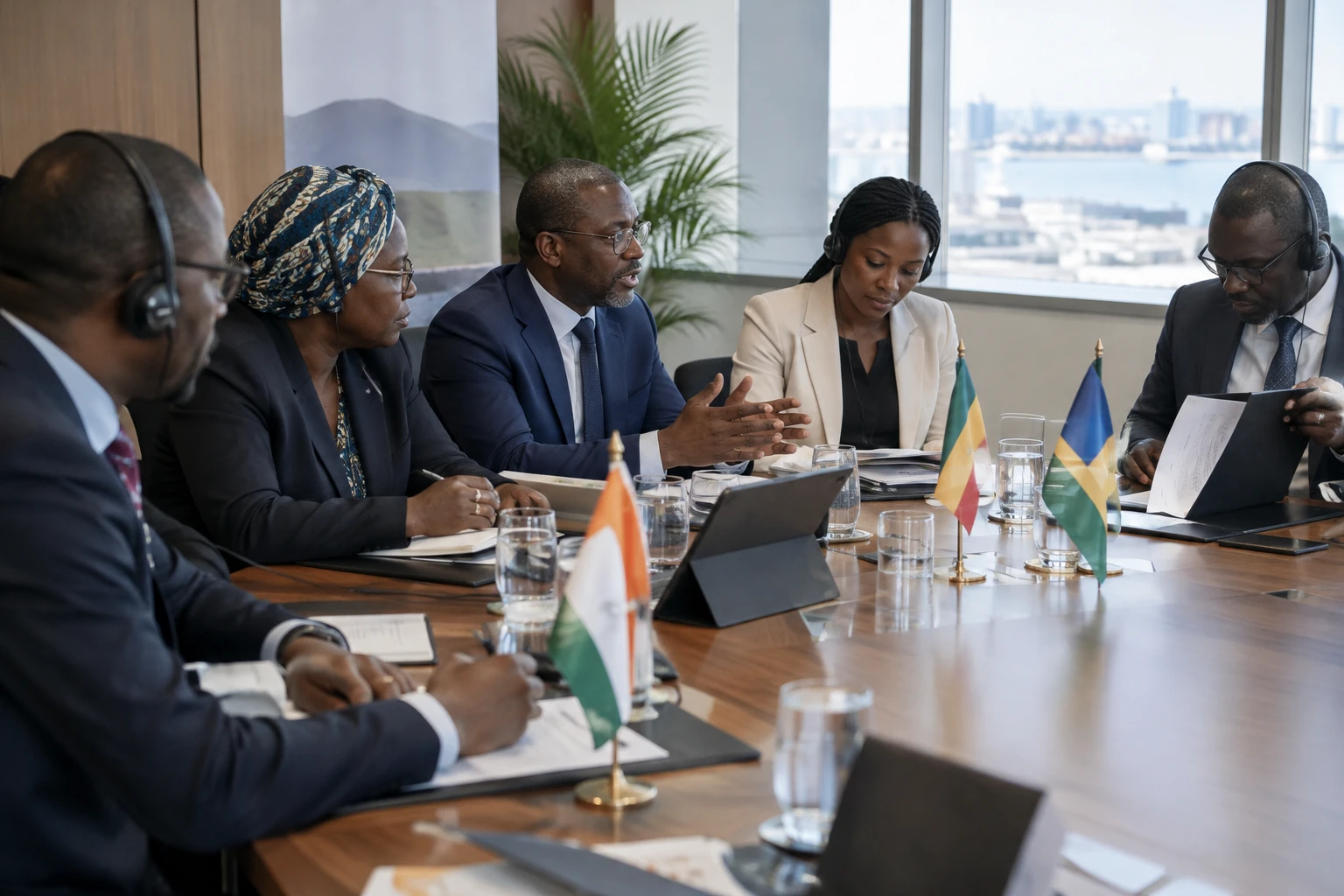
Meeting on Wednesday 14 October 2026, the Council of Ministers granted five gold exploration permits and one permit for copper and nickel. The permits are valid for four years and cover several departments across the country, according to the Council’s report, carried by the Ivorian press. An exploration permit authorises prospecting; it is neither proof of economically viable reserves nor automatic authorisation to open a mine.
The five gold permits have been awarded to Awalé Resources, which received two, as well as Etruscan Resources Côte d’Ivoire, Smart Mining Group and Tietto Minerals Côte d’Ivoire. The areas concerned include Gbéléban, Minignan, Bondoukou, Tanda, M’Bahiakro, Bouaké, Gagnoa and Soubré. The copper and nickel permit has been awarded to Switch Metals Côte d’Ivoire, in the departments of Ouaninou and Touba. The government says the permits are subject to technical and environmental requirements. The report of the Council of Ministers meeting on 14 October lists the companies and areas concerned.
The decision forms part of a mining growth strategy led by the state and financed largely by private operators. In October 2025, the Minister of Mines outlined this model: the state awards permits and retains a free carried interest in certain projects, while companies provide most of the capital. He also cited the goal of making Côte d’Ivoire Africa’s leading gold producer. The Ivorian government set out this ambition in 2025.
Production rises, but gap remains
Ivorian gold production has risen sharply since the early 2010s, with new mines coming into operation and existing sites expanding. Figures published in the regional business press put output at about 13.2 tonnes in 2012 and 59.33 tonnes in 2025. Estimates for 2026 point to nearly 62 tonnes. These figures should be read as reported numbers and projections, distinct from a final annual tally. A pan-African outlet reported these production estimates.
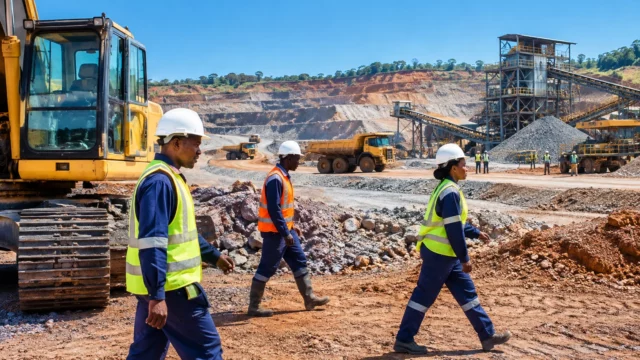
Growth is already underpinned by several operating mines, including Abujar, Yaouré, Séguéla and Lafigué. Other projects, notably Assafou and Doropo, are expected to contribute to future production, subject to the necessary development stages, financing and approvals. Exploration therefore remains a gamble: some permits will not lead to an economically viable discovery, and any discovery will still have to pass through evaluation, investment and construction.
Ghana, Côte d’Ivoire’s neighbour in the Economic Community of West African States (ECOWAS), retains a substantial lead. Estimates reported for 2025 put its output at about 186.6 tonnes, more than three times the Ivorian volume reported for the same year. The comparison nevertheless depends on accounting methods and the respective shares of industrial and artisanal production. Côte d’Ivoire’s ambition therefore depends not only on granting new permits, but on its ability to turn identified resources into regular production.
Investment, but also local stakes
The Koné project illustrates how exploration can move into production after several years of work. Montage Gold announced its first gold pour on 26 September 2026. The company is targeting annual production of more than 300,000 ounces in the first few years, equivalent to about 9.3 tonnes. This is the operator’s target and will depend on the site ramping up. Montage Gold sets out the stages and targets for the Koné project.
For investors, the new permits expand the areas in which deposits can be sought. For the authorities, they may pave the way for future tax revenue and royalties. For residents of the regions concerned, the benefits will depend on more tangible factors: jobs accessible to local workers, procurement from Ivorian businesses, infrastructure that serves communities beyond the mine site, and monitoring of environmental commitments.
These effects are not automatic. Exploration work may remain limited, while a future mine can permanently change land use and local economic activity. Communities, local authorities and state services will therefore have an important role in monitoring consultations, water, land and rehabilitation commitments. Another challenge is to distribute the value created more fairly between the state, companies and producing regions.
The 2035 goal will depend on results
Across the region, the race for mineral resources is unfolding as several West African countries seek to attract capital while strengthening national control over the benefits. Côte d’Ivoire is banking on the continuity of its mining framework and private investment. But the comparison with Ghana shows the scale of the challenge: issuing more permits is not enough; discoveries must be confirmed, projects financed and mines brought into operation.
The next steps will therefore be decisive: the results of prospecting campaigns, compliance with environmental standards, progress on projects already identified and actual changes in production. The ambition of African leadership announced by Abidjan remains a political goal, not an achieved result. The new permits are one instrument among others; their significance will be measured by the discoveries they enable, and then by the share of the resulting wealth that also benefits the people of Côte d’Ivoire.