Algeria
 Egypt
 Libya
 Morocco
 Sudan
 Tunisia
 Benin
 Burkina Faso
 Cabo Verde
 Ghana
 Guinea
 Guinea-Bissau
 Liberia
 Mali
 Mauritania
 Niger
 Nigeria
 Senegal
 Sierra Leone
 The Gambia
 Togo
 Cameroon
 Central African Republic
 Chad
 DR Congo
 Equatorial Guinea
 Gabon
 Republic of the Congo
 São Tomé and Príncipe
 Burundi
 Comoros
 Djibouti
 Eritrea
 Ethiopia
 Kenya
 Madagascar
 Malawi
 Mauritius
 Mozambique
 Rwanda
 Seychelles
 Somalia
 South Sudan
 Tanzania
 Uganda
 Angola
 Botswana
 Eswatini
 Lesotho
 Namibia
 South Africa
 Zambia
 Zimbabwe
A strained sector, caught between immediate liquidity and rebuilding trust
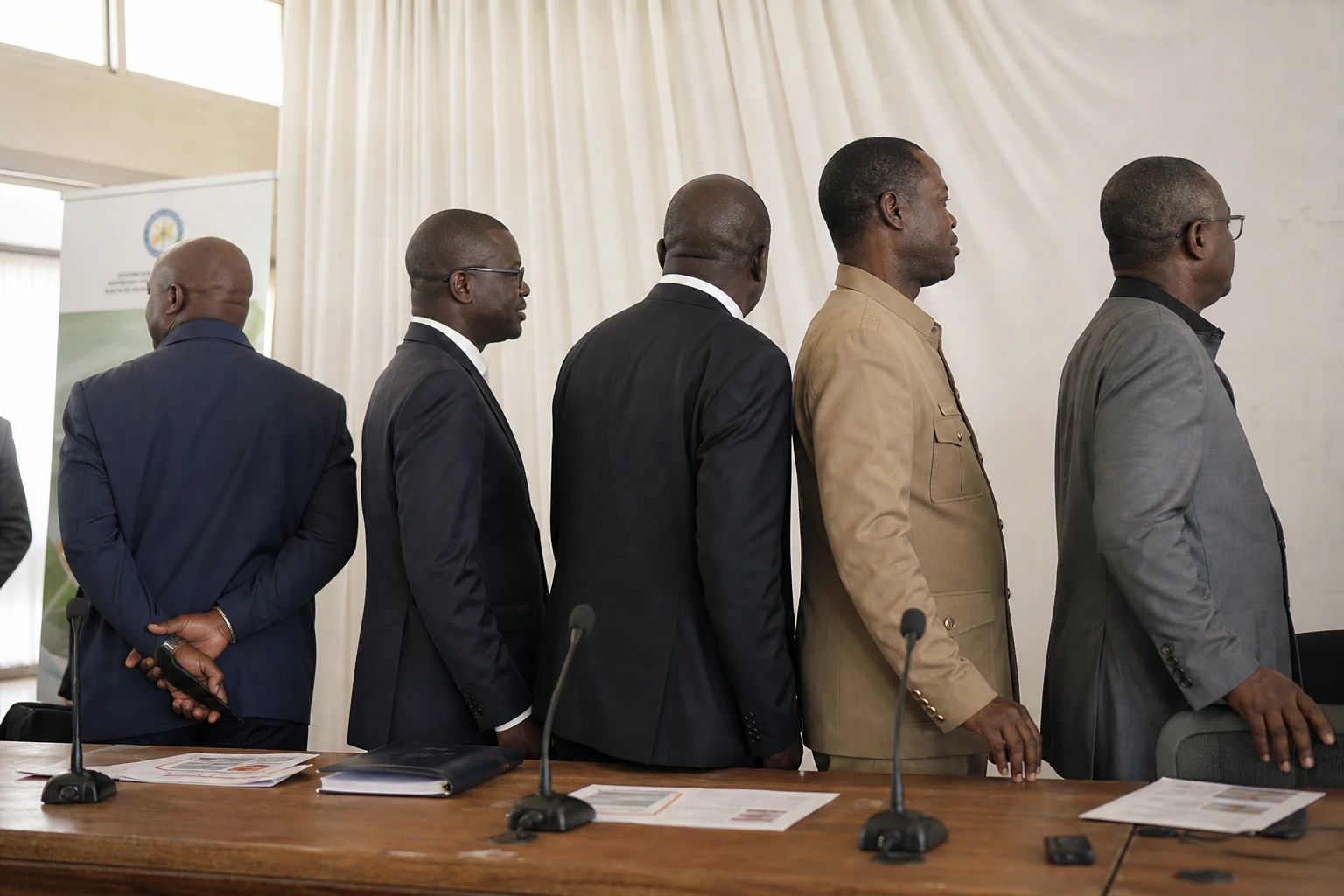
When thousands of tonnes of cocoa remain tied up in cooperative warehouses, the debate is about more than just stock. It affects farmers’ cash flow, the credibility of public oversight and Côte d’Ivoire’s ability to maintain the balance of a sector that carries considerable weight in the national economy. In Yamoussoukro, the question is simple: who actually received the cocoa, in what volume, and under what rules?
Côte d’Ivoire remains the world’s leading cocoa producer. In this context, every marketing disruption quickly becomes more than an agricultural issue. It affects export revenues, the ports of Abidjan and San Pedro, rural cooperatives and, more broadly, social stability in production areas. The sector is also facing new traceability requirements, reinforced by European rules on imported deforestation, adding administrative and technical pressure on producers and their organisations.
What the figures show, and what producer organisations dispute
At the heart of the matter is a plan to remove residual stocks launched by the Ivorian authorities. According to the government’s official portal, the operation targeted 123,000 tonnes of residual cocoa and was rolled out across the 13 regional delegations of the Coffee and Cocoa Council from 4 February 2026. Other institutional and industry sources cite a volume of around 102,000 tonnes inventoried at 1,430 cooperatives, with quotas reassigned to the interprofessional body in the spring. This difference in volumes already shows that the issue has been presented using several different scopes at different stages of the operation.
Producer organisations are calling for full transparency over the list of inventoried cooperatives, the actual beneficiaries and the quantities genuinely removed. Their spokesperson says some of the stocks, despite having been recorded, may still be in the warehouses of certain organisations, while other cooperatives may have received nothing. The minister responsible for the issue says the accusation amounts to speculation and points to the cost of the measure to the public purse. The Treasury says the state released 280 billion CFA francs to secure the purchase of the stock at 2,800 CFA francs per kilogram, amid a fall in international prices.
This tension is not trivial. It exposes a familiar fault line in Côte d’Ivoire’s cocoa sector: when the state steps in to prevent a market blockage, the distribution of the proceeds immediately becomes sensitive. Producers want to know whether the support was distributed evenly. Cooperatives want to avoid being blamed for a bottleneck they say they are suffering from rather than controlling. And the authorities are seeking to prevent physical stock from turning into a crisis of confidence. In a sector where liquidity often determines whether the next harvest is viable, transparency is not a luxury. It is a condition for the sector to function.
A test of governance in Côte d’Ivoire’s cocoa sector, well beyond the current season
The current episode is part of a broader trend. In March 2026, the farm-gate price of cocoa was set at 1,200 CFA francs per kilogram for the mid-crop season, following a fall in world prices. A few months earlier, it had reached 2,800 CFA francs per kilogram, a record level that was not enough to offset the effects of the international market’s reversal. This volatility is a reminder of Côte d’Ivoire’s dependence on world prices, but also of the difficulty of protecting farmers’ incomes over the long term without depleting stabilisation reserves.
The next milestone cited by the authorities and people on the ground is the announcement of the farm-gate price for the main crop season. In the sector, such announcements shape the marketing season, cooperatives’ borrowing and rural households’ choices, as they often have to decide whether to sell quickly or wait for a better price. At the national level, then, the issue goes beyond cocoa itself. It raises questions about the Ivorian state’s ability to regulate a strategic value chain while retaining the trust of producers, from the centre of the country to border areas, where the risks of bean smuggling and trafficking are also present.
Across West Africa, the issue also resonates with Côte d’Ivoire’s place in ECOWAS, a region where agricultural commodities remain a source of income, employment and stability. Ivorian cocoa is not merely an export product. It is a marker of economic sovereignty, a test of public governance and a reflection of relations between producers, cooperatives, the regulator and the state. Unless the list of stocks, beneficiaries and quantities actually removed is clarified, the crisis of perception could last longer than the commercial crisis itself.