
 Algeria
 Egypt
 Libya
 Morocco
 Sudan
 Tunisia
 Benin
 Burkina Faso
 Cabo Verde
 Côte d'Ivoire
 Ghana
 Guinea
 Guinea-Bissau
 Liberia
 Mali
 Mauritania
 Niger
 Nigeria
 Senegal
 Sierra Leone
 The Gambia
 Togo
 Cameroon
 Central African Republic
 Chad
 Equatorial Guinea
 Gabon
 Republic of the Congo
 São Tomé and Príncipe
 Burundi
 Comoros
 Djibouti
 Eritrea
 Ethiopia
 Kenya
 Madagascar
 Malawi
 Mauritius
 Mozambique
 Rwanda
 Seychelles
 Somalia
 South Sudan
 Tanzania
 Uganda
 Angola
 Botswana
 Eswatini
 Lesotho
 Namibia
 South Africa
 Zambia
 Zimbabwe
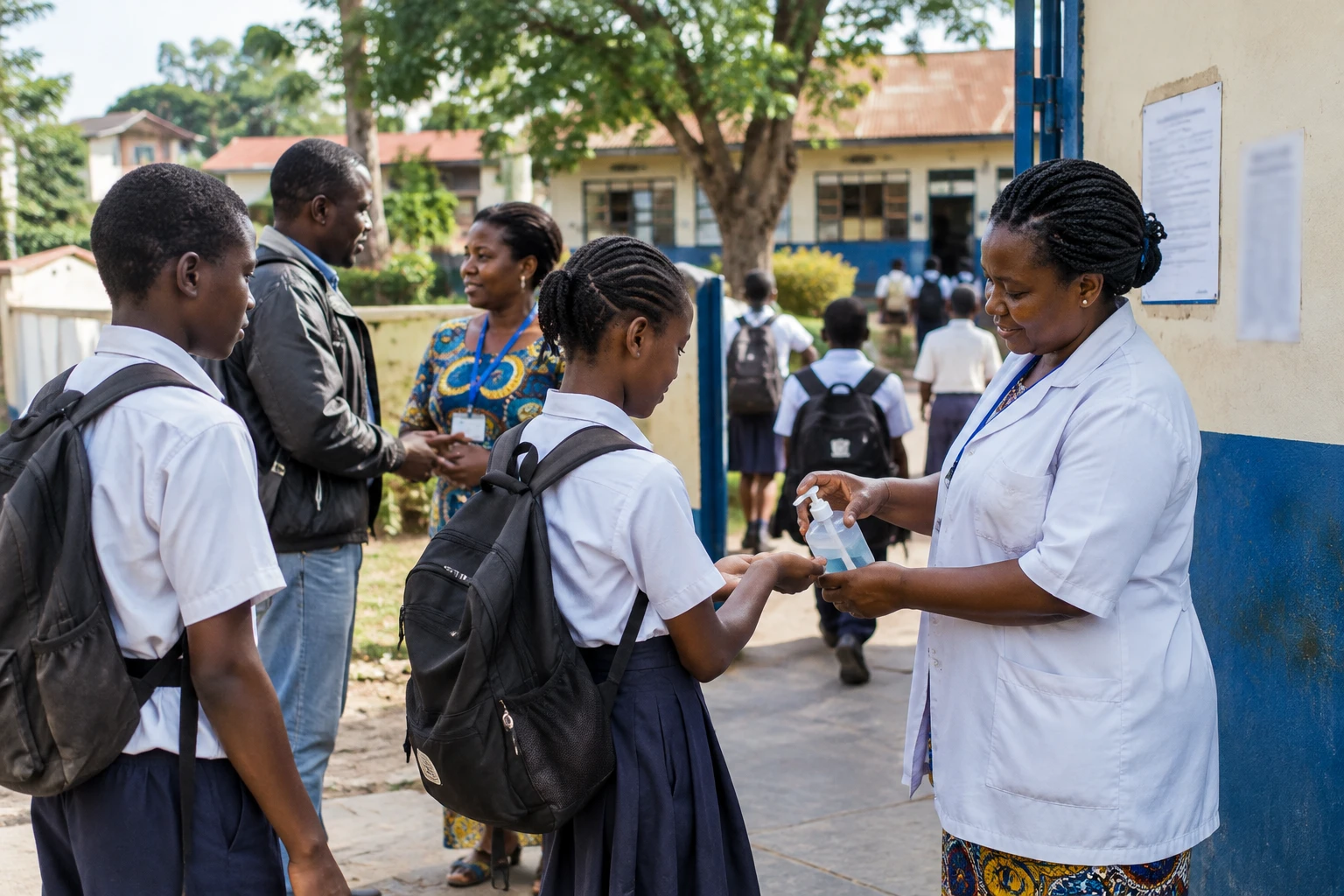
In Bunia and other parts of Ituri, the school year is beginning amid an outbreak spreading across several provinces of the Democratic Republic of the Congo. Cases reported among pupils are a reminder that protecting classrooms also depends on the ability to detect infections quickly and support families.
Cases reported at several schools
On 13 October 2026, the provincial head of education for Ituri 1, Yvon Muke Abassele, said that 25 pupils in his area had been recorded among confirmed Ebola cases at schools. Ten pupils are reported to have died and seven others are being treated at specialised centres. The status of the other eight pupils was not specified in the published information.
A Congolese media outlet also reported these figures on 14 October, citing the education official. It also reported deaths among teachers, without providing a detailed toll. School data alone do not constitute a complete epidemiological count: national health figures are based on separate definitions and updates.
The provincial education authority has called on schools to comply with prevention measures and step up awareness-raising. The distribution of hand sanitiser and protective equipment has also been announced. These measures will need to be available at the schools concerned and accompanied by information that pupils, education staff and parents can understand.
An outbreak extending beyond Ituri
The current outbreak is caused by Bundibugyo virus, a strain of Ebola virus. The World Health Organization (WHO) describes it as the 17th Ebola outbreak in the DRC since the virus was identified in 1976. On 15 May 2026, the WHO declared a public health emergency of international concern to strengthen coordination in response to the risk of spread.
As of 11 October, the WHO had recorded 9,066 confirmed cases and 4,381 confirmed deaths in the country. The outbreak was then affecting 65 health zones across seven provinces. Ituri remains the main outbreak area, but transmission is continuing elsewhere, including in North Kivu and Haut-Uele. These national figures should not be confused with the numbers relating specifically to pupils.
The geography of the outbreak matters. Ituri lies in the north-east of the country, near Uganda and South Sudan. Movements linked to trade, mining activities and population displacement complicate health surveillance. They make cross-border coordination necessary, without treating people’s movement as an individual failing.
Prevention must protect schools and pupils
For families, the challenge is twofold: reduce the risk of exposure and prevent the disease from depriving children of education for an extended period. Whether to close or keep a school open is not a decision that can be applied uniformly. Authorities must tailor measures to local risks, testing capacity and the specific conditions of each school.
Sanitiser and protective equipment can help prevent infections, but are not enough on their own. Symptoms must also be recognised quickly, sick people directed to care and contacts monitored, while staff are protected. The WHO has highlighted difficulties in accessing healthcare and conducting surveillance in areas affected by insecurity and displacement.
The reintegration of pupils who have recovered also deserves particular attention. Stigma can isolate children and their relatives, and make their return to class more difficult. Health messages should therefore explain the risks without identifying or excluding those affected. Schools, health services and communities all have a role, provided guidance is consistent and resources are available.
A Congolese and regional challenge
For the Democratic Republic of the Congo, the situation is testing the continuity of public services in provinces where access to healthcare and education can be severely disrupted. In Kinshasa, the national authorities must coordinate the health and education responses; in affected areas, their effectiveness also depends on local teams and residents’ trust.
The response also involves neighbouring countries. The WHO says there is no licensed vaccine or approved specific treatment for Bundibugyo virus. Early detection, supportive care, infection prevention and information-sharing between countries therefore remain essential. The immediate priority is to monitor the evolution of cases in schools and health zones, while ensuring that patients receive care and learning continues.



