Algeria
 Egypt
 Libya
 Morocco
 Sudan
 Tunisia
 Benin
 Burkina Faso
 Cabo Verde
 Côte d'Ivoire
 Ghana
 Guinea
 Guinea-Bissau
 Liberia
 Mali
 Mauritania
 Niger
 Nigeria
 Senegal
 Sierra Leone
 The Gambia
 Togo
 Cameroon
 Central African Republic
 Chad
 Equatorial Guinea
 Gabon
 Republic of the Congo
 São Tomé and Príncipe
 Burundi
 Comoros
 Djibouti
 Eritrea
 Ethiopia
 Kenya
 Madagascar
 Malawi
 Mauritius
 Mozambique
 Rwanda
 Seychelles
 Somalia
 South Sudan
 Tanzania
 Uganda
 Angola
 Botswana
 Eswatini
 Lesotho
 Namibia
 South Africa
 Zambia
 Zimbabwe
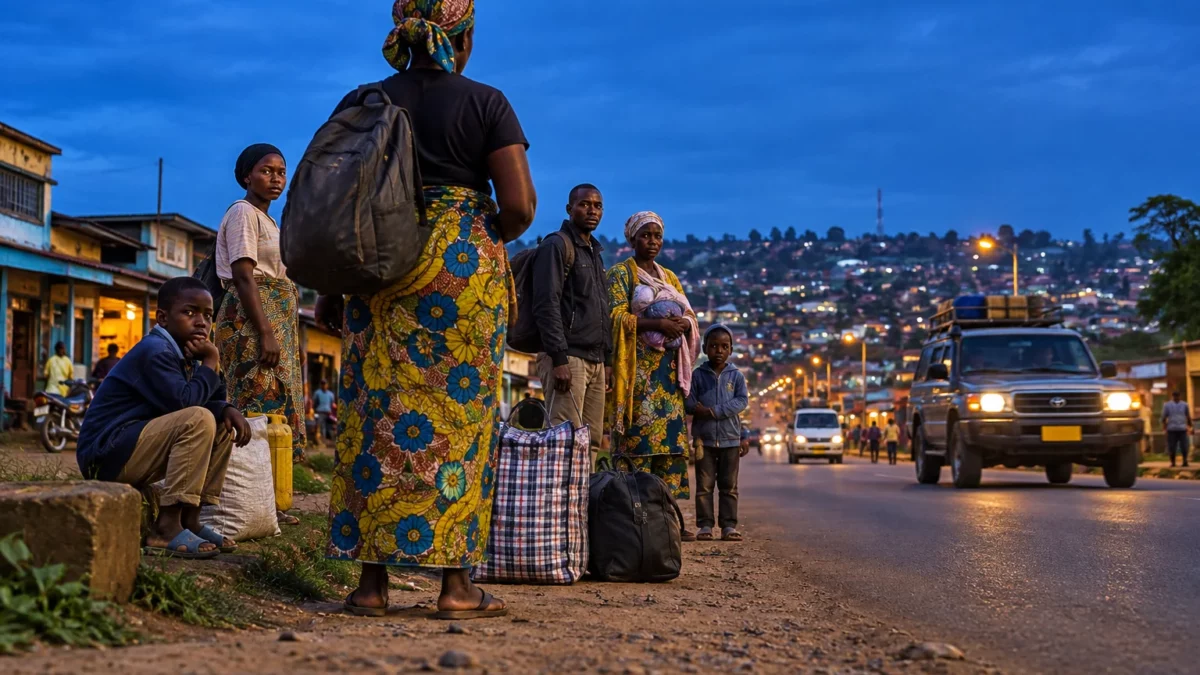
About 20 kilometres from Bunia, fleeing the fighting can take residents away from the gunfire. But when an Ebola outbreak is circulating in the same province, every journey also complicates health monitoring. In Ituri, the emergency is therefore twofold: protecting civilians and keeping healthcare accessible.
Clashes near a vital route
Since the weekend of 21 and 22 November, fighting has pitted the Armed Forces of the Democratic Republic of the Congo (FARDC) against the Convention for the Popular Revolution (CRP) in Djugu territory. Clashes were reported in particular in Lopa, Lindji and Iga-Barrière, about 25 kilometres north of Bunia, the capital of Ituri.
On 24 November, Radio Okapi reported a provisional toll of at least 10 dead, including seven CRP members and three civilians, according to security sources. The army says it pushed back the fighters. These figures remain attributed and have not been confirmed by an independent official toll. Another Congolese media outlet, Actualité.cd, also reported clashes and residents fleeing towards Bunia.
Accounts from the parties differ on how the fighting unfolded. The CRP, a movement associated with Thomas Lubanga, says it has suspended its advance and is open to talks with Kinshasa under Ugandan mediation. Military authorities instead describe an incursion that was repelled. These statements alone do not establish who broke the ceasefire or who has lasting control of the localities.
The renewed violence comes after a truce was announced in May. It undermines already fragile talks between the armed group and the Congolese government. Ituri remains scarred by years of violence involving several armed groups, while state operations have struggled to ensure sustained security outside the main urban centres.
Displacement complicates the Ebola response
Residents have gone to Bunia to seek safety. According to Radio Okapi, the fighting has also disrupted markets, businesses and traffic on National Road 27, an important supply route for the city and nearby localities. Displaced families must find accommodation and access healthcare at a time when health services are already under heavy strain.
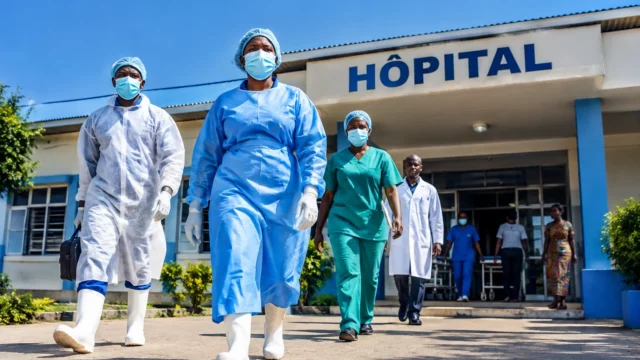
The ongoing outbreak is caused by the Bundibugyo Ebola virus. World Health Organization data as of 10 November record 11,114 confirmed cases and 5,433 confirmed deaths in the country. Ituri accounts for the largest share of the toll: 7,728 cases and 3,655 confirmed deaths as of that date. These official figures predate the fighting in the last week of November.
Population displacement does not automatically mean that a sick person will transmit the virus. It can, however, make it harder to identify contacts, quickly refer people with symptoms and ensure continuity of care. The situation report from the Congolese National Institute of Public Health, dated 16 November, had already noted that insecurity had led to the closure of some health screening points.
Response capacity also depends on trust and the presence of teams on the ground. National data showed that, as of 16 November, more than 15,000 contacts were being monitored in Ituri, with a reported follow-up rate of 85.7%. Any interruption to these visits or health services can leave people without support, particularly in rural areas far from Bunia.
Consequences beyond the front lines
The crisis affects residents in different ways. Those who reach Bunia may be closer to healthcare facilities, but they need appropriate reception and clear information. In rural localities, business closures and travel restrictions make it harder to access medicines and basic necessities. Healthcare workers, meanwhile, must be able to reach patients without being exposed to the fighting.
The DRC faces a challenge that extends beyond Ituri. In November, the WHO reported outbreak-related transmission in several countries, with distinct situations in different territories. This underscores the importance of regional health co-ordination, particularly with neighbouring countries, without conflating imported cases with local transmission. The safety of teams and continuity of screening at crossing points remain crucial.
In the short term, two indicators will be essential: independent verification of the death toll and developments in displacement around the RN27. The effective resumption of talks, if confirmed, will also matter. For the people of Ituri, the immediate priority is tangible: to be able to travel, receive care and access assistance without being caught between fighting and an epidemic.