
 Algeria
 Egypt
 Libya
 Sudan
 Tunisia
 Benin
 Burkina Faso
 Cabo Verde
 Côte d'Ivoire
 Ghana
 Guinea
 Guinea-Bissau
 Liberia
 Mali
 Mauritania
 Niger
 Nigeria
 Senegal
 Sierra Leone
 The Gambia
 Togo
 Cameroon
 Central African Republic
 Chad
 DR Congo
 Equatorial Guinea
 Gabon
 Republic of the Congo
 São Tomé and Príncipe
 Burundi
 Comoros
 Djibouti
 Eritrea
 Ethiopia
 Kenya
 Madagascar
 Malawi
 Mauritius
 Mozambique
 Rwanda
 Seychelles
 Somalia
 South Sudan
 Tanzania
 Uganda
 Angola
 Botswana
 Eswatini
 Lesotho
 Namibia
 South Africa
 Zambia
 Zimbabwe
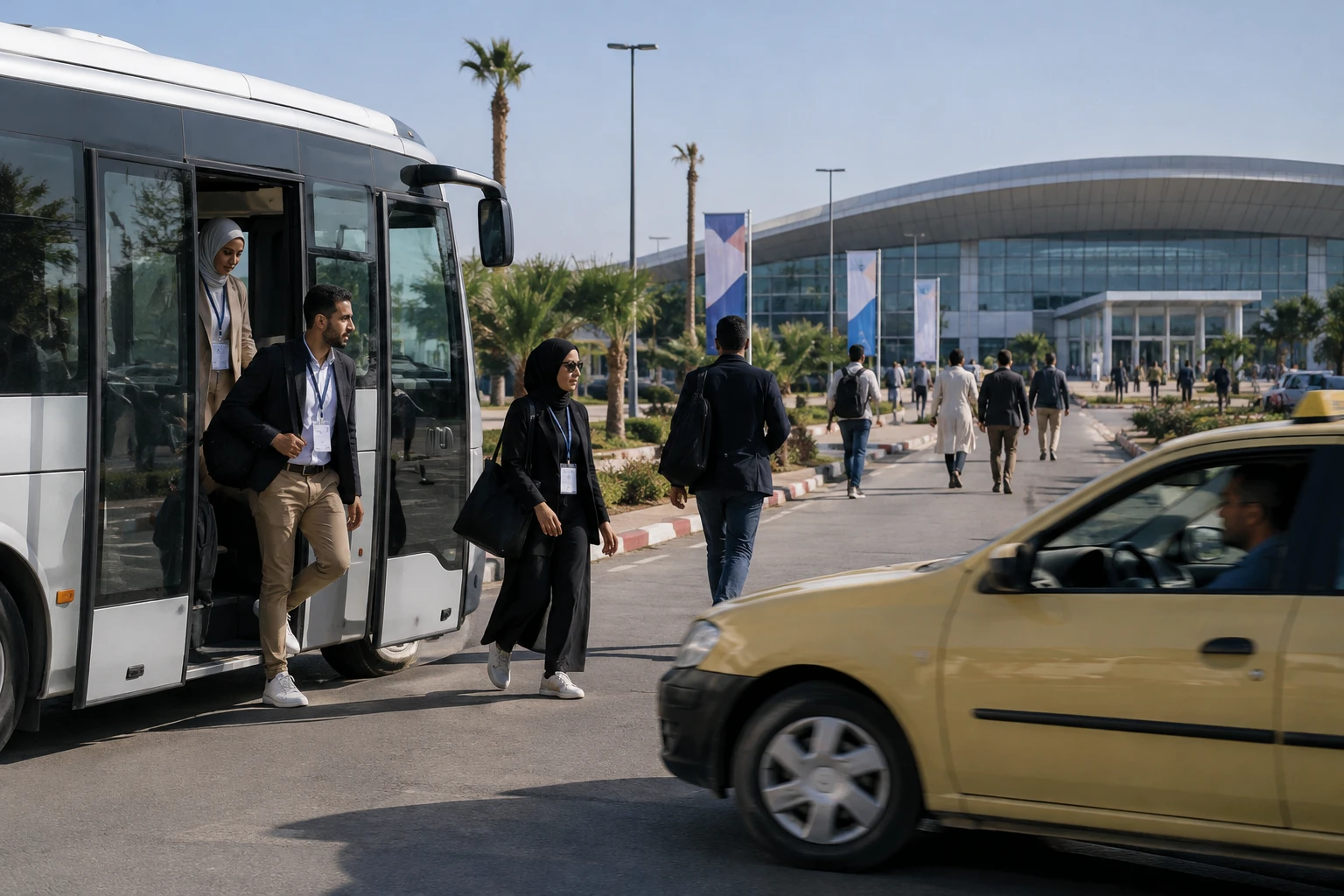
In Marrakech, discussions on aviation and defence are also taking place on sensitive diplomatic ground. The official presence of Israeli companies at the air show highlights closer ties between Rabat and Tel Aviv, but also the persistent gap between the Moroccan state’s choices and the protests of part of the population.
A rapprochement reaching trade fairs
The Marrakech Airshow 2026, held from 7 to 10 October, is hosting an Israeli national pavilion for the first time, according to Israel’s Ministry of Defence. A delegation led by its department for international defence cooperation is accompanying eight companies from the sector. The event is taking place at Marrakech air base.
Elbit Systems, Israel Aerospace Industries (IAI) and Rafael are among the companies attending. The Israeli ministry says the firms are exhibiting technologies covering the air, land, maritime, space and digital domains, among others. This official presentation does not in itself constitute independent confirmation of the performance claims made for this equipment. Moroccan media outlet Le360 also reports the presence of the leading Israeli companies. Al Jazeera confirms the pavilion’s opening and the participation of the eight companies.
The new development is the level of institutional visibility: according to the Israeli ministry, this is Israel’s first official participation in a defence exhibition held in Morocco since the normalisation of relations. Israeli companies’ presence in the country, however, does not necessarily date from this edition. This first official participation should therefore be distinguished from a possible first commercial presence.
Ties revived in 2020, deepened in 2026
Morocco restored relations with Israel in December 2020 under an agreement backed by the United States and described as part of the Abraham Accords. Since then, the two countries have developed their political, economic and security contacts. In September 2026, their foreign ministers announced their intention to upgrade their respective representations to embassies, a step beyond the existing liaison offices, Al Jazeera reports.
The Marrakech show is therefore part of an existing trend. It makes a co-operation that extends beyond diplomatic statements more visible: defence fairs also serve to showcase equipment, build contacts between companies and government bodies, and explore commercial opportunities. Israel’s participation does not, however, in itself prove that a new contract has been signed or a technology transfer agreed.
For Rabat, these relations are part of a foreign policy in which partnerships are tied to specific national interests, particularly defence and international recognition of its position on Western Sahara. The 2020 agreement was also accompanied by US recognition of Moroccan sovereignty over the disputed territory. This development remains contested and does not resolve the dispute, which retains a regional dimension and is also part of the United Nations process.
Official diplomacy faces public protest
Closer ties with Israel do not enjoy consensus in Morocco. In Rabat, protesters gathered on 7 October to denounce normalisation and express solidarity with Palestinians, according to reports in the event’s coverage. The number of participants and details of the protest could not be corroborated by a second independent source, and therefore cannot be treated here as a confirmed tally.
This opposition is part of wider protests seen in Morocco since the start of the war in Gaza. Demonstrations have called, among other things, for relations with Israel to be severed, while the Moroccan authorities have maintained diplomatic ties. In 2024, the Associated Press had already reported rallies in Rabat calling for the normalisation agreement to be cancelled. Moroccan society is not monolithic: state decisions, diplomatic calculations and views expressed on the streets coexist, sometimes in tension.
This difference in pace matters. For public officials and defence-sector players, a presence at the show can open up prospects for co-operation and strengthen state-to-state relations. For citizens taking part in protests, the same scene can symbolise a policy they consider incompatible with their solidarity with Palestinians. The tangible effects on employment, local industry or military capabilities will depend on specific agreements and their implementation, not merely on the presence of a pavilion.
A regional signal, not yet a record of co-operation
In the Maghreb, Morocco’s partnership choices are watched in an environment shaped by diplomatic rivalries, particularly with Algeria, and by persistent disagreements over Western Sahara. The Arab Maghreb Union, a regional organisation bringing together the Maghreb countries, remains largely inactive. In this context, Rabat’s bilateral relations with Israel and the United States carry significance beyond the exhibition.
Across Africa, the event is a reminder that defence co-operation forms part of different national strategies. On its own, it does not support the conclusion that the continent shares a common direction or that the African Union has a single position. The key question now is whether this visibility will lead to contracts, industrial partnerships or technology exchanges, and what safeguards will govern their implementation.
The Israeli pavilion is thus a concrete sign of the official rapprochement between Rabat and Tel Aviv. But it also exposes the political limits of this relationship: governments can deepen their co-operation while part of the population opposes it. The next diplomatic steps announced in September and any industrial agreements will show whether the exhibition is primarily a showcase or a new operational milestone.



