
 Algeria
 Egypt
 Libya
 Morocco
 Sudan
 Tunisia
 Benin
 Burkina Faso
 Cabo Verde
 Côte d'Ivoire
 Ghana
 Guinea
 Guinea-Bissau
 Liberia
 Mali
 Mauritania
 Niger
 Nigeria
 Senegal
 Sierra Leone
 The Gambia
 Togo
 Cameroon
 Central African Republic
 Chad
 Equatorial Guinea
 Gabon
 Republic of the Congo
 São Tomé and Príncipe
 Burundi
 Comoros
 Djibouti
 Eritrea
 Ethiopia
 Kenya
 Madagascar
 Malawi
 Mauritius
 Mozambique
 Rwanda
 Seychelles
 Somalia
 South Sudan
 Tanzania
 Uganda
 Angola
 Botswana
 Eswatini
 Lesotho
 Namibia
 South Africa
 Zambia
 Zimbabwe
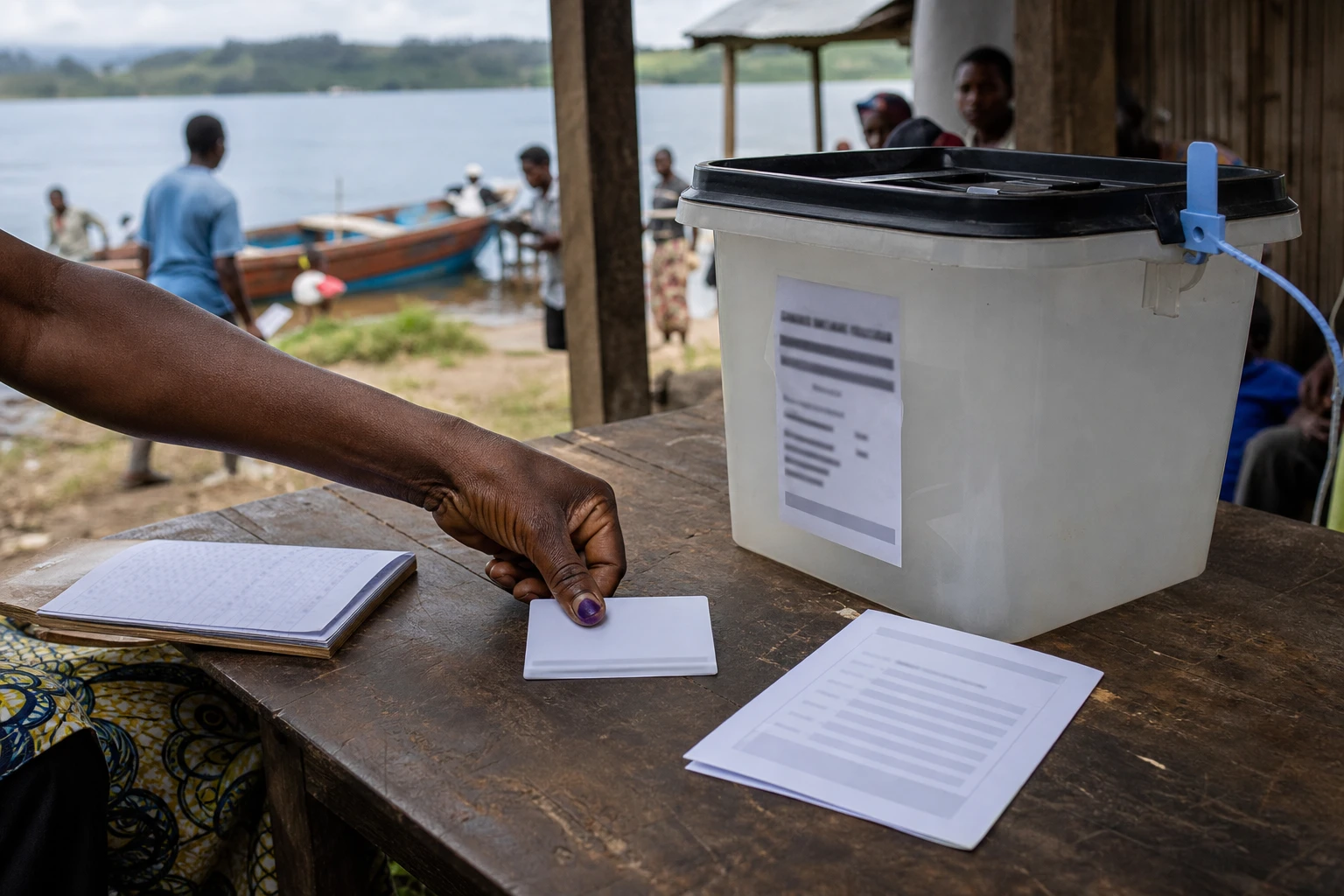
On Lake Kivu, the daily journey between Idjwi island and the shores of South Kivu can quickly become a fight for survival. On the night of Saturday 26 to Sunday 27 September 2026, a motorised boat sank while carrying passengers, goods and vendors selling small fish. At least twelve bodies have been recovered. Several people are still missing.
Casualty figures in Idjwi remain incomplete
The shipwreck occurred in the Nyakalengwa groupement, in Idjwi territory, South Kivu. The boat had come from Bukavu and was heading towards the north of the island, according to information gathered by Actualite.cd.
The reported toll remains provisional. Bienfait Shamanvu, a member of the citizen movement OBAPG, reported at least twelve deaths. Idjwi territorial administrator Pascal Ntambuka confirmed this figure. Local sources also mention five survivors, while an Associated Press report refers to around 15 people rescued.
This discrepancy means the exact number of passengers on board has yet to be established. The authorities do not currently have a complete list of those aboard. In this kind of accident, the toll often changes as searches continue, bodies are identified and survivors give their accounts.
Rescue operations are continuing on the lake. Residents, fishermen and relatives are taking part in the search. On the shore, the wait is particularly difficult for families who still do not know whether their loved ones survived, are missing or are among the victims whose bodies have been recovered.
Causes yet to be established
The precise circumstances of the shipwreck have not yet been established. Local accounts point to the condition of the boat and high waves after rainfall. These details remain to be verified by an official investigation.
Overcrowding, however, is a regularly reported risk on waterways in the Democratic Republic of the Congo. Boats often carry passengers, sacks of goods and fish in a limited space. The wearing of life jackets is also inconsistent, while pre-departure checks do not always cover the condition of the hull, load capacity or the presence of a reliable passenger manifest.
These shortcomings are not solely a matter of transport operators’ conduct. They also reflect a lack of port infrastructure, inadequate monitoring resources and a shortage of land-based alternatives in several lakeside areas. For Idjwi’s residents, Lake Kivu is at once a trade route, a fishing ground and the main link with Bukavu and other urban centres in South Kivu.
A blanket ban on sailing would therefore not solve the problem. It would mainly risk isolating island communities and pushing up the cost of transporting food. The challenge is instead to make crossings safer, with suitable boats, regular inspections, rescue equipment and weather information accessible to crews.
Lake Tanganyika hit just days earlier
The Idjwi tragedy comes less than a week after the sinking of the MV MJP on Lake Tanganyika on Wednesday 23 September 2026. The vessel was travelling between Kigoma, Tanzania, and Kalemie, in the Congolese province of Tanganyika.
The boat capsized near Mapera, off Kabimba. According to 7sur7.cd, the provincial transport minister later reported 43 survivors and 41 people missing. An earlier toll, released in the preceding hours, had listed 36 survivors and 39 missing.
This change illustrates how difficult it can be to establish a reliable count quickly when the passenger manifest is incomplete or passengers have not been registered. It also highlights the essential role of local fishermen, who are often among the first to respond when specialist rescue resources are far away.
The MV MJP operated an important cross-border route between Tanzania and the Democratic Republic of the Congo. Lake Tanganyika does not merely separate territories. It connects markets, families and supply networks across several countries in the Great Lakes region. An accident on this route therefore affects trade beyond Tanganyika province alone.
A national problem with very tangible effects
Recent shipwrecks on Lake Kivu, Lake Tanganyika, the Kwilu and other Congolese waterways point to a vulnerability that extends beyond South Kivu. In April 2026, an accident on Lake Kivu had already left at least two people dead and around 20 missing, according to reports in the local press. The same period had also seen another deadly shipwreck on Lake Tanganyika.
Every accident has consequences that go beyond the human toll. Families sometimes lose their main breadwinner. Traders see their goods disappear. Fishermen have to stop working. In rural areas, a disrupted crossing can also delay access to healthcare, school or markets.
Women selling fish and agricultural produce are particularly exposed when cargoes are lost. Small transport operators, meanwhile, bear the direct cost of repairing or replacing a boat. In provincial capitals, these tragedies are often seen as isolated accidents. On the shores, however, they disrupt an entire local economy.
Congolese civil society and several media outlets have for years raised the alarm over the same factors: overcrowding, night-time navigation, inadequate safety equipment, irregular inspections and difficult weather conditions. The recurrence of these warnings now raises questions about the follow-up to recommendations and the accountability of the services responsible for inland navigation.
Lake safety, a regional issue
The Democratic Republic of the Congo is part of the Great Lakes region, where administrative borders do not match transport routes. Lake Kivu also concerns Rwanda. Lake Tanganyika links the DRC, Tanzania, Burundi and Zambia. Vessel safety therefore requires cooperation between local authorities, port services and countries bordering the lakes.
For Kinshasa, the priority is to strengthen national rules without cutting communities off from their means of transport. This requires, among other things, better-kept passenger registers, pre-departure inspections, life jackets on board and rescue procedures coordinated between provinces.
The Idjwi shipwreck has once again highlighted an urgent and very concrete issue: on Congolese lakes, daily mobility can no longer depend solely on individual caution. As long as searches remain constrained by a lack of resources and boats set out without sufficiently rigorous checks, every crossing will continue to pose a disproportionate risk to Congolese people who often have no alternative route.



