Algeria
 Egypt
 Libya
 Morocco
 Sudan
 Tunisia
 Benin
 Burkina Faso
 Cabo Verde
 Côte d'Ivoire
 Ghana
 Guinea-Bissau
 Liberia
 Mali
 Mauritania
 Niger
 Nigeria
 Senegal
 Sierra Leone
 The Gambia
 Togo
 Cameroon
 Central African Republic
 Chad
 DR Congo
 Equatorial Guinea
 Gabon
 Republic of the Congo
 São Tomé and Príncipe
 Burundi
 Comoros
 Djibouti
 Eritrea
 Ethiopia
 Kenya
 Madagascar
 Malawi
 Mauritius
 Mozambique
 Rwanda
 Seychelles
 Somalia
 South Sudan
 Tanzania
 Uganda
 Angola
 Botswana
 Eswatini
 Lesotho
 Namibia
 South Africa
 Zambia
 Zimbabwe
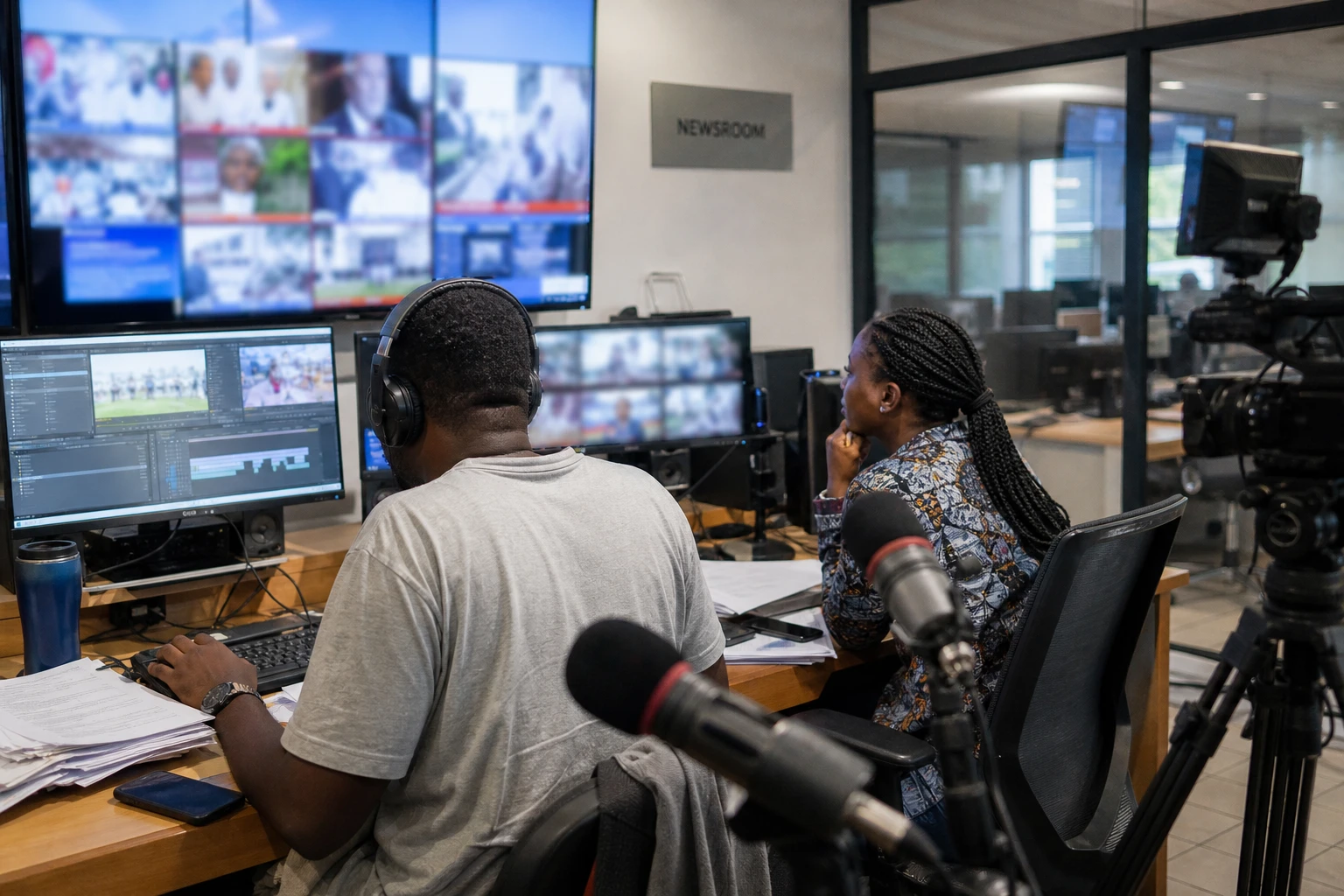
In Conakry, the line between regulation and punishment is narrowing
In Guinea, one word can now be enough to shut down a screen. In a country where the media work under close surveillance, the battle is no longer only about the information broadcast, but about the vocabulary permitted when talking about those in power.
The decision taken in Conakry is part of a broader sequence. Since Mamadi Doumbouya seized power on 5 September 2021, and was then sworn in as president in January 2026 after the December 2025 election, Guinea’s political balances have been profoundly reshaped. Guinea remains a member of ECOWAS, the West African organisation that accompanied the transition and later lifted its sanctions after the return to constitutional order was confirmed in early 2026.
What the HAC decided, and why
On Thursday 17 September 2026, the High Authority for Communication (HAC) banned France 24 from broadcasting across Guinea with immediate effect. The regulator revoked the channel’s authorisation and withdrew the accreditations of its correspondents, special envoys and contributors. It also called for its digital access to be blocked and for local distributors to stop carrying it, according to consistent reports published in Conakry and Dakar.
The measure followed a formal notice sent the previous day. At the heart of the dispute, the HAC accuses the channel of using a description it considered offensive to refer to Mamadi Doumbouya, presenting him on air as a “coup-installed president”. The regulator says France 24’s management did not comply with its request to remove the term. Yet a source quoted by AFP and cited in several reports on the decision said the channel had apologised on Wednesday 16 September, without avoiding the sanction the following day.
The case did not come out of nowhere. Just the day before, the same institution had withdrawn the accreditation of the Jeune Afrique correspondent, citing “professional failings”, according to information published in Conakry. The two cases coming in quick succession, just 24 hours apart, point to a clear hardening in relations between Guinea’s regulator and newsrooms deemed too critical.
Press freedom, sovereignty and the regional precedent
In Guinea, the debate is not only about whether a word was appropriate. It touches on how the authorities want to shape the public narrative. For the government, the contested term challenges the head of state’s historical legitimacy. For journalists, the description refers to a significant political fact: Mamadi Doumbouya did seize power in a coup in 2021, before winning the December 2025 presidential election and being sworn in in January 2026. The two interpretations therefore reflect different perspectives, but distinct political realities.
The case also has a practical impact on Guineans. In Conakry, access to pluralistic information depends largely on major television packages, digital platforms and local correspondents’ networks. When an international channel is removed from distribution networks, the restriction affects more than a media brand. It also reduces the sources available to urban audiences, professionals, the connected diaspora and economic actors following regional news in real time.
Guinea is not alone on this front. In Togo, in June 2025, the HAAC suspended RFI and France 24 for three months. In Burkina Faso, France 24 was suspended in March 2023 after an interview the authorities deemed problematic. In Niger, both media outlets were also suspended after the July 2023 coup. In several West African capitals, the same argument keeps recurring: content considered inaccurate, biased or damaging to institutions. The result is often the same: a narrower media landscape and more strained relations between regulators and international newsrooms.
But the comparison only goes so far. In Guinea, this sequence comes after a transition that lasted longer than expected, a constitutional referendum, a presidential election and regional reintegration. The Guinean government therefore wants to show that it is fully in control of its institutional framework. This is a way of invoking sovereignty, but also of making clear that the state now sets the limits of the public narrative.
What to watch next in West Africa
For the sub-region, the Guinean episode goes beyond the case of France 24. It raises a broader question: how far can regulators go when they believe a media outlet has crossed the line? In a West African region already marked by military transitions, electoral tensions and competition between narratives of sovereignty, every media sanction becomes a political signal.
ECOWAS, which for years served as a framework for exerting pressure on transitions in the region, now sees another question return to the fore: the role of checks and balances in states that say they have returned to constitutional order. In Guinea, the next test will not be merely judicial or administrative. It will also be political: whether audiovisual regulation remains a matter of law, or becomes an instrument for disciplining public debate.
In this context, the France 24 case serves as a barometer. It shows how sensitive the government is to the wording used by foreign media, but also how fragile pluralism becomes when regulation tightens. In Conakry, the question is no longer only who gets to speak. It is what can still be said, and within what framework.