Algeria
 Egypt
 Libya
 Morocco
 Sudan
 Tunisia
 Benin
 Burkina Faso
 Cabo Verde
 Côte d'Ivoire
 Ghana
 Guinea-Bissau
 Liberia
 Mali
 Mauritania
 Niger
 Nigeria
 Senegal
 Sierra Leone
 The Gambia
 Togo
 Cameroon
 Central African Republic
 Chad
 DR Congo
 Equatorial Guinea
 Gabon
 Republic of the Congo
 São Tomé and Príncipe
 Burundi
 Comoros
 Djibouti
 Eritrea
 Ethiopia
 Kenya
 Madagascar
 Malawi
 Mauritius
 Mozambique
 Rwanda
 Seychelles
 Somalia
 South Sudan
 Tanzania
 Uganda
 Angola
 Botswana
 Eswatini
 Lesotho
 Namibia
 South Africa
 Zambia
 Zimbabwe
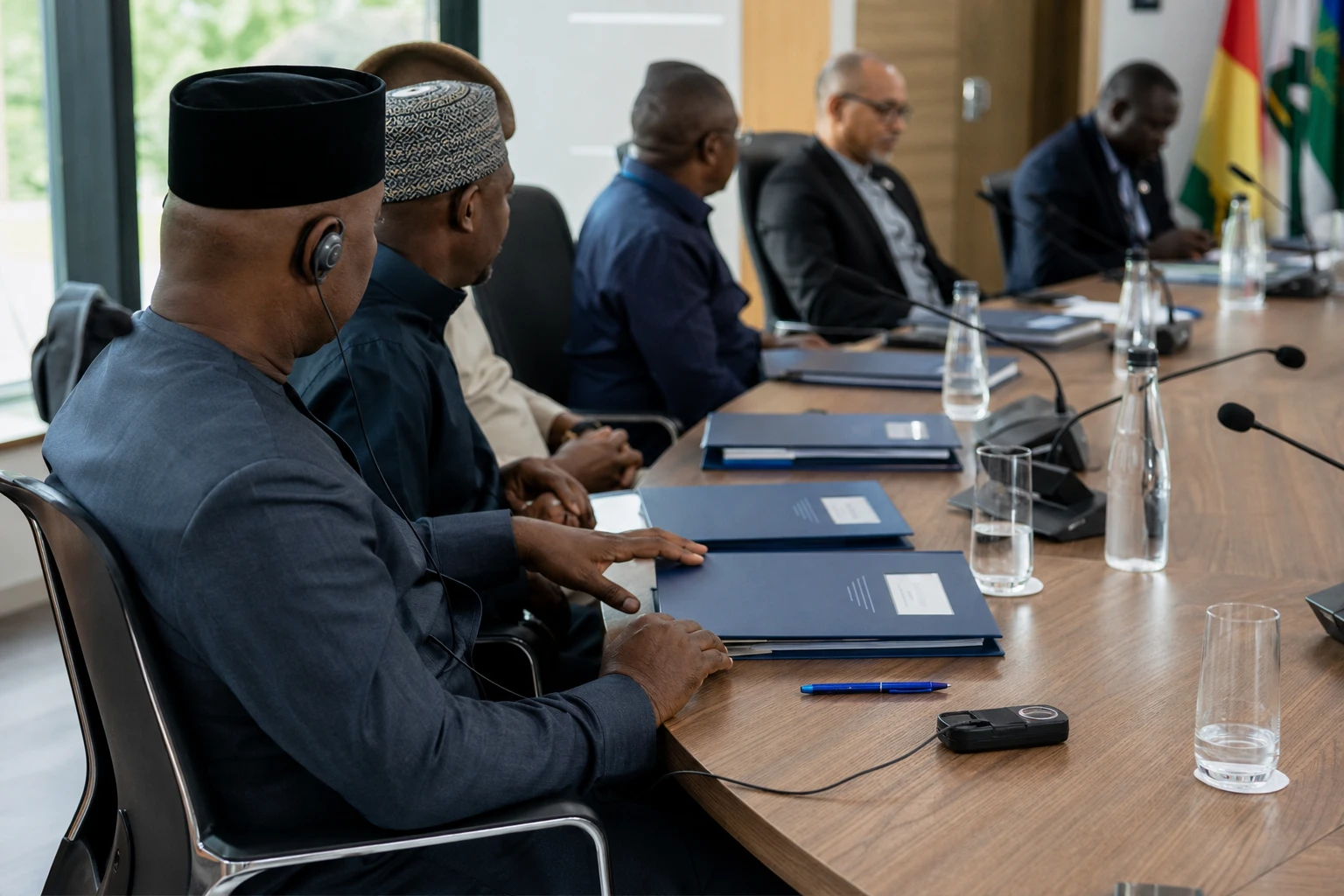
In Conakry, the challenge is no longer simply to get Simandou’s iron ore out of the ground. It is now to turn this wealth into jobs, local businesses and infrastructure that serves areas beyond the mining zones. That is the aim of the new partnership between Guinea and the World Bank Group.
A cooperation framework aligned with Simandou 2040
Guinea and the World Bank Group officially launched the Country Partnership Framework (CPF) for 2027-2033 on Monday 5 October 2026. The meeting was held at Guinea’s Ministry of Economy, Finance and Budget, attended by Minister Mariama Ciré Sylla and a delegation led by Ousmane Diagana, the World Bank’s vice-president for West and Central Africa.
The document sets out cooperation priorities for the next seven years. It is part of the national Simandou 2040 programme, which aims to use mining revenues to accelerate Guinea’s economic transformation.
The timing is strategic. The Simandou deposit is due to enter its production and export phase. The World Bank sees this as an opportunity to link mining infrastructure to other activities, including agriculture, energy, transport and industry.
Under this approach, the Simandou corridor must not remain simply a route for transporting ore to the coast. It is intended to become an economic corridor, able to connect producing regions with markets, services and private investment.
Four priorities to create more jobs
The CPF is built around four main outcomes. The first concerns economic governance. The aim is to improve domestic revenue mobilisation, public expenditure management and transparency over mining revenues.
This priority addresses a central question for Guinea: how can the country prevent strong mining growth from delivering only an increase in exports, without lasting improvements in public services and household incomes? The quality of institutions will directly affect the state’s ability to turn Simandou revenues into useful investment.
The second pillar concerns human capital. The World Bank plans to support education, technical and vocational training, healthcare and youth employment. The SIRA programme, which focuses on skills for innovation, resilience and aspirations, is intended in particular to bring training closer to businesses’ needs.
According to the World Bank, the programme could reach around 2.7 million young Guineans. The aim is to better prepare workers for sectors expected to grow: agro-industry, energy, manufacturing, digital technology and infrastructure-related services.
The third pillar concerns access to energy and transport. Mining infrastructure can support national development, but only if it also benefits the areas it passes through. Electricity, roads, rail and logistics services will therefore have to meet the needs of businesses as well as those of the population.
The fourth pillar aims to promote private investment and job creation. The International Finance Corporation, which works with businesses, is to support projects in agro-industry, fisheries, manufacturing and energy. The Multilateral Investment Guarantee Agency, in turn, may help reduce certain risks for investors.
Initial funding of $471 million
For the first three years of the framework, Guinea is expected to receive an indicative allocation of around $471 million under IDA21. The International Development Association, or IDA, is the World Bank’s facility for low-income countries.
Guinea’s current IDA portfolio exceeds $1.5 billion. In June 2026, the World Bank Group had also approved three operations worth a total of $293 million: $116 million for the second phase of the commercial agriculture development project, $102 million for the SIRA programme and $75 million for domestic revenue mobilisation and public expenditure management.
These amounts alone, however, do not guarantee diversification. Their impact will depend on the quality of implementation, project monitoring and the ability of Guinean businesses to access public contracts, credit and supply chains linked to Simandou.
From mining growth to a productive economy
The World Bank expects Guinea’s economy to grow steadily in the coming years, driven by investment and iron ore exports. This momentum could boost public revenues and support domestic demand.
It also carries risks. An economy that is too dependent on ore would remain exposed to swings in global prices, trade tensions and delays to major projects. Climate shocks could also affect agriculture, infrastructure and living conditions in rural areas.
For households, the most tangible issue will be real income. High growth is not enough if it does not reduce the cost of living, improve access to electricity and create opportunities for young people. Urban workers in Conakry, agricultural producers and small businesses in mining regions will not have the same needs or expect the same benefits from the programme.
Guinean private-sector participation will therefore be crucial. Without local content mechanisms, contracts linked to infrastructure and mining services could mainly benefit large international groups. With a policy of subcontracting, training and access to finance, they can instead strengthen SMEs and national skills.
An issue for Guinea and West Africa
Guinea remains a member state of the Economic Community of West African States, ECOWAS, an organisation tasked with promoting economic integration and the movement of goods, capital and people across the region. The development of the Simandou corridor could therefore affect trade with Sierra Leone, Liberia, Côte d’Ivoire and other West African markets.
The regional impact will depend in particular on Guinea’s ability to connect its infrastructure to neighbouring networks. More efficient roads, ports, energy and customs procedures could broaden opportunities for agriculture, industry and services.
The next test will be implementation. Disbursements, jobs actually created, the share of contracts awarded to Guinean businesses and the transparency of revenues from Simandou will all need to be monitored. For Conakry and the regions alike, the partnership’s success will be measured less by the size of the funding announced than by how it translates into everyday economic life.