Algeria
 Egypt
 Libya
 Morocco
 Sudan
 Tunisia
 Benin
 Burkina Faso
 Cabo Verde
 Côte d'Ivoire
 Ghana
 Guinea-Bissau
 Liberia
 Mali
 Mauritania
 Niger
 Nigeria
 Senegal
 Sierra Leone
 The Gambia
 Togo
 Cameroon
 Central African Republic
 Chad
 DR Congo
 Equatorial Guinea
 Gabon
 Republic of the Congo
 São Tomé and Príncipe
 Burundi
 Comoros
 Djibouti
 Eritrea
 Ethiopia
 Kenya
 Madagascar
 Malawi
 Mauritius
 Mozambique
 Rwanda
 Seychelles
 Somalia
 South Sudan
 Tanzania
 Uganda
 Angola
 Botswana
 Eswatini
 Lesotho
 Namibia
 South Africa
 Zambia
 Zimbabwe
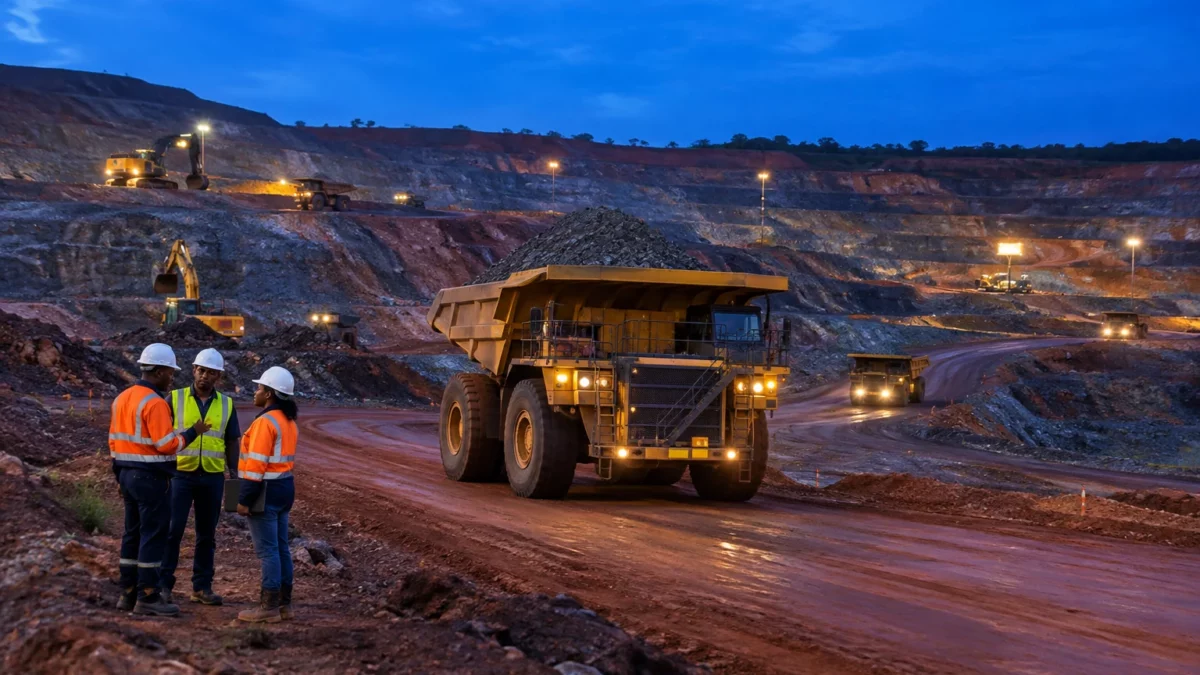
The expected rise in mining revenues poses a decisive question for Conakry: how can Simandou’s expansion be converted into public services and jobs without undermining state finances? The new International Monetary Fund (IMF) programme puts this equation at the heart of its commitments.
Deal now approved, after several stages
The IMF executive board approved a three-year economic programme for Guinea on Monday 23 November 2026. The announced package amounts to around $425 million, or 310.59 million Special Drawing Rights, the Fund’s unit of account. The Guinean government announced the decision, which was reported by several media outlets.
The approval follows a preliminary agreement reached at staff level with the IMF in August. At that stage, the Fund said its executive board still had to make a decision. The difference between the $439 million cited in initial announcements and the approximately $425 million approved is $14 million. It marks the shift from an initial estimate to the programme’s final amount.
The arrangement is due to run from 2026 to 2029 and draws on two IMF instruments: the Extended Credit Facility, designed for low-income countries, and the Extended Fund Facility. The available information does not yet specify the detailed disbursement schedule or the amount of an initial tranche. The announced package should therefore not be confused with an immediate payment of the full amount.
Simandou raises the stakes for fiscal discipline
The decision comes as Guinea enters a new phase of mining development. Production at the Simandou iron ore deposit began in November 2025. The project also includes a trans-Guinean railway and port facilities. The Simandou 2040 programme aims to link this activity to broader investment in the economy.
Announced priorities include revenue mobilisation, particularly from mining, public cash management and stronger foreign exchange reserves. The IMF also refers to central bank governance, transparency in gold operations and anti-corruption measures. These objectives should help the state better forecast its resources and protect priority spending when revenues fluctuate.
Prime Minister Amadou Oury Bah presented the agreement as a sign of confidence and emphasised the Fund’s technical expertise. He also acknowledged that the administration needed to strengthen its capacity to implement the reforms. This is essential: external financing alone does not guarantee better tax collection, transparent public procurement or more effective spending.
Benefits will depend on implementation
For the authorities and mining companies, the programme could help make the economic environment more predictable. For Guineans, the impact will be more tangible if additional revenues sustainably fund infrastructure and services, and if mining activity also boosts jobs outside the extractive sector. Workers and businesses in Conakry will not necessarily experience the same effects as communities near the mines, railway or port infrastructure.
The issue goes beyond ore production alone. A Guinean national report submitted to the United Nations notes that mining growth does not automatically lead to lower poverty or sufficient job creation in other sectors. It also highlights the importance of processing more resources locally. These findings are a reminder that public revenues, their distribution and local content will determine a large share of the social benefits.
The programme also comes amid a West African context in which states must fund their priorities while managing debt, inflation and foreign currency needs. Guinea is a member of the Economic Community of West African States (ECOWAS), which brings together countries with different economic and monetary trajectories. The IMF agreement does not replace national choices: it provides an economic policy framework and access to resources, while their use is a matter for Guinean institutions.
Transparency will be the next test
The agreement’s impact will be measured in the next steps: publication of detailed conditions, the disbursement schedule, monitoring of reforms and changes in revenues actually collected. Management of mining revenues will come under particular scrutiny, as will the ability of the administrations to account for how funds are used. Budget transparency is a practical issue for taxpayers, local authorities and economic partners.
Simandou offers Guinea the prospect of substantial revenues and infrastructure, but also presents a governance challenge. IMF financing can support macroeconomic stability; it will not, on its own, determine how the benefits are shared. The conversion of this wealth into lasting progress for Guineans will depend on budget implementation and economic diversification.