Algeria
 Egypt
 Libya
 Morocco
 Sudan
 Tunisia
 Benin
 Burkina Faso
 Cabo Verde
 Côte d'Ivoire
 Ghana
 Guinea-Bissau
 Liberia
 Mali
 Mauritania
 Niger
 Nigeria
 Senegal
 Sierra Leone
 The Gambia
 Togo
 Cameroon
 Central African Republic
 Chad
 DR Congo
 Equatorial Guinea
 Gabon
 Republic of the Congo
 São Tomé and Príncipe
 Burundi
 Comoros
 Djibouti
 Eritrea
 Ethiopia
 Kenya
 Madagascar
 Malawi
 Mauritius
 Mozambique
 Rwanda
 Seychelles
 Somalia
 South Sudan
 Tanzania
 Uganda
 Angola
 Botswana
 Eswatini
 Lesotho
 Namibia
 South Africa
 Zambia
 Zimbabwe
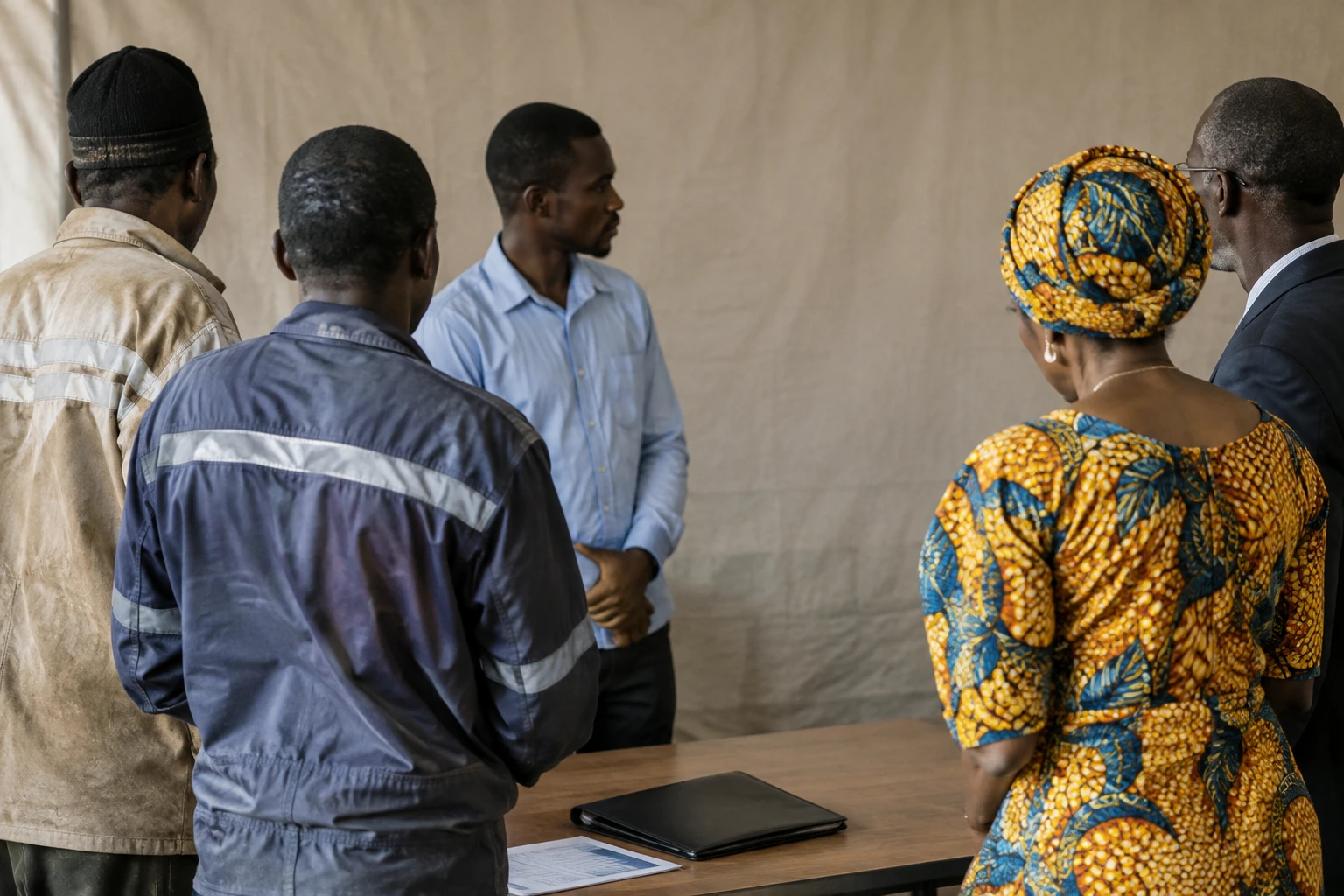
In Siguiri, stopping gold panning does not simply mean closing sites. The measure affects workers, businesses and communities that depend on gold, while raising an urgent question: how can land and waterways be protected without local incomes collapsing?
The debate is taking place in north-eastern Guinea, at the heart of a region where artisanal gold mining is a major economic activity. It is also part of a period of public oversight: after heavy machinery was banned in March 2026, followed by sanctions targeting administrative officials in June, regional authorities ordered a blanket halt.
Suspension announced, then a change at the head of the region
In a statement dated Thursday 29 October 2026, the acting governor, Colonel Fadjimba Mara, suspended all artisanal gold-mining activities in the administrative region of Siguiri. The measure is to remain in force until the situation is regularised, with no resumption date announced. Two Guinean media outlets reported the decision and its official rationale: environmental damage and risks to the safety and peace of local communities.
Regional authorities have cited in particular the use of machinery they consider incompatible with artisanal activity. They blame it for damage to ecosystems and pollution of waterways. The statement entrusts local administrative officials and the defence and security forces with enforcing the suspension. These are the reasons given by the authorities; they do not, on their own, constitute an independent assessment of the damage.
The administrative context changed quickly. On Friday 30 October, Guinea’s Minister of Territorial Administration and Decentralisation suspended 22 officials in the region, including the acting governor and prefectural and sub-prefectural officials. The decision was reported by several Guinean media outlets. The individual reasons were not detailed in the reports consulted; it would therefore be premature to establish a direct link between these suspensions and the halt to gold panning.
A ban on machinery that has already proved difficult to enforce
The suspension is not without precedent. In March 2026, the government banned the use of heavy machinery, including mechanical excavators, in artisanal gold mining. In June, administrative officials and staff were suspended after the authorities denounced the failure to enforce that ban. The Guinean Press Agency then specified that the measures targeted illegal mining and harmful practices, not the abolition of traditional artisanal activity.
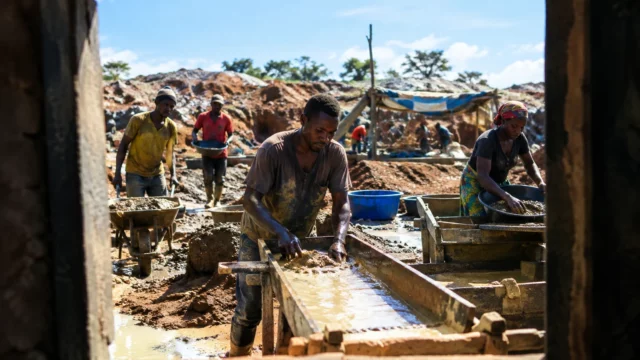
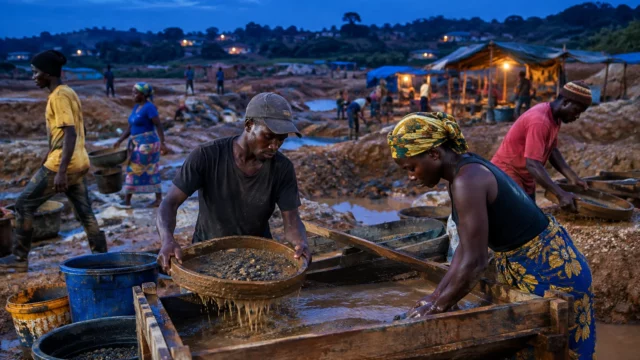
This distinction matters. Gold panning refers to small-scale gold extraction, often carried out by local workers and teams. The use of mechanical equipment can, however, change the scale of excavation and increase pressure on land and water. In Siguiri, the immediate problem for the state is therefore also one of enforcing the rules: a ban is already in place, but the authorities say the targeted equipment continued to be used.
The succession of bans and sanctions is testing the administration’s ability to monitor sites, including in localities far from Conakry. It also raises a question of consistency: can a blanket suspension be applied sustainably if the precise rules for resumption, inspections and alternatives are not made clear to workers and communities?
Protecting resources without wiping out incomes
The cost of a suspension is not shared equally. Gold panners lose their livelihoods directly; vendors, transport operators and other businesses linked to the sites may also see their incomes fall. Households combining several sources of work could be affected differently from those relying mainly on gold. No independently corroborated estimate of the number of people affected by the 29 October measure has been found; general figures for the sector should therefore not be turned into a definitive local assessment.
By contrast, the damage attributed to mechanised mining concerns shared resources. Soil, farmland and waterways also support agriculture and people’s everyday needs. Organisations and local stakeholders who have warned for several years about these pressures thus point out that the debate is not limited to mining incomes. It also concerns livelihoods that depend on land and water being in good condition.
For the authorities, the challenge will be to turn the suspension into a regulatory framework that is clear and enforceable: define permitted practices, enforce the limits set and explain the conditions for any resumption. Without these steps, a halt “until further notice” risks displacing activity rather than addressing its consequences, while uncertainty will weigh first on those who depend on artisanal work.
A governance test for Upper Guinea
The decision applies first and foremost to Siguiri and should not be presented as a nationwide ban on all gold panning. It nevertheless resonates beyond the region: Upper Guinea is an important gold-mining area, and the balance between local incomes, environmental protection and resource oversight also concerns neighbouring territories.
For Guinea, the next indicator will be the publication of concrete rules and a possible timetable for resumption. It will also be necessary to follow how inspections are carried out and how the regional administration is organised after the 30 October suspensions. In Conakry, the national authorities will have to show that regulation does not amount to a succession of announcements. On the ground, its effectiveness will be measured both by the protection of resources and by communities’ ability to maintain lawful incomes.
The issue also extends beyond Guinea’s borders, without making ECOWAS — the Economic Community of West African States — the authority responsible for this local decision. It is a reminder of a shared regional challenge: formalising artisanal mining, curbing the most destructive practices and taking account of the workers who sustain the site economy. In Siguiri, the halt announced on 29 October marks the start of this test; the rules for resumption have yet to be set out.