Algeria
 Egypt
 Libya
 Morocco
 Sudan
 Tunisia
 Benin
 Burkina Faso
 Cabo Verde
 Côte d'Ivoire
 Ghana
 Guinea-Bissau
 Liberia
 Mali
 Mauritania
 Niger
 Nigeria
 Senegal
 Sierra Leone
 The Gambia
 Togo
 Cameroon
 Central African Republic
 Chad
 DR Congo
 Equatorial Guinea
 Gabon
 Republic of the Congo
 São Tomé and Príncipe
 Burundi
 Comoros
 Djibouti
 Eritrea
 Ethiopia
 Kenya
 Madagascar
 Malawi
 Mauritius
 Mozambique
 Rwanda
 Seychelles
 Somalia
 South Sudan
 Tanzania
 Uganda
 Angola
 Botswana
 Eswatini
 Lesotho
 Namibia
 South Africa
 Zambia
 Zimbabwe
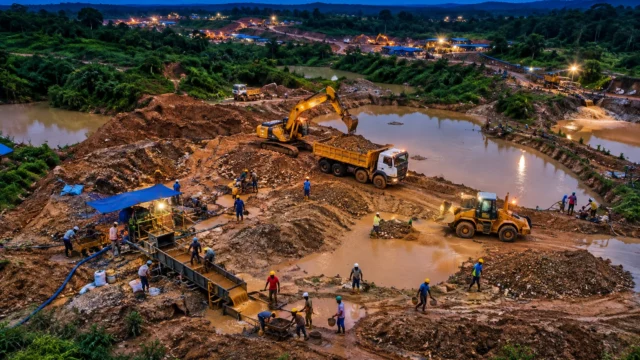
In Conakry, access to machinery, commercial vehicles and digital equipment remains a tangible obstacle for many small businesses. Leasing, which allows a company to use an asset before potentially owning it, could offer a solution. But in Guinea, the instrument remains concentrated among a few players.
A still-narrow market despite a long-standing legal framework
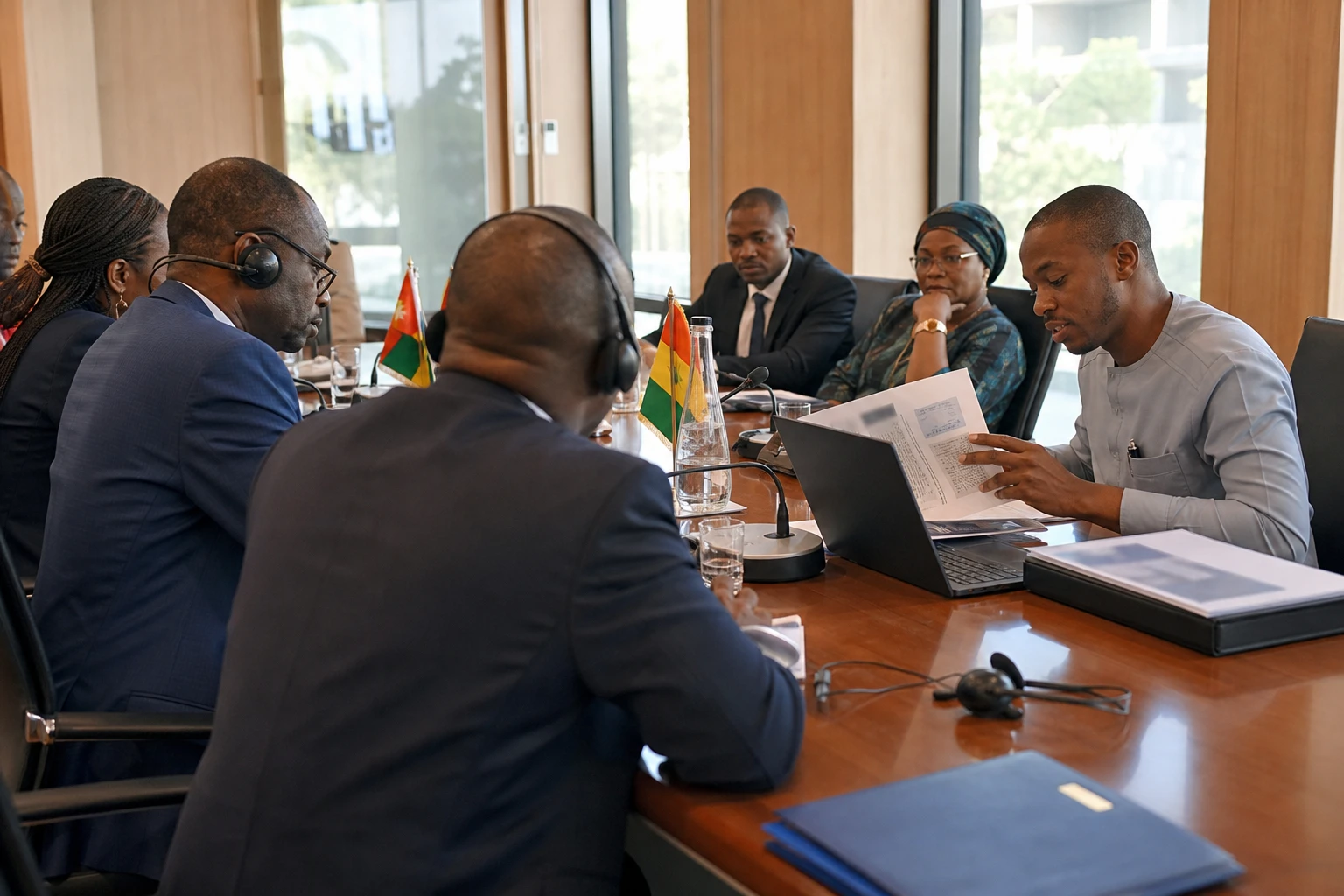
The Central Bank of the Republic of Guinea (BCRG) has begun revising the legal framework for leasing. The announcement follows a workshop held on 23 September 2026 with the International Finance Corporation (IFC), a World Bank Group institution specialising in private-sector financing.
The meeting brought together financial institutions, government representatives, businesses, chambers of commerce and other private-sector stakeholders. The aim is to make the framework better suited to the current needs of Guinea’s economy.
Guinea has had a law dedicated to leasing since 2012. The legislation sets out the main rules governing contracts, the conditions for conducting the activity, and the rights and obligations of the lessor and lessee.
Under this arrangement, a business uses equipment in return for rental payments over a specified period. At the end of the contract, it can generally buy the asset under terms agreed from the outset. This allows it to avoid committing all the capital needed for the purchase immediately.
An assessment carried out in 2024 at the BCRG’s request identified three players in Guinea’s market: two banks and a specialist company. The figure illustrates how limited the offering remains, more than ten years after the law was adopted.
The BCRG believes the economic, financial and legal environment has changed since 2012. The regulator therefore wants to clarify the rules, address shortcomings identified and better align the law with other legislation governing financial institutions.
Why SMEs are at the centre of the reform
Leasing is of particular interest to small and medium-sized enterprises. Many have viable projects but lack the collateral required to obtain a conventional loan. Asset finance can shift some of the focus to the value of the equipment being financed and its ability to generate revenue.
In agro-processing, transport, construction, healthcare and digital services, access to equipment directly affects productivity. A business that acquires a commercial vehicle, production machinery or computer equipment can increase its capacity before it has built up sufficient equity.
However, leasing is neither an automatic source of finance nor necessarily a cheaper one. Rental payments, insurance, maintenance, taxation and the terms for repossessing the asset must be clearly defined. For businesses, clarity in the contract will therefore matter as much as the availability of the product.
The reform will also need to take account of the realities of Guinea’s business landscape. Larger formal companies are more likely to have financial statements and regular accounting procedures. By contrast, many small businesses operate with irregular revenues, limited accounting and significant exposure to market fluctuations.
Taxation and legal certainty at the heart of discussions
The 2024 assessment identified several issues requiring closer examination. Taxation, particularly the treatment of value-added tax on leasing transactions, is among the sensitive topics.
Unclear tax rules can raise the final cost of financing and deter both businesses and lessors. They can also lead to different treatment of a purchase financed by a bank loan and a hire-purchase transaction. The forthcoming reform will need to reduce these uncertainties.
The BCRG will also need to ensure consistency between the law and the technical instructions already in force. An instruction published in December 2014 sets out, in particular, how credit institutions should account for leasing transactions. Aligning the rules could make matters easier for banks, auditors and businesses.
Protecting the parties is another key issue. The contract must specify responsibilities relating to insurance, maintenance, damage, late payments and the return of the asset. Such safeguards are essential to attract new operators without leaving financed businesses exposed.
An issue extending beyond the banking sector
The small number of players shows that the reform will not be limited to the wording of the law. It will also need to establish whether regulatory, tax and commercial conditions genuinely allow new operators to enter the market.
Guinea’s financial system remains dominated by commercial banks. A technical report by the International Monetary Fund published in 2025 listed one financial leasing company licensed by the BCRG among the financial auxiliaries operating in the country. This confirms the concentration of the segment and the scope for diversifying the offering.
For banks, leasing could become a product that complements conventional loans. For specialist investors, it could open up a market linked to business equipment. For the state, it offers an additional instrument to support productive investment, provided the rules are stable and supervision is effective.
The effects will not, however, be the same everywhere. Businesses based in Conakry generally have better access to banks, suppliers and legal services. In the regions, transport costs, the availability of spare parts and the capacity to maintain equipment may weigh more heavily in the decision to finance it.
Guinea and the challenges of regional financing
The reform is taking place in a West African environment where businesses are seeking to invest despite the cost of credit and collateral requirements. The Economic Community of West African States (ECOWAS), which brings together countries in the region, has for several years been working to strengthen market integration and the movement of capital.
Guinea does not, however, share the monetary framework of the West African Economic and Monetary Union. The Guinean franc has its own rules, under the responsibility of the BCRG. This makes a stable national framework particularly important, especially for contracts lasting several years.
The forthcoming law will therefore need to meet two requirements. It must be precise enough to give operators legal certainty while remaining flexible enough to respond to businesses’ changing needs. Its effectiveness will then depend on banks, specialist companies and the tax authorities applying the same rules.
The next step will be the substance of the draft reform. Proposals on taxation, licensing conditions, accounting, repossession of assets and SME access will need to be watched closely. Leasing will become a genuine growth driver for Guinea only if the reform turns an existing legal framework into a financial offering that businesses can actually access.
Consult information from the Central Bank of the Republic of Guinea