Algeria
 Egypt
 Libya
 Morocco
 Sudan
 Tunisia
 Benin
 Burkina Faso
 Cabo Verde
 Côte d'Ivoire
 Ghana
 Guinea-Bissau
 Liberia
 Mali
 Mauritania
 Niger
 Nigeria
 Senegal
 Sierra Leone
 The Gambia
 Togo
 Cameroon
 Central African Republic
 Chad
 DR Congo
 Equatorial Guinea
 Gabon
 Republic of the Congo
 São Tomé and Príncipe
 Burundi
 Comoros
 Djibouti
 Eritrea
 Ethiopia
 Kenya
 Madagascar
 Malawi
 Mauritius
 Mozambique
 Rwanda
 Seychelles
 Somalia
 South Sudan
 Tanzania
 Uganda
 Angola
 Botswana
 Eswatini
 Lesotho
 Namibia
 South Africa
 Zambia
 Zimbabwe
A local case, a broader political signal
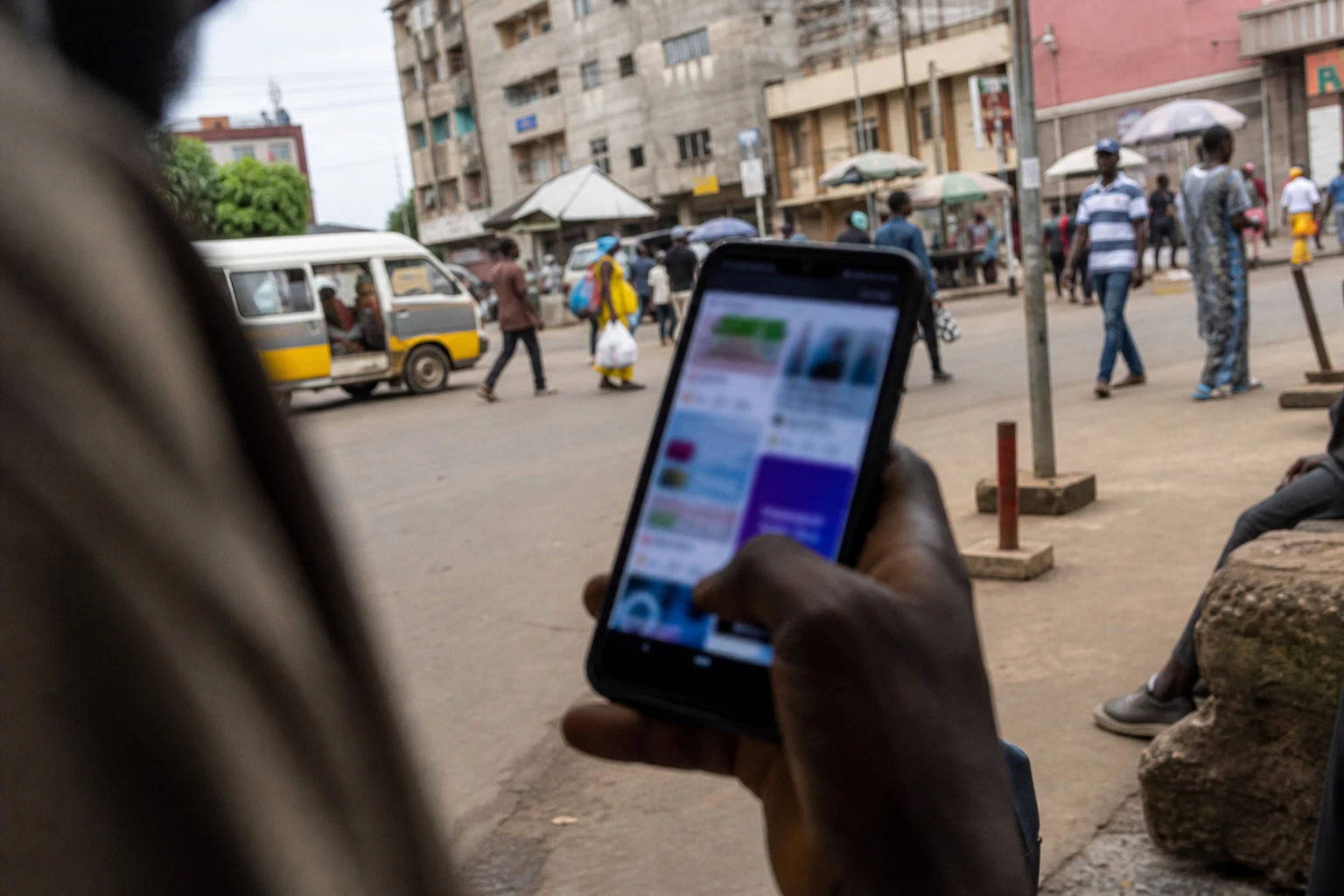
In Guinea, a way out of a crisis is not found only in a statement or a judicial corridor. It also plays out in the streets, in mosques, on social media and in the way the state treats its critics. The episode involving Bella Bah, an activist based in Conakry, says much about the constant tension between authority, public speech and the fear of disappearance.
The capital, Conakry, has for months been at the centre of tensions linked to the political transition. Guinea remains committed to a return to constitutional order, closely monitored by ECOWAS, the African Union and other regional partners, following the coup of 5 September 2021. In this context, every opaque arrest, every rumour about a place of detention and every alleged disappearance carries weight far beyond the individual case.
Conakry’s grand imam publicly forgives him
At the heart of the case, Mamadou Saliou Camara, grand imam of Fayçal Mosque, chose to defuse tensions. After being harshly criticised on Facebook by Bella Bah, who called him “dishonest” and described him as a moral guarantor of injustice, the religious leader said on Tuesday evening, in comments to Guinean media, that he forgave the activist and was calling for his release. The gesture immediately changed the tone of a case that, just hours earlier, had seemed locked in silence.
According to the statement reported by the local press, the imam described Bella Bah as “his son” and appealed to the authorities to release him. In a country where religious figures retain strong social influence, this stance is not merely a moral gesture. It also creates an informal form of mediation, often more audible than a straightforward political debate.
Bella Bah’s family welcomed the gesture with relief. His wife publicly expressed her gratitude to the imam, while also recalling the uncertainty that still surrounded her husband’s precise whereabouts. This matters. In Guinea, the families of people detained without clear information often spend several days in uncertainty, caught between anxiety, hope and anger.
An arrest that revives old traumas
The most sensitive aspect of the case remains the way Bella Bah was reportedly taken away. According to witnesses quoted by the Guinean press, armed, masked men, some in civilian clothes and others in gendarmerie uniform, allegedly entered the school he ran without presenting a warrant. The activist was then reportedly taken to an unknown destination. For three days, his family and lawyers had no news of him. As not all the details have been independently confirmed, these should be read as accounts reported by witnesses and relatives.
This type of arrest revives an already painful precedent in Guinea: the abductions or disappearances of opponents, activists and human rights defenders. Since 2024, several international organisations have voiced concern about missing people, including Mamadou Billo Bah and Oumar Sylla, two civil society figures whose fate has fuelled serious tensions between the authorities and rights defenders. The recurrence of such cases contributes to a lasting climate of mistrust.
In this case, the official silence mattered as much as the arrest itself. When relatives do not know where a detainee is, anxiety quickly turns into political accusation. The state, in turn, loses credibility whenever it is slow to provide a clear and verifiable answer. This dynamic is not unique to Guinea, but it has taken on particular force there since the military transition.
What the case says about Guinea today
The Bella Bah case first shows that the space for dissent in Guinea remains narrow. Since the junta came to power in 2021, civil liberties have been heavily restricted. Demonstrations have been curtailed, several political or social leaders have been arrested or forced into exile, and public debate takes place in a climate where self-censorship can easily take hold. The Africa Center for Strategic Studies describes a civil society in a state of concern, while the US human rights report notes disappearances, arbitrary arrests and severe restrictions on freedom of expression.
But this episode also shows something else: in Guinea, social mediation remains central. An imam, a traditional leader, a lawyer or an influential relative can still alter the course of a case when institutions seem slow or opaque. This is not a lasting solution. Rather, it is a sign of a system in which confidence in the criminal justice process remains fragile.
For the Guinean authorities, the challenge is twofold. First, they must quickly clarify Bella Bah’s precise whereabouts; then they must show that any judicial proceedings comply with ordinary law. For the public, the stakes are broader: whether critical expression, even if blunt or inappropriate, still belongs within the space for debate, or whether it continues to expose people to informal punishment or even temporary disappearance.
A regional significance beyond Conakry
Guinea does not operate in isolation. ECOWAS, the African Union and the Mano River Union are closely monitoring the country’s transition, elections and institutional stability. In Conakry, regional partners are pressing for a return to constitutional order; in Addis Ababa and Abuja, the question is also whether Guinea can emerge from the transition without widening the rift between the government and civil society.
The Bella Bah case therefore goes beyond the emotion prompted by a man who disappeared and was later located. It is a reminder that, in West Africa, political stability also depends on protecting critical voices, ensuring transparency in arrests and respecting procedural safeguards. In Conakry, what happens next will show whether a grand imam’s forgiveness is enough to ease a rights case, or whether the state will finally choose to respond with clear actions, at a time when every move is being watched as a test of credibility.